Thanks to their unique properties, chitosan and chitosan-based materials have numerous applications in the field of biomedicine, especially in drug delivery.
This proceedings volume gathers selected papers presented at the Chinese Materials Conference 2017 (CMC2017), held in Yinchuan City, Ningxia, China, on July 06-12, 2017.
This book provides a comprehensive description of topological polymers, an emerging research area in polymer science and polymer materials engineering.
This book comprehensively covers researches on enzymatic polymerization and related enzymatic approaches to produce well-defined polymers, which is valuable and promising for conducting green polymer chemistry.
This book summarizes the recent advances in applications of starch in state-of-the-art drug carriers (hydrogel, micro- and nano-particulate carriers) with stimulus-responsive and target-specific properties.
This book offers a systematic overview of polymer joining and highlights the experimental and numerical work currently being pursued to devise possible strategies to overcome the technical issues.
This proceedings volume gathers selected papers presented at the Chinese Materials Conference 2017 (CMC2017), held in Yinchuan City, Ningxia, China, on July 06-12, 2017.
Sustainable biomaterials are used as substitutions for traditional materials in aerospace, automotive, civil, mechanical, environmental engineering, medical, and other industries.
The principal aim of this book is to introduce chemists through a tutorial approach to the use of microwaves by examining several experiments of microwave chemistry and materials processing.
This book exclusively focuses on the science and fundamentals of polymer gels, as well as the numerous advantages that polymer gel-based materials offer.
This book addresses a range of synthesis and characterization techniques that are critical for tailoring and broadening the various aspects of polymer gels, as well as the numerous advantages that polymer gel-based materials offer.
This book introduces recent progress in stimuli-responsive interfaces constructed on colloidal materials such as micelles and vesicles and on solid material surfaces.
Advances in Renewable Natural Materials for Textile Sustainability promotes sustainable practices in the textile industry through exploring the use of natural materials in textile production.
The 3rd edition of this successful textbook continues to build on the strengths that were recognized by a 2008 Textbook Excellence Award from the Text and Academic Authors Association (TAA).
The 3rd edition of this important dictionary offers more than 12,000 entries with expanded encyclopaedic-style definitions making this major reference work invaluable to practitioners, researchers and students working in the area of polymer science and technology.
This book contains eight chapters that discuss the manufacturing methods, surface treatment, composite interfaces, microstructure-property relationships with underlying fundamental physical and mechanical principles, and applications of carbon fibers and their composites.
The contributed volume addresses a wide range of topics including, but not limited to, biotechnology, synthetic chemistry, polymer chemistry and materials chemistry.
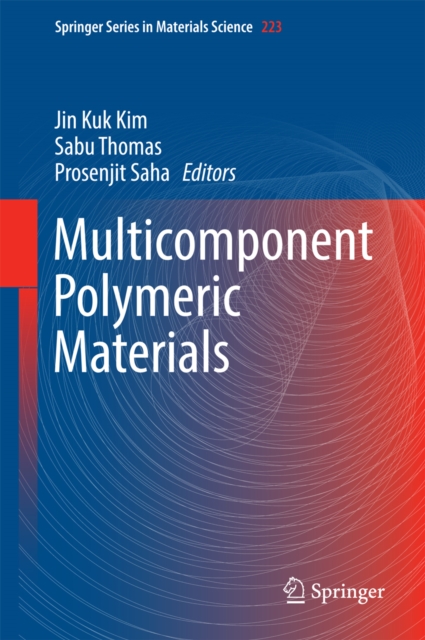
The book offers an in-depth review of the materials design and manufacturing processes employed in the development of multi-component or multiphase polymer material systems.
In many cases rheological measurements are carried out in the simplest of geometries, but the interpretation involved in obtaining the rheological parameters of the test fluids from these measurements is surprisingly complex.
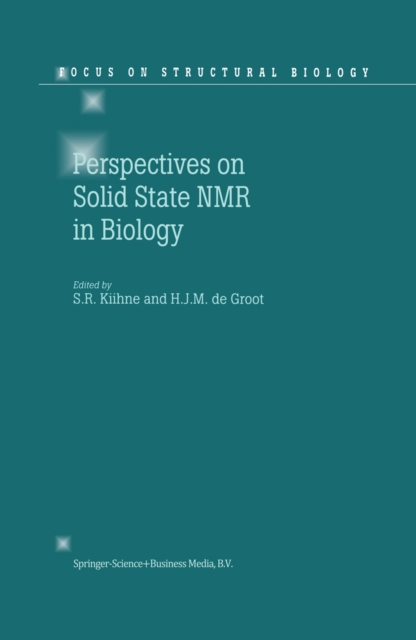
Solid state NMR is rapidly emerging as a universally applicable method for the characterization of ordered structures that cannot be studied with solution methods or diffraction techniques.
This book contains the majority of the papers presented at the NATO Ad- vanced Research Workshop (ARW) held in Burlington, Vermont, USA on October 12-15, 1992.
Bioactive Carbohydrate Polymers is probably the first book dealing with the latest in the field of polysaccharides and related products and their biological activities, especially the immunological effects.
Supercritical fluids which are neither gas nor liquid, but can be compressed gradually from low to high density, are gaining increasing importance as tunable solvents and reaction media in the chemical process industry.
Physical techniques such as X-ray crystallography, IR spectroscopy and solution-phase NMR spectroscopy have played key roles in the development of supramolecular chemistry.
This book contains the texts of the main lectures presented at the NATO Advanced Studies Institute on "e;Advances in Preparation and Properties of Stereoregular Polymers"e; held at Tirrenia near Pisa, Italy, from October 3 to 14, 1978.
Although the title of this book is Paper Chemistry, it should be considered as a text about the chemistry of the formation of paper from aqueous suspensions of fibre and other additives, rather than as a book about the chemistry of the raw material itself.
Polymer Latices, Second Edition is a comprehensive update of the previous edition, High Polymer Latices, taking into account the many developments since it was first published in 1966.
Since the publication of the first edition of The Physics of Glassy Polymers there have been substantial developments in both the theory and application of polymer physics, and many new materials have been introduced.