This volume describes new insights into the main aspects of rubber degradation by material's fatigue, wear and aging evolution, as well as their impact on mechanical rubber properties.
This book provides a comprehensive presentation of the most frequently used high resolution manufacturing techniques available, as well as the polymeric materials used for each of the techniques.
This book presents the fundamental aspects, recent developments in fabrication and characterization techniques, structure, properties, and emerging applications of MXenes.
This book presents the development of electrospun materials, fundamental principles of electrospinning process, controlling parameters, electrospinning strategies, and electrospun nanofibrous structures with specific properties for applications in tissue engineering and regenerative medicine, textile, water treatment, sensor, and energy fields.
Shape Memory Composites Based on Polymers and Metals for 4D Printing is a thorough discussion of the physics and chemistry behind this developing area of materials science.
This book provides an introduction to the micromechanics of fiber-reinforced laminae, which deals with the prediction of the macroscopic mechanical lamina properties based on the mechanical properties of the constituents, i.
This book presents a novel continuum finite deformation framework addressing the complex interactions among electrostatics, species transport, and mechanics in solid networks immersed in a fluid phase of solvent and ions.
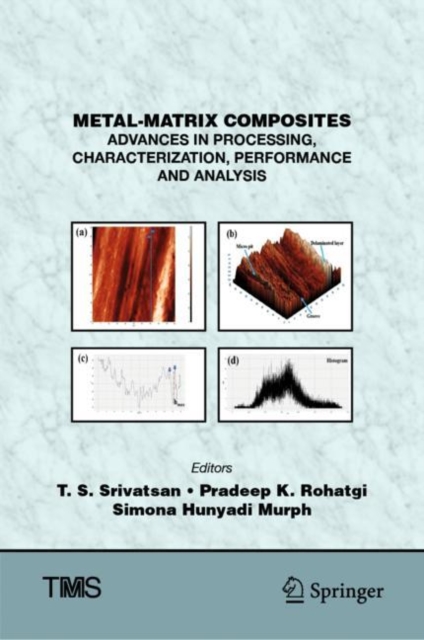
This collection brings together engineers, scientists, scholars, and entrepreneurs to present their novel and innovative contributions in the domain specific to metal-matrix composites and on aspects specific to processing, characterization, mechanical behavior, measurements, failure behavior, and kinetics governing microstructural influences on failure by fracture.
This book contains full papers presented at the First Virtual Conference on Mechanical Fatigue (VCMF 2020), which was organised by the University of Porto (FEUP, Portugal), the Wroclaw University of Science and Technology (Poland), University of Electronic Science and Technology of China (China), Siberian Federal University (Russia), and the ESIS/TC12 Technical Committee (European Structural Integrity Society-ESIS), between 9 and 11 of September 2020.
The book presents recent developments in the field of composites, investigated by Broadband Dielectric Spectroscopy (BDS) and sheds a special focus on nanocomposites.
Mechanics of Composite, Hybrid, and Multifunctional Materials, Fracture, Fatigue, Failure and Damage Evolution, Volume 3 of the Proceedings of the 2021 SEM Annual Conference & Exposition on Experimental and Applied Mechanics, the third volume of four from the Conference, brings together contributions to this important area of research and engineering.
This book presents an authoritative account of the potential of advanced composites such as composites, biocomposites, composites geopolymer, hybrid composites and hybrid biocomposites in aerospace application.
This book focuses on the electrochemical and nanostructural properties of new photoanode/electrolyte combinations used in the development of novel surface-modified nanomaterials for environmental applications.
This book provides a systematic and thorough introduction to the classical laminate theory based on the theory for plane elasticity elements and classical (shear-rigid) plate elements.
This book bridges disparate fields in an exploration of the phenomena and applications surrounding molecular mobility in glassy materials experiencing inelastic deformation.
The book provides an up-to-date account of the various techniques of fabrication & functionalization of electrospun nanofibers as well as recent advancements.
This book summarizes many of the recent research accomplishments in the area of polyvinylchloride (PVC)-based blends and their preparation, characterization and applications.
This book provides valuable information about fiber-reinforced polymer composites, with emphasis in the process of water absorption by experiments and simulation.
This book presents selected peer-reviewed contributions from the 2020 International Conference on "e;Physics and Mechanics of New Materials and Their Applications"e;, PHENMA 2020 (26-29 March 2021, Kitakyushu, Japan), focusing on processing techniques, physics, mechanics, and applications of advanced materials.
This book looks at advanced nanocomposites, introducing long-awaited concepts towards bridging the gap between nanostructured optical materials and next-generation imaging systems.
This book examines ten materials-flint, clay, iron, gold, glass, cement, rubber, polyethylene, aluminum, and silicon-explaining how they formed, how we discovered them, why they have the properties they do, and how they have transformed our lives.
This book introduces the physics and chemistry of plastic scintillators (fluorescent polymers) that are able to emit light when exposed to ionizing radiation, discussing their chemical modification in the early 1950s and 1960s, as well as the renewed upsurge in interest in the 21st century.
This book provides in-depth coverage of smart materials, including electroactive polymers (EAPs), synthetic muscle, pneumatic artificial muscle, soft pneumatics, hydro-muscle, and other cutting-edge transformational smart material technologies.
This book is intended to raise awareness about the use of sustainable Textile-Reinforced Mortar (TRM) composite systems, including plant fibers, for civil engineering applications.
This book provides understanding of raw materials, manufacturing and biomedical applications of different polymeric and natural composites such as drug delivery, growth factor delivery, orthopedics, dentistry and wound dressing.
This companion volume to "e;Fundamental Polymer Science"e; (Gedde and Hedenqvist, 2019) offers detailed insights from leading practitioners into experimental methods, simulation and modelling, mechanical and transport properties, processing, and sustainability issues.
This book offers a timely yet comprehensive snapshot of innovative research and developments at the interface between manufacturing, materials and mechanical engineering, and quality assurance.
This book gathers the proceedings of the 4th International Conference on Mechanical Engineering and Applied Composite Materials (MEACM), held in Beijing, China on October 24-25, 2020.
This collection brings together engineers, scientists, scholars, and entrepreneurs to present their novel and innovative contributions in the domain specific to metal-matrix composites and on aspects specific to modeling, analysis, measurements, and observations specific to microstructural advances.