This graduate/upper-division undergraduate textbook provides a solid grounding in the theory underlying the design and analysis of hydraulic structures, including spillways, energy dissipators, culverts, flow measuring structures and others.
This thesis demonstrates the first use of high-speed ultrasound imaging to non-invasively probe how the interior of a dense suspension responds to impact.
This book presents the results of a European-Chinese collaborative research project, Manipulation of Reynolds Stress for Separation Control and Drag Reduction (MARS), including an analysis and discussion of the effects of a number of active flow control devices on the discrete dynamic components of the turbulent shear layers and Reynolds stress.
This unique text provides engineering students and practicing professionals with a comprehensive set of practical, hands-on guidelines and dozens of step-by-step examples for performing state-of-the-art, reliable computational fluid dynamics (CFD) and turbulence modeling.
This book provides a comprehensive introduction to the kinetic theory for describing flow problems from molecular scale, hydrodynamic scale, to Darcy scale.
This book gathers contributions to the 21st biannual symposium of the German Aerospace Aerodynamics Association (STAB) and the German Society for Aeronautics and Astronautics (DGLR).
This textbook is for a one semester introductory course in thermodynamics, primarily for use in a mechanical or aerospace engineering program, although it could also be used in an engineering science curriculum.
This book describes and explains the basis of bio-inspired, leading-edge tubercles based on humpback whale flippers as passive but effective flow control devices, as well as providing a comprehensive practical guide in their applications.
This volume collects the edited and reviewed contributions presented in the 8th iTi Conference on Turbulence, held in Bertinoro, Italy, in September 2018.
This textbook presents a modern treatment of fundamentals of heat and mass transfer in the context of all types of multiphase flows with possibility of phase-changes among solid, liquid and vapor.
This revised and updated second edition is designed for the first course in mechanics of materials in mechanical, civil and aerospace engineering, engineering mechanics, and general engineering curricula.
This book explores the dynamics of planetary and stellar fluid layers, including atmospheres, oceans, iron cores, and convective and radiative zones in stars, describing the different theoretical, computational and experimental methods used to study these problems in fluid mechanics, including the advantages and limitations of each method for different problems.
This book presents a collection of selected reviews from PLMMP 2018 that address modern problems in the fields of liquids, solutions and confined systems, critical phenomena, as well as colloidal and biological systems.
This Brief deals with Performance Evaluation Criteria (PEC) for heat exchangers, single phase flow, objective function and constraints, algebraic formulation, constant flow rate, fixed flow area, thermal resistance, heat exchanger effectiveness, relations for St and f, finned tube banks, variations of PEC, reduced exchanger flow rate, exergy based PEC, PEC for two-phase heat exchangers, work consuming, work producing and heat actuated systems.
This Brief stands as a primer for heat transfer fundamentals in heat transfer enhancement devices, the definition of heat transfer area, passive and active enhancement techniques and their potential and benefits and commercial applications.
This book provides state-of-art information on high-accuracy scientific computing and its future prospects, as applicable to the broad areas of fluid mechanics and combustion, and across all speed regimes.
The book presents an advanced but accessible overview of some of the most important sub-branches of magnetohydrodynamics (MHD): stability theory, magnetic topology, relaxation theory and magnetic reconnection.
This handbook summarizes the research results on hydraulic problems in centrifugal pump design and describes the state of the art in a comprehensive way.
Many problems in mechanics involve deformable domains with moving boundaries, including fluid-structure interaction, multiphase flows, flows over soft tissues and textiles, or flows involving accretion/erosion to name but a few.
This book gives a mathematical insight--including intermediate derivation steps--into engineering physics and turbulence modeling related to an anisotropic modification to the Boussinesq hypothesis (deformation theory) coupled with the similarity theory of velocity fluctuations.
Gathering contributions by the most prominent researchers in a highly specialised field, this proceedings volume clarifies selected aspects of the physics of turbulent cascades and their statistical universalities under complex stationary and non-homogeneous conditions.
This book provides design engineers using gas-liquid two-phase flow in different industrial applications the necessary fundamental understanding of the two-phase flow variables.
This book aims to be the reference book in the area of oxyfuel combustion, covering the fundamentals, design considerations and current challenges in the field.
This book addresses the concepts of unstable flow solutions, convective instability and absolute instability, with reference to simple (or toy) mathematical models, which are mathematically simple despite their purely abstract character.
Back Cover Text:This book addresses the study of the gaseous state of granular matter in the conditions of rapid flow caused by a violent and sustained excitation.
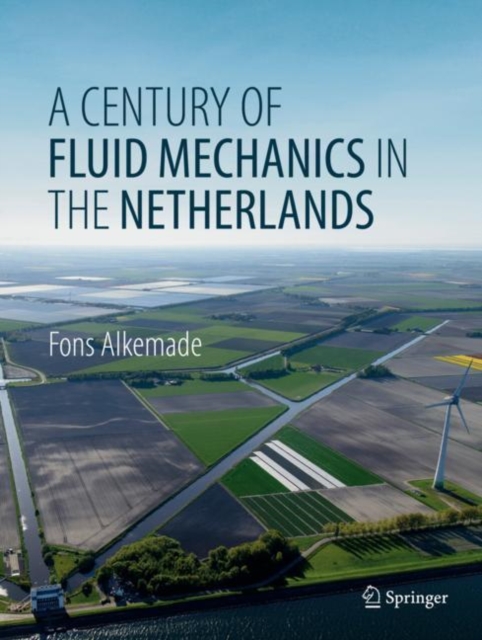
In October 1918, Jan Burgers, 23 years old, started as professor of 'aerodynamics, hydrodynamics, and their applications' at the Technical University in Delft.