This book illustrates a new quantitative risk analysis model for road tunnels that is capable of evaluating the role of infrastructure measures, equipment and management procedures as prescribed by EU Directive 2004/54/EC.
Back Cover Text:This book addresses the study of the gaseous state of granular matter in the conditions of rapid flow caused by a violent and sustained excitation.
This book is an expanded form of the monograph, Dropwise Condensation on Inclined Textured Surfaces, Springer, 2013, published earlier by the authors, wherein a mathematical model for dropwise condensation of pure vapor over inclined textured surfaces was presented, followed by simulations and comparison with experiments.
This unique book provides a unified and systematic account of internal, external and unsteady slow viscous flows, including the latest advances of the last decade, some of which are due to the author.
Working Guide to Reservoir Rock Properties and Fluid Flow provides an introduction to the properties of rocks and fluids that are essential in petroleum engineering.
In 2007, author and broadcaster Chris Foote Wood achieved a lifelong ambition - to visit every seaside pier in England, Wales and the Isle of Man - all 56 of them!
Magnetorheological fluids, smart fluids which change viscosity in the presence of a magnetic field, are of great commercial interest for many engineering applications such as shock absorbers and dampers in aerospace.
The manipulation of cells and microparticles within microfluidic systems using external forces is valuable for many microscale analytical and bioanalytical applications.
Bicontinuous interfacially jammed emulsion gels, now commonly termed 'bijels' are a class of soft materials, in which interpenetrating, continuous domains of two immiscible fluids are maintained in a rigid arrangement by a jammed layer of colloidal particles at their interface.
Bicontinuous interfacially jammed emulsion gels, now commonly termed 'bijels' are a class of soft materials, in which interpenetrating, continuous domains of two immiscible fluids are maintained in a rigid arrangement by a jammed layer of colloidal particles at their interface.
Historically pharmaceutical and fine chemical products have been synthesised using batch methods, but increasingly chemists are looking towards flow chemistry as a greener and more efficient alternative.
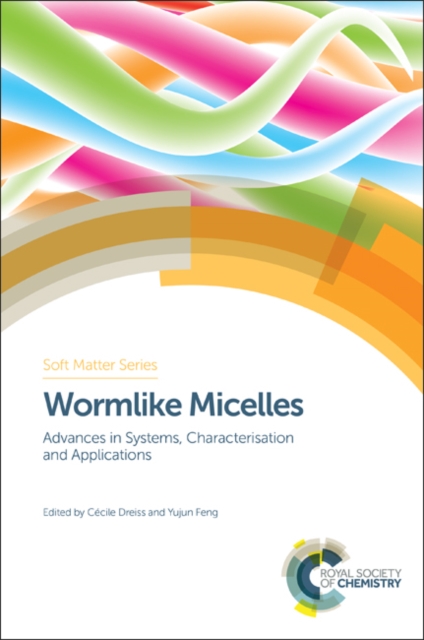
Wormlike micelles are elongated flexible self-assembled structures created from the aggregation of amphiphiles and their resulting dynamic networks have gained attention for a number of uses, particularly in the oil industry.
This book is intended for self-study or as a companion of lectures delivered to post-graduate students on the subject of the computational prediction of complex turbulent flows.
This volume records the presentations and discussions at the Second Royal Society-Unilever Indo-UK Forum on 'Dynamics of Complex Fluids' which was the culmination of the six-month programme on this topic organised at the Issac Newton Institute for Mathematical Sciences, Cambridge University.
Modern day high-performance computers are making available to 21st-century scientists solutions to rheological flow problems of ever-increasing complexity.
First published by McGraw-Hill in 1989, this book provides a unified treatment of cavitation, a phenomenon which extends across the boundaries of many fields.
This book highlights some recent advances in interfacial research in the fields of fluid mechanics and materials science at the beginning of the twenty-first century.
This book gives a systematic exposition of abrasive erosion and corrosion of hydraulic machinery in both theory and engineering practice, and is the first comprehensive volume to cover this area in depth.
Wormlike micelles are elongated flexible self-assembled structures created from the aggregation of amphiphiles and their resulting dynamic networks have gained attention for a number of uses, particularly in the oil industry.
The current book, Advanced Fluid Mechanics and Heat Transfer is based on author's four decades of industrial and academic research in the area of thermofluid sciences including fluid mechanics, aero-thermodynamics, heat transfer and their applications to engineering systems.
Fluid Power Circuits and Controls: Fundamentals and Applications, Second Edition, is designed for a first course in fluid power for undergraduate engineering students.
Fluid Power Circuits and Controls: Fundamentals and Applications, Second Edition, is designed for a first course in fluid power for undergraduate engineering students.
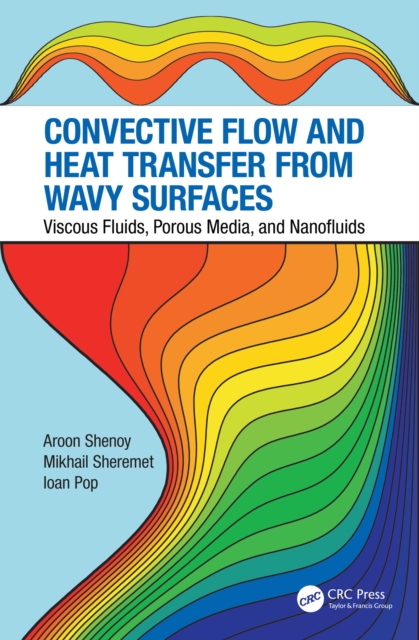
Convective Flow and Heat Transfer from Wavy Surfaces: Viscous Fluids, Porous Media, and Nanofluids addresses the wavy irregular surfaces in heat transfer devices.
The main objective of the book is to highlight the modeling of magnetic particles with different shapes and magnetic properties, to provide graduate students and young researchers information on the theoretical aspects and actual techniques for the treatment of magnetic particles in particle-based simulations.
The second edition of this long-time bestseller provides a framework for designing and understanding sprays for a wide array of engineering applications.
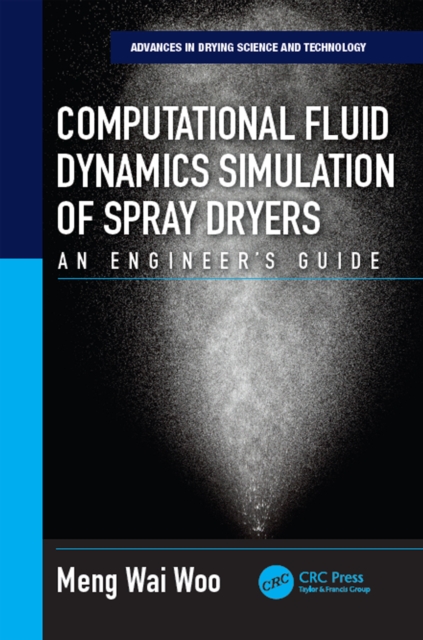
Bridging the gap in understanding between the spray drying industry and the numerical modeler on spray drying, Computational Fluid Dynamics Simulation of Spray Dryers: An Engineer's Guide shows how to numerically capture important physical phenomena within a spray drying process using the CFD technique.
Taking a highly pragmatic approach to presenting the principles and applications of chemical engineering, this companion text for students and working professionals offers an easily accessible guide to solving problems using computers.
Computational Methods for Complex Liquid-Fluid Interfaces highlights key computational challenges involved in the two-way coupling of complex liquid-fluid interfaces.
In this concise yet comprehensive book, the author discusses the principles of mass, momentum, and energy transport, and derives balance equations for single-component fluids and multicomponent mixtures based on the direct application of natural laws and principles of thermodynamics.