Fundamentals of Combustion Processes is designed as a textbook for an upper-division undergraduate and graduate level combustion course in mechanical engineering.
This monograph is devoted to the description of the physical fundamentals of laser refractography-a novel informational-measuring technique for the diagnostics of optically inhomogeneous media and flows, based on the idea of using spatially structured probe laser radiation in combination with its digital recording and c- puter techniques for the differential processing of refraction patterns.
The aim of the School on Rheology of Complex fluids is to bring together young researchers and teachers from educational and R&D institutions, and expose them to the basic concepts and research techniques used in the study of rheological behavior of complex fluids.
Computational Cardiovascular Mechanics provides a cohesive guide to creating mathematical models for the mechanics of diseased hearts to simulate the effects of current treatments for heart failure.
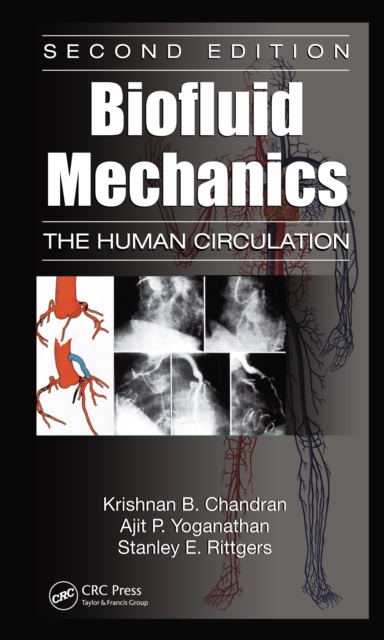
Designed for senior undergraduate or first-year graduate students in biomedical engineering, Biofluid Mechanics: The Human Circulation, Second Edition teaches students how fluid mechanics is applied to the study of the human circulatory system.
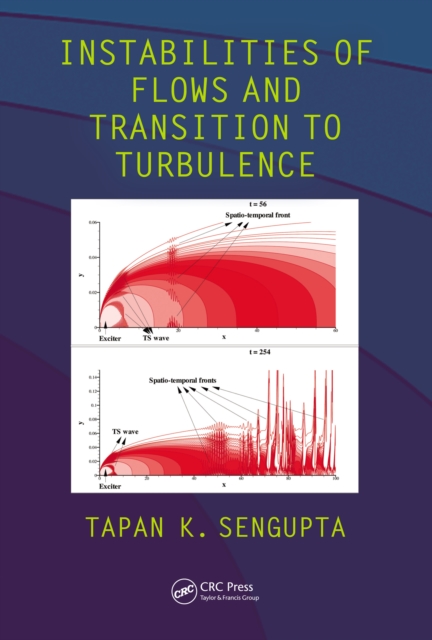
This book covers material ranging from classical hydrodynamic instability to contemporary research areas, including bluff body flow instability and mixed convection flows.
Although computer technology has dramatically improved the analysis of complex transport phenomena, the methodology has yet to be effectively integrated into engineering curricula.
Featuring contributions by leading researchers in the field, Nanoparticle Heat Transfer and Fluid Flow explores heat transfer and fluid flow processes in nanomaterials and nanofluids, which are becoming increasingly important across the engineering disciplines.
While professional courses and how-to manuals can prepare us for expected events that will occur in the course of our careers, there remains an untapped reservoir of life experience that cannot be prepared for in training or study.
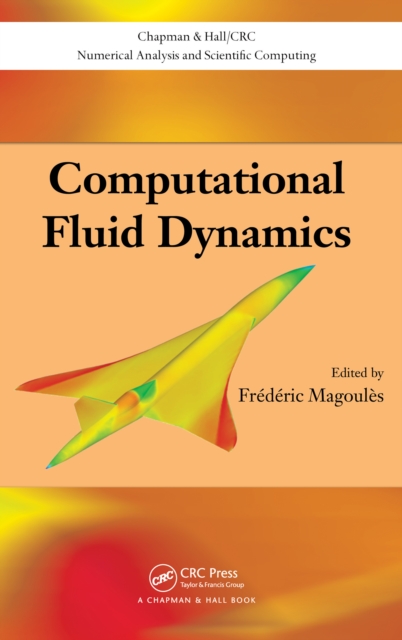
Exploring new variations of classical methods as well as recent approaches appearing in the field, Computational Fluid Dynamics demonstrates the extensive use of numerical techniques and mathematical models in fluid mechanics.
Designed for senior undergraduate or first-year graduate students in biomedical engineering, Biofluid Mechanics: The Human Circulation, Second Edition teaches students how fluid mechanics is applied to the study of the human circulatory system.
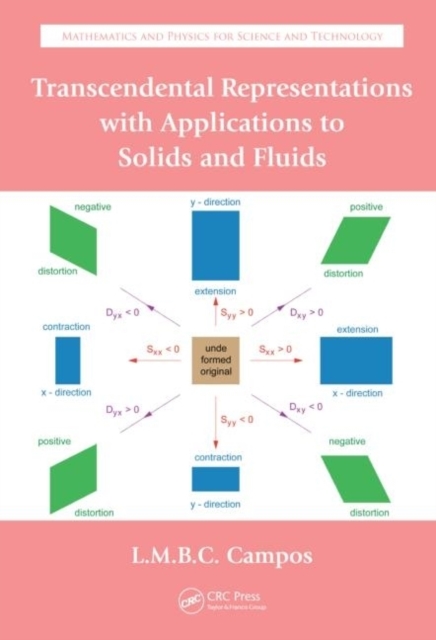
Building on the author's previous book in the series, Complex Analysis with Applications to Flows and Fields (CRC Press, 2010), Transcendental Representations with Applications to Solids and Fluids focuses on four infinite representations: series expansions, series of fractions for meromorphic functions, infinite products for functions with infinit
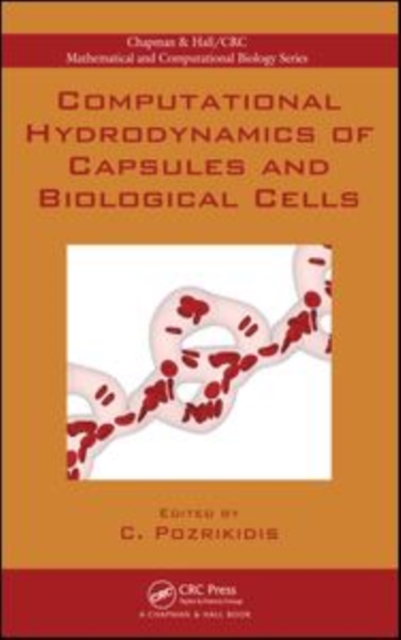
Spanning biological, mathematical, computational, and engineering sciences, computational biofluiddynamics addresses a diverse family of problems involving fluid flow inside and around living organisms, organs, tissue, biological cells, and other biological materials.
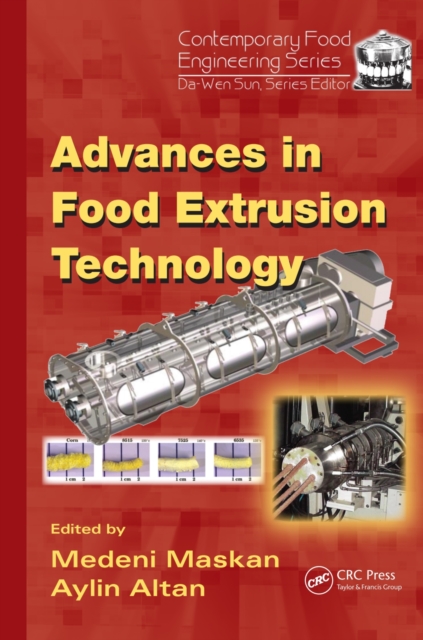
A fresh view of the state-of-the-art, Advances in Food Extrusion Technology focuses on extruder selection, extrudate development, quality parameters, and troubleshooting in the 21st century extrusion process.
In the critical work of maintaining power plant machinery, operating difficulties with centrifugal pumps will inevitably occur because of the essential requirement for electric power plants to operate at all times throughout the year.
Despite generations of change and recent, rapid developments in gas dynamics and hypersonic theory, relevant literature has yet to catch up, so those in the field are generally forced to rely on dated monographs to make educated decisions that reflect present-day science.
The text thoroughly discusses the fundamentals of flow resistance over a solid body, the frictional resistance of flow through a granular bed, and the flow phenomena of particles, which are essential requirements for solid-fluid operations in various process units, especially in mineral and chemical industries.
Improving our understanding of friction, lubrication, and fatigue, Modeling and Analytical Methods in Tribology presents a fresh approach to tribology that links advances in applied mathematics with fundamental problems in tribology related to contact elasticity, fracture mechanics, and fluid film lubrication.
Detailing the major developments of the last decade, the Handbook of Hydraulic Fluid Technology, Second Edition updates the original and remains the most comprehensive and authoritative book on the subject.
Understand How to Use and Develop Meshfree TechniquesAn Update of a Groundbreaking WorkReflecting the significant advances made in the field since the publication of its predecessor, Meshfree Methods: Moving Beyond the Finite Element Method, Second Edition systematically covers the most widely used meshfree methods.
Illustrates Calculations Using Machine and Technological ProcessesThe conjugate heat transfer (CHT) problem addresses the thermal interaction between a body and fluid flowing over or through it.
Published nearly a decade ago, Fluid Machinery: Performance, Analysis, and Design quickly became popular with students, professors, and professionals because of its comprehensive and comprehensible introduction to the fluid mechanics of turbomachinery.
Compared to the traditional modeling of computational fluid dynamics, direct numerical simulation (DNS) and large-eddy simulation (LES) provide a very detailed solution of the flow field by offering enhanced capability in predicting the unsteady features of the flow field.
Breaking down the complicated concepts of speed, acceleration, torque, fluid mechanics, and surface physics, Physics of Sailing provides a lively, easily accessible introduction to the basic science underlying the sport of sailing.
Two-phase nano- and micro-thermal control device research is now proving relevant to a growing range of modern applications, including those in cryogenics, thermal engineering, MEMS, and aerospace engineering.
The understanding and control of transport phenomena in materials processing play an important role in the improvement of conventional processes and in the development of new techniques.
"e;With the appearance and fast evolution of high performance materials, mechanical, chemical and process engineers cannot perform effectively without fluid processing knowledge.
Centrifugal and Rotary Pumps offers both professionals and students a concise reference detailing the design, performance, and principles of operation of the different pumps types defined by the Hydraulic Institute.
Processing Foods: Quality Optimization and Process Assessment provides a large body of updated information - helping researchers and industrialists make use of new concepts, technologies and approaches that are at the heart of modern food research.
Written by international experts from industry, research centers, and academia, Mathematical Modeling of Food Processing discusses the physical and mathematical analysis of transport phenomena associated with food processing.
Drawing from the third edition of the bestselling Powder Technology Handbook, this book is focused solely on analyzing the fundamental properties and behavior of particles and particle beds.
With a novel approach that bridges theory and practice, this book uses a uniquely structured series of chapters and appendices to present the basic theory and equations of fluid flow with just the right amount of detail and discussion.
The boundary-element method is a powerful numerical technique for solving partial differential equations encountered in applied mathematics, science, and engineering.
Before applying multigrid methods to a project, mathematicians, scientists, and engineers need to answer questions related to the quality of convergence, whether a development will pay out, whether multigrid will work for a particular application, and what the numerical properties are.
Thoroughly revised and updated, the new edition of the best-selling MEMS Handbook is now presented as a three-volume set that offers state-of-the-art coverage of microelectromechanical systems.
An ideal textbook for civil and environmental, mechanical, and chemical engineers taking the required Introduction to Fluid Mechanics course, Fluid Mechanics for Civil and Environmental Engineers offers clear guidance and builds a firm real-world foundation using practical examples and problem sets.
On the job or in the field, when facing a problem with differential equations and boundary conditions, most likely you don't have time to read through several publications in search of a method that may or may not solve your problem.
Due to the increase in computational power and new discoveries in propagation phenomena for linear and nonlinear waves, the area of computational wave propagation has become more significant in recent years.
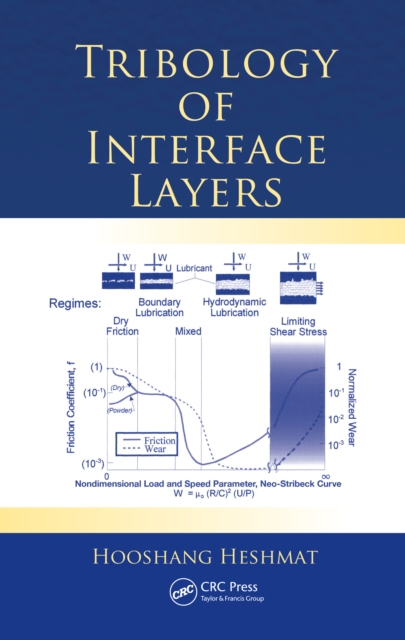
To this point, the field of lubrication has been conceptualized using several noncontiguous modes of operation- boundary, fluid-film, and dry and solid lubrication.