Reducing and controlling the level of vibration in a mechanical system leads to an improved work environment and product quality, reduced noise, more economical operation, and longer equipment life.
Continuum Models for Phase Transitions and Twinning in Crystals presents the fundamentals of a remarkably successful approach to crystal thermomechanics.
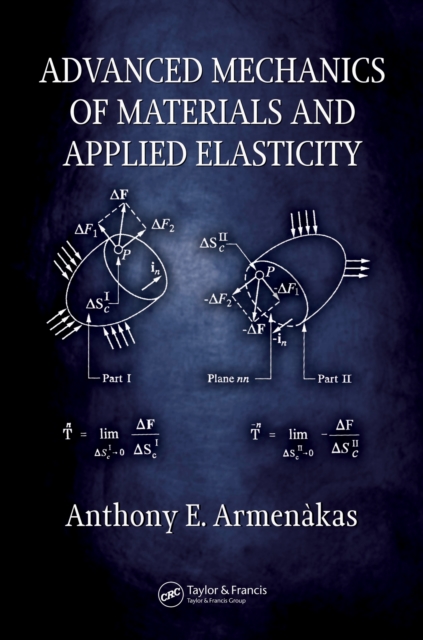
This book presents both differential equation and integral formulations of boundary value problems for computing the stress and displacement fields of solid bodies at two levels of approximation - isotropic linear theory of elasticity as well as theories of mechanics of materials.
Understanding the elastoplastic deformation of metals and geomaterials, including the constitutive description of the materials and analysis of structure undergoing plastic deformation, is an essential part of the background required by mechanical, civil, and geotechnical engineers as well as materials scientists.
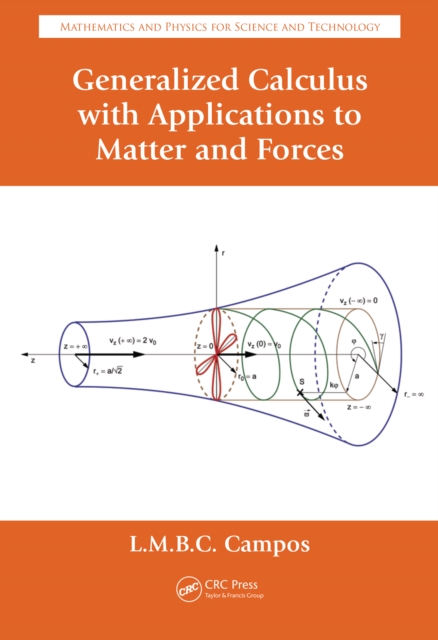
Combining mathematical theory, physical principles, and engineering problems, Generalized Calculus with Applications to Matter and Forces examines generalized functions, including the Heaviside unit jump and the Dirac unit impulse and its derivatives of all orders, in one and several dimensions.
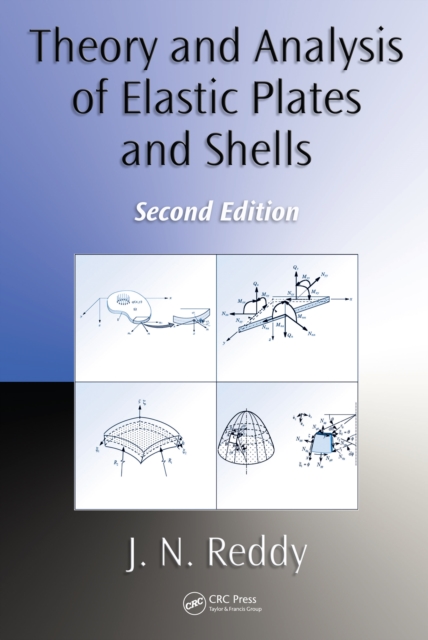
Because plates and shells are common structural elements in aerospace, automotive, and civil engineering structures, engineers must understand the behavior of such structures through the study of theory and analysis.
During many of the earliest American and Russian space missions, experiments were performed using cables to connect people and objects to spacecraft in orbit.
This book presents a comprehensive review, evaluation, and summary of the dependence of mechanical properties on grain and particle parameters of monolithic ceramics and ceramic composites.
This progressive volume of lectures, written by leading experts on current developments in the field, is a must-read for engineers in physics, mechanics and engineering applications alike.
Due to their unique properties, rubber materials are found in multiple engineering applications such as tires, engine mounts, shock absorbers, flexible joints, seals, etc.
Structural Analysis of Polymeric Composite Materials, Second Edition introduces the mechanics of composite materials and structures and combines classical lamination theory with macromechanical failure principles for prediction and optimization of composite structural performance.
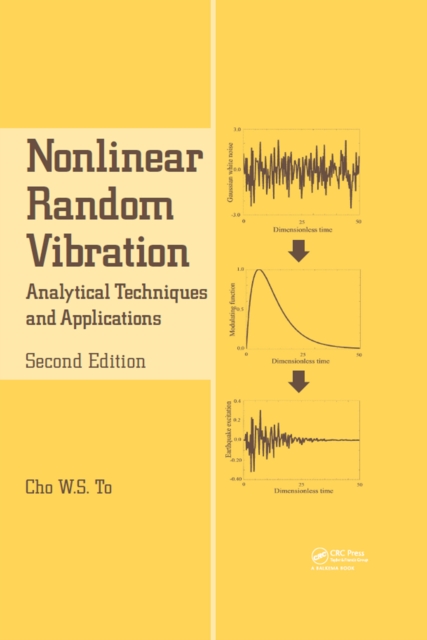
This second edition of the book, Nonlinear Random Vibration: Analytical Techniques and Applications, expands on the original edition with additional detailed steps in various places in the text.
A comprehensive treatise on the hot working of aluminum and its alloys, Hot Deformation and Processing of Aluminum Alloys details the possible microstructural developments that can occur with hot deformation of various alloys, as well as the kind of mechanical properties that can be anticipated.
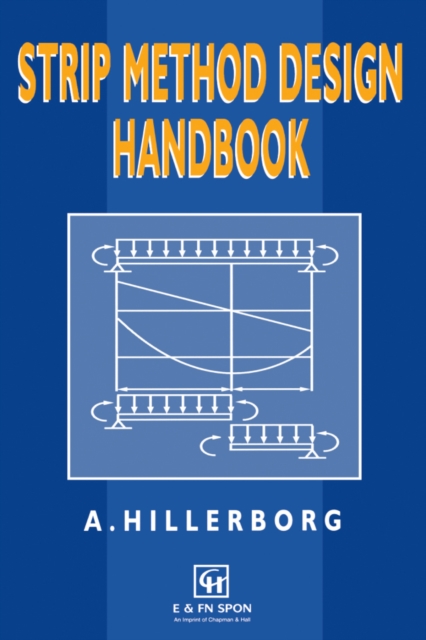
The Strip Method Design Handbook is a thorough guide to the use of the strip method, developed by Arne Hillerborg, for design of reinforced concrete slabs.
Before a structure or component can be completed, before any analytical model can be constructed, and even before the design can be formulated, you must have a fundamental understanding of damage behavior in order to produce a safe and effective design.
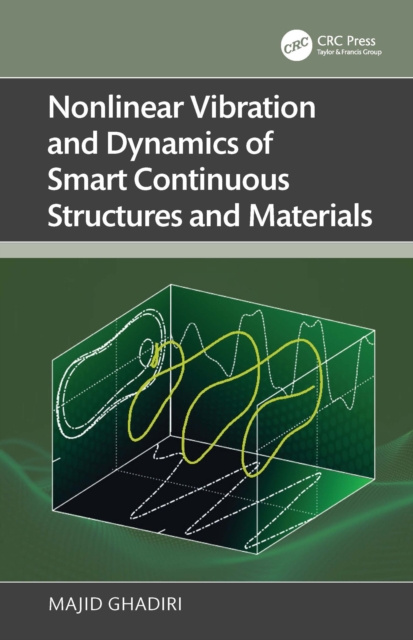
Nonlinear Vibration and Dynamics of Smart Continuous Structures and Materials delves into intricate subjects concerning the analysis of nonlinear vibration issues in continuous structures.
Elastic plates form a class of very important mechanical structures that appear in a wide range of practical applications, from building bodies to microchip production.
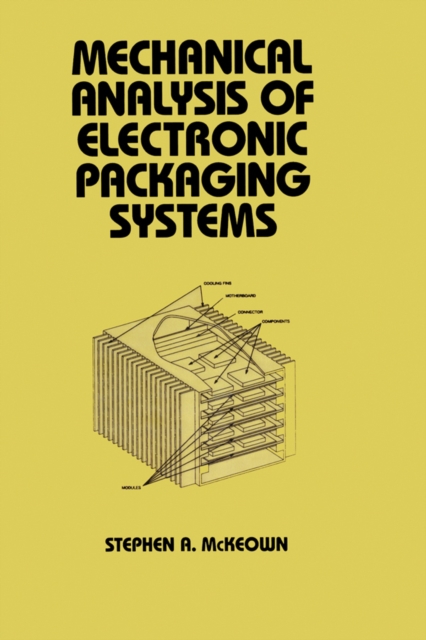
"e;Fills the niche between purely technical engineering texts and sophisticated engineering software guides-providing a pragmatic, common sense approach to analyzing and remedying electronic packaging configuration problems.
Presents Concepts That Can Be Used in Design, Processing, Testing, and Control of Composite MaterialsIntroduction to the Micromechanics of Composite Materials weaves together the basic concepts, mathematical fundamentals, and formulations of micromechanics into a systemic approach for understanding and modeling the effective material behavior of co
Although the study of classical thermoelasticity has provided information on linear systems, only recently have results on the asymptotic behavior completed our basic understanding of the generic behavior of solutions.
While the theory and application of finite elements methods can be extended to incompatible, hybrid, and mixed element methods, important issues, such as determining the reliability of the solution of incompatible multivariable elements, along with a common perception of impracticality, have hindered the widespread implementation of these methods.
Explicitly reintroducing the idea of modeling to the analysis of structures, Analytical Estimates of Structural Behavior presents an integrated approach to modeling and estimating the behavior of structures.
Electroacoustic devices such as microphones and loudspeakers are used everywhere from cars and mobile phones to homes, places of worship, and sports arenas.
Constitutive Models for Rubber XIII is a comprehensive compilation of the oral and poster contributions to the XIII European Conference on Constitutive Models for Rubbers (Istanbul, Turkiye, 26-28 June 2024).
Constitutive Models for Rubber XIII is a comprehensive compilation of the oral and poster contributions to the XIII European Conference on Constitutive Models for Rubbers (Istanbul, Turkiye, 26-28 June 2024).
In the last decade, the number of complex problems facing engineers has increased, and the technical knowledge required to address and mitigate them continues to evolve rapidly.
This proceedings contains the best contributions to the series of seminars held in Vienna (1992), Miskolc, Hungary (1993 and 1994) and Vienna (1995) and provides a valuable resource for those concerned with the teaching of fracture and fatigue.
The application of fracture mechanics to cementitious materials allows the investigation of many important factors relating to the durability of these materials.
Structural Stability in Engineering Practice elucidates the various problems associated with attaining stability, and provides the results for practical use by the design engineer.
Using a mold for centrifugal casting as an example, discusses the types of apparatus and tools that are commonly affected by thermal fatigue during industrial processes, and examines the various factors that lead to such failure.
This book offers a collection of original peer-reviewed contributions presented at the 10th International Congress on Design and Modeling of Mechanical Systems (CMSM'2023), held on December 18-20, 2023, in Hammamet, Tunisia.
This book offers a collection of original peer-reviewed contributions presented at the 10th International Congress on Design and Modeling of Mechanical Systems (CMSM'2023), held on December 18-20, 2023, in Hammamet, Tunisia.
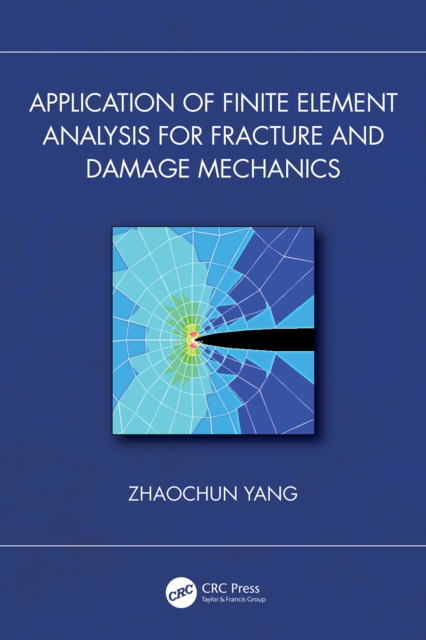
Application of Finite Element Analysis for Fracture and Damage Mechanics focuses on the finite element analysis of various material models and their relevant fracture and damage models using this advanced software.
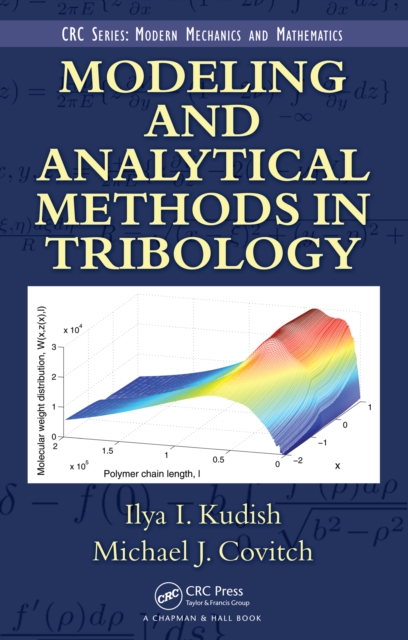
Improving our understanding of friction, lubrication, and fatigue, Modeling and Analytical Methods in Tribology presents a fresh approach to tribology that links advances in applied mathematics with fundamental problems in tribology related to contact elasticity, fracture mechanics, and fluid film lubrication.
There are various techniques to optimize either structural parameters, or structural controllers, but there are not many techniques that can simultaneously optimize the structural parameters and controller.