This book provides an in-depth and systematic introduction to transmissibility-based system identification and its role in modern structural health monitoring (SHM).
This book provides an in-depth and systematic introduction to transmissibility-based system identification and its role in modern structural health monitoring (SHM).
The coupled response of solid materials to multiple fields, such as deformation, heat, electricity, and magnetism, plays a crucial role in modern engineering applications, from soft robotics to energy storage.
This book provides a state-of-the-art overview of computational methods and virtual engineering tools, featuring contributions from leading international researchers presented at the 11th International Conference on Computational Mechanics (COMEC-2025).
This book provides a state-of-the-art overview of computational methods and virtual engineering tools, featuring contributions from leading international researchers presented at the 11th International Conference on Computational Mechanics (COMEC-2025).
This volume is the second edition of Transmission Electron Microscopy: Diffraction, Imaging, and Spectrometry building upon the foundation of the first edition while significantly expanding and updating its scope.
Structural Mechanics provides an in-depth coverage of mechanics of structures with an approach that departs from the conventional strength of materials approach.
This book is to provide the basic concepts and formulations related to the theory of elasticity, including the strain and stress tensors, the constitutive law, the principal strains and principal stresses, the plain stress and plain strain problems, etc.
This book brings together the latest research on vibration fatigue and related topics from the first international event entirely dedicated to the field: a symposium held in Udine, Italy, on September 17–18, 2025, celebrating the 40th anniversary of Turan Dirlik’s doctoral thesis, which introduced the formula for the probability distribution of rainflow ranges.
This book brings together the latest research on vibration fatigue and related topics from the first international event entirely dedicated to the field: a symposium held in Udine, Italy, on September 17–18, 2025, celebrating the 40th anniversary of Turan Dirlik’s doctoral thesis, which introduced the formula for the probability distribution of rainflow ranges.
This book is to provide the basic concepts and formulations related to the theory of elasticity, including the strain and stress tensors, the constitutive law, the principal strains and principal stresses, the plain stress and plain strain problems, etc.
This book focuses on bolted conical-cylindrical shells in aero-engine thin-walled structures, investigating their nonlinear dynamic behavior under extreme service conditions.
This book focuses on bolted conical-cylindrical shells in aero-engine thin-walled structures, investigating their nonlinear dynamic behavior under extreme service conditions.
'Structural mechanics in reactor technology, LWR Pressure Components' is the proceedings and transactions of the international conference on structural mechanics in reactor technology, held in 1987.
'Structural mechanics in reactor technology, LWR Pressure Components' is the proceedings and transactions of the international conference on structural mechanics in reactor technology, held in 1987.
The advantages of composite materials include a high specific strength and stiffness, formability, and a comparative resistance to fatigue cracking and corrosion.
Known as the bible of biomedical engineering, The Biomedical Engineering Handbook, Fourth Edition, sets the standard against which all other references of this nature are measured.
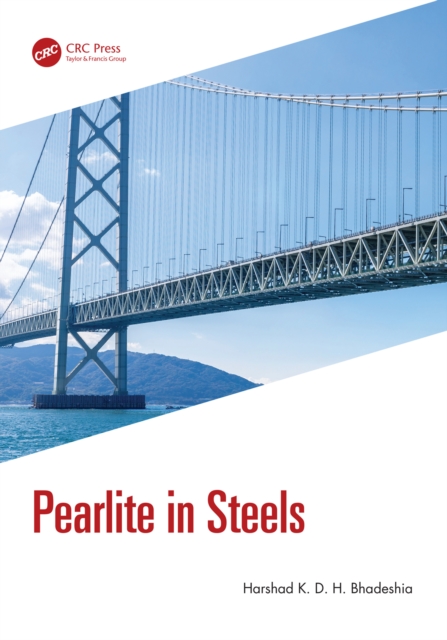
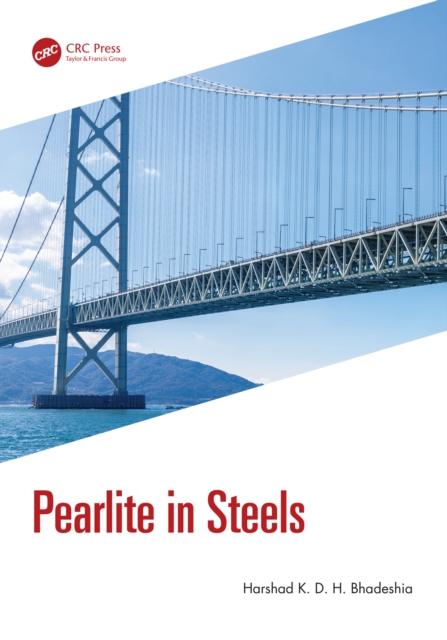
Pearlitic steel is the strongest commercially available mass-produced alloy, and pearlite is used in a myriad of applications, from the reinforcement of tyres in every single road vehicle in the world, to the creation of pathways across troubled waters.
Pearlitic steel is the strongest commercially available mass-produced alloy, and pearlite is used in a myriad of applications, from the reinforcement of tyres in every single road vehicle in the world, to the creation of pathways across troubled waters.
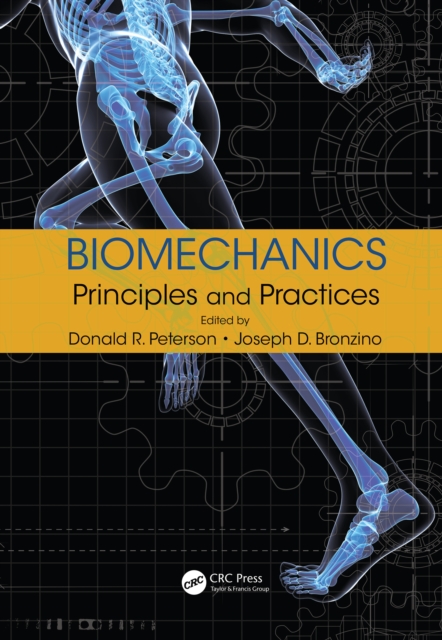
This book draws on material from the biomechanics section of The Biomedical Engineering Handbook, Fourth Edition, and includes additional chapters containing highly relevant, cutting-edge material dealing with cellular mechanics.
This is a comprehensive guide to dielectric elastomer composites (DECs), which play an integral role in new electromechanically active smart-material technologies.
This is a comprehensive guide to dielectric elastomer composites (DECs), which play an integral role in new electromechanically active smart-material technologies.
Biomechanics of Human Motion: Basics and Beyond for the Health Professions presents a straightforward approach to the basic principles, theories and applications of biomechanics and provides numerous techniques and examples for approaching biomechanical situations enhanced by healthcare professionals.
Biomechanics of Human Motion: Basics and Beyond for the Health Professions presents a straightforward approach to the basic principles, theories and applications of biomechanics and provides numerous techniques and examples for approaching biomechanical situations enhanced by healthcare professionals.
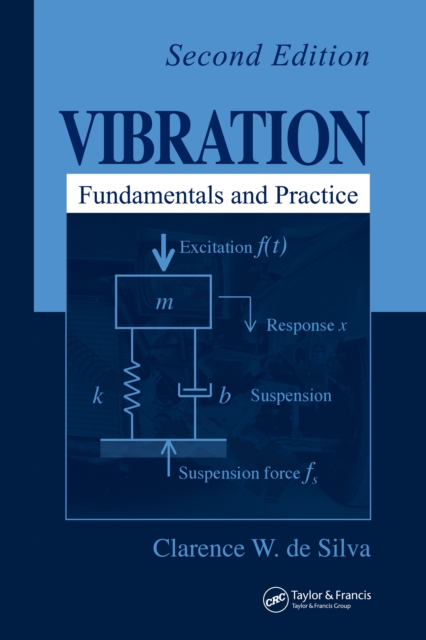
Maintaining the outstanding features and practical approach that led the bestselling first edition to become a standard textbook in engineering classrooms worldwide, Clarence de Silva's Vibration: Fundamentals and Practice, Second Edition remains a solid instructional tool for modeling, analyzing, simulating, measuring, monitoring, testing, controlling, and designing for vibration in engineering systems.
Superplasticity is the ability of polycrystalline materials under certain conditions to exhibit extreme tensile elongation in a nearly homogeneous/isotropic manner.
Das Werk beschreibt erstmalig in einer geschlossenen Form eine Simulationsmethode zur schnellen Berechnung von Kontakteigenschaften und Reibung zwischen rauen Oberflächen.
This monograph presents recent research findings on fracture properties and behavior of the composites, and their damage and cracking process under both quasi-static and impact loading conditions.
This collection on Mechanics of Generalized Continua - from Micromechanical Basics to Engineering Applications"e; brings together leading scientists in this field from France, Russian Federation, and Germany.
This is the second volume of a two-volume work which summarizes in an edited format and in a fairly comprehensive manner many of the recent technical research accomplishments in the area of Elastomers.
In-situ scattering and diffraction measurements using synchrotron and neutron beam lines have become a viable tool to look at the non-equilibrium processing of advanced materials.
Decoupling or non-interactive control has attracted considerable research attention since the 1960s when control engineers started to deal with multivariable systems.