This book provides readers with the fundamental, analytical, and quantitative knowledge of machining process planning and optimization based on advanced and practical understanding of machinery, mechanics, accuracy, dynamics, monitoring techniques, and control strategies that they need to understanding machining and machine tools.
Often, a new area of science grows at the confines between recognised subject divisions, drawing upon techniques and intellectual perspectives from a diversity of fields.
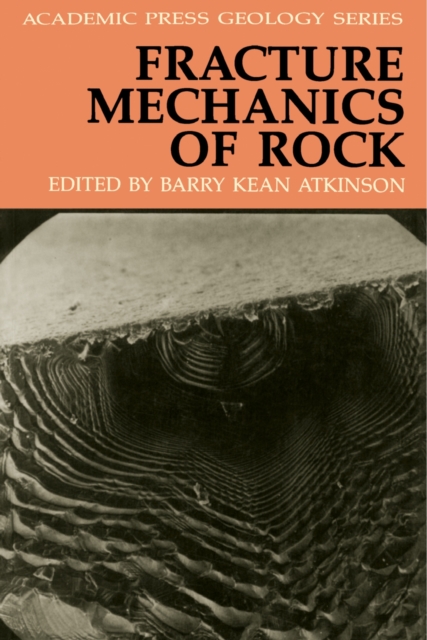
Since the beginning of the century the technological desire to master the fracture of metals, concrete or polymers has boosted research and has left behind an overwhelming amount of literature.
Significant developments in the boundary element method during the last two decades have made it a powerful alternative to the domain-type numerical methods of solution such as the finite element method.
The analysis of crack problems through fracture mechanics has been applied to the study of materials such as glass, metals and ceramics because relatively simple fracture criteria describe the failure of these materials.
The boundary element method is an extremely versatile and powerful tool of computational mechanics which has already become a popular alternative to the well established finite element method.
In the last three decades the field of mechanics has seen spectacular progress due to the demand for applications in problems of cosmology, thermonuclear fusion, metallurgy, etc.
A comprehensive overview is given in this book towards a fundamental understanding of the micromechanics of the overall response and failure modes of advanced materials, such as ceramics and ceramic and other composites.
This collection of papers, written by friends and colleagues of Josef Singer, presents a comprehensive and timely review of the theoretical mechanics of thin shell-structures.
Publications oriented to the interests of engineering scientists and graduate students on topics of functional analysis and its applications are rare - this book has been written to fill the gap in the literature.
Analytical Elements of Mechanics, Volume 2: Dynamics focuses on the processes, methodologies, approaches, and technologies involved in classical mechanics.
Wave Propagation and Scattering in Random Media, Volume 2, presents the fundamental formulations of wave propagation and scattering in random media in a unified and systematic manner.
Classical Dynamics of Particles and Systems presents a modern and reasonably complete account of the classical mechanics of particles, systems of particles, and rigid bodies for physics students at the advanced undergraduate level.
The Classical Dynamics of Particles: Galilean and Lorentz Relativity has been designed to serve either as an independent graduate course in dynamics or as a segment of a graduate theoretical physics course.
Body Tensor Fields in Continuum Mechanics: With Applications to Polymer Rheology aims to define body tensor fields and to show how they can be used to advantage in continuum mechanics, which has hitherto been treated with space tensor fields.
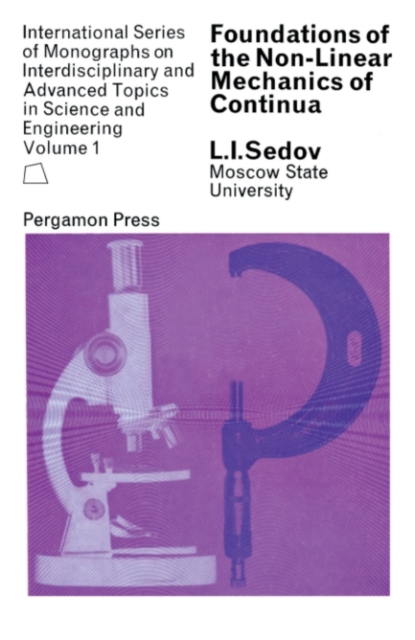
International Series of Monographs on Interdisciplinary and Advanced Topics in Science and Engineering, Volume 1: Foundations of the Non-Linear Mechanics of Continua deals with the theoretical apparatus, principal concepts, and principles used in the construction of models of material bodies that fill space continuously.
International Series of Monographs on Aeronautics and Astronautics, Division VII, Volume 5: The Flight of Uncontrolled Rockets focuses on external ballistics of uncontrolled rockets.
Thermoelasticity, Second Edition reviews advances in thermoelasticity and covers topics ranging from stationary problems of thermoelasticity to variational theorems of stationary thermoelasticity; stresses due to the action of a discontinuous temperature field in an infinite elastic body; the action of heat sources in the elastic space; and thermal inclusions in an infinite disc and semi-infinite disc.
Elements of Theoretical Mechanics for Electronic Engineers deals with theoretical mechanics, which is considered one of the fundamental branches of instruction essential to training an engineer.
Developments in Theoretical and Applied Mechanics, Volume 3 presents papers on the proceedings of the Third Southeastern Conference on Theoretical and Applied Mechanics held in Columbia, S.
Lambda-Matrices and Vibrating Systems presents aspects and solutions to problems concerned with linear vibrating systems with a finite degrees of freedom and the theory of matrices.
High Pressure Science and Technology, Volume 2 contains the proceedings of the Association Internationale for Research and Advancement of High Pressure Science and Technology's VIIth International Conference held in Le Creusot, France, from July 30 to August 3, 1979.
Progress in Heat and Mass Transfer, Volume 5: Heat and Mass Transfer in Rheologically Complex Fluids compiles selected papers presented at the International Seminar held in Herceg Novi, Yugoslavia on September 8-12, 1970.
Recommended Reference Materials for Realization of Physicochemical Properties deals with recommended reference materials for realization of physicochemical properties, including water, mercury, 2,2,4-trimethylpentane, cyclohexane, and trans-bicyclo[4,4,0]decane for density measurement.