Biomedical Engineering Principles in Sports contains in-depth discussions on the fundamental biomechanical and physiological principles underlying the acts of throwing, shooting, hitting, kicking, and tackling in sports, as well as vision training, sports injury, and rehabilitation.
Active noise control - the reduction of noise by generating an acoustic signal that actively interferes with the noise - has become an active area of basic research and engineering applications.
Robot and Multibody Dynamics: Analysis and Algorithms provides a comprehensive and detailed exposition of a new mathematical approach, referred to as the Spatial Operator Algebra (SOA), for studying the dynamics of articulated multibody systems.
Descriptor linear systems theory is an important part in the general field of control systems theory, and has attracted much attention in the last two decades.
Computational Methods in Elasticity and Plasticity: Solids and Porous Media presents the latest developments in the area of elastic and elasto-plastic finite element modeling of solids, porous media and pressure-dependent materials and structures.
"e;Constrained Deformation of Materials: Devices, Heterogeneous Structures and Thermo-Mechanical Modeling"e; is an in-depth look at the mechanical analyses and modeling of advanced small-scale structures and heterogeneous material systems.
Dynamical Systems: Discontinuous, Stochasticity and Time-Delay provides an overview of the most recent developments in nonlinear dynamics, vibration and control.
In their 1909 publication Theorie des corps deformables, Eugene and Francois Cosserat made a historic contribution to materials science by establishing the fundamental principles of the mechanics of generalized continua.
The second edition of this book would not have been possible without the comments and suggestions from students, especially those at Columbia University.
Structurally Constrained Controllers: Analysis and Synthesis studies the control of interconnected systems with a particular application in network, power systems, flight formations, etc.
"e;Neural Network-Based State Estimation of Nonlinear Systems"e; presents efficient, easy to implement neural network schemes for state estimation, system identification, and fault detection and Isolation with mathematical proof of stability, experimental evaluation, and Robustness against unmolded dynamics, external disturbances, and measurement noises.
"e;Control of Complex Systems: Structural Constraints and Uncertainty"e; focuses on control design under information structure constraints, with a particular emphasis on large-scale systems.
Research and development of various parallel mechanism applications in engineering are now being performed more and more actively in every industrial field.
Model-Based Control will be a collection of state-of-the-art contributions in the field of modelling, identification, robust control and optimization of dynamical systems, with particular attention to the application domains of motion control systems (high-accuracy positioning systems) and large scale industrial process control systems.
Predictive Modeling of Dynamic Processes provides an overview of hydrocode technology, applicable to a variety of industries and areas of engineering design.
"e;Piezoelectric-Based Vibration-control Systems: Applications in Micro/Nano Sensors and Actuators"e; covers: Fundamental concepts in smart (active) materials including piezoelectric and piezoceramics, magnetostrictive, shape-memory materials, and electro/magneto-rheological fluids; Physical principles and constitutive models of piezoelectric materials; Piezoelectric sensors and actuators; Fundamental concepts in mechanical vibration analysis and control with emphasis on distributed-parameters and vibration-control systems; and Recent advances in piezoelectric-based microelectromechanical and nanoelectromechanical systems design and implementation.
With a rigorous and comprehensive coverage, the second edition of Compliant Mechanisms: Design of Flexure Hinges provides practical answers to the design and analysis of devices that incorporate flexible hinges.
A systematic presentation of theory, procedures, illustrative examples, and applications, Mechanics of Materials provides the basis for understanding structural mechanics in engineering systems such as buildings, bridges, vehicles, and machines.
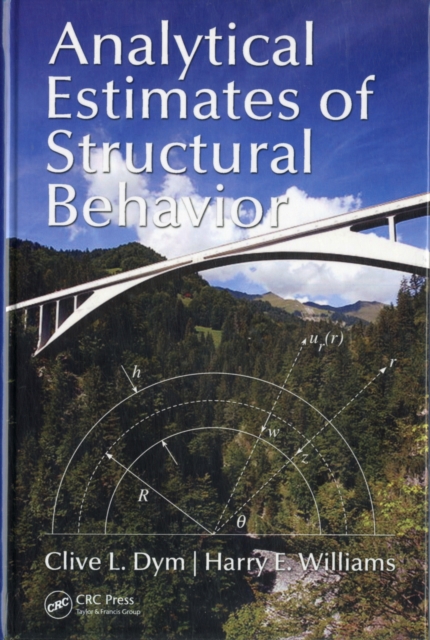
Explicitly reintroducing the idea of modeling to the analysis of structures, Analytical Estimates of Structural Behavior presents an integrated approach to modeling and estimating the behavior of structures.
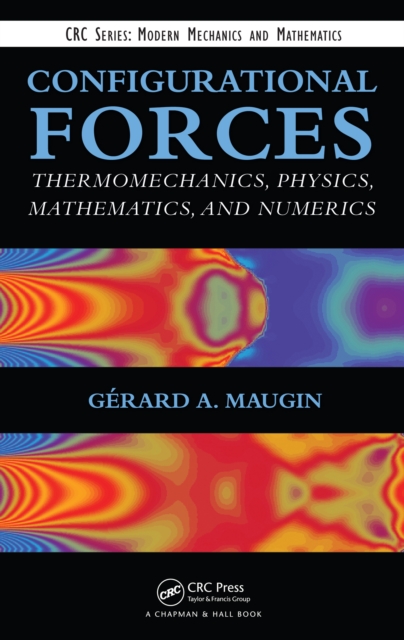
Exploring recent developments in continuum mechanics, Configurational Forces: Thermomechanics, Physics, Mathematics, and Numerics presents the general framework for configurational forces.
In the last decade, the number of complex problems facing engineers has increased, and the technical knowledge required to address and mitigate them continues to evolve rapidly.
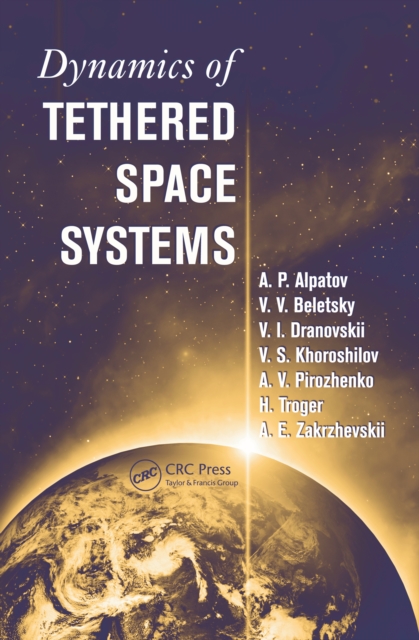
During many of the earliest American and Russian space missions, experiments were performed using cables to connect people and objects to spacecraft in orbit.
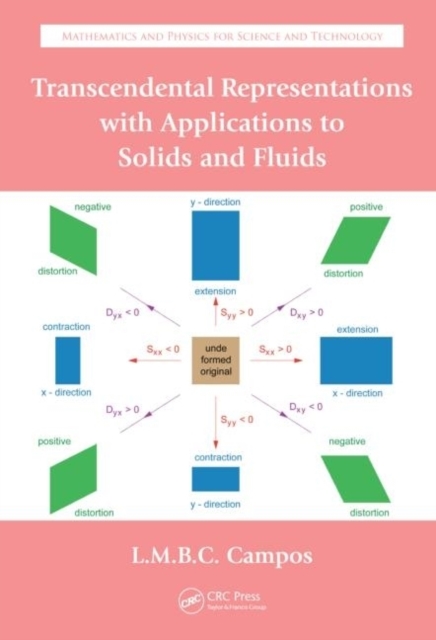
Building on the author's previous book in the series, Complex Analysis with Applications to Flows and Fields (CRC Press, 2010), Transcendental Representations with Applications to Solids and Fluids focuses on four infinite representations: series expansions, series of fractions for meromorphic functions, infinite products for functions with infinit
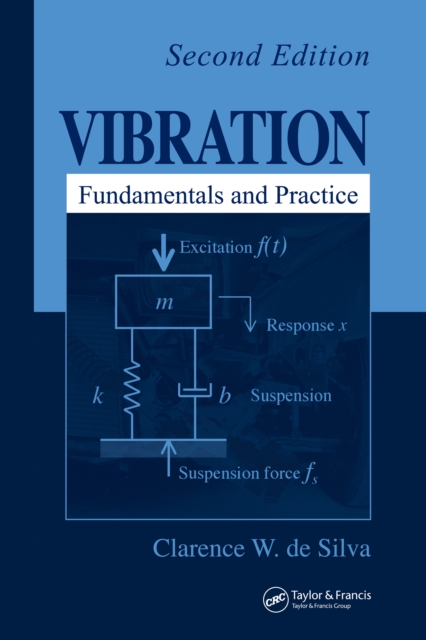
Maintaining the outstanding features and practical approach that led the bestselling first edition to become a standard textbook in engineering classrooms worldwide, Clarence de Silva's Vibration: Fundamentals and Practice, Second Edition remains a solid instructional tool for modeling, analyzing, simulating, measuring, monitoring, testing, controlling, and designing for vibration in engineering systems.
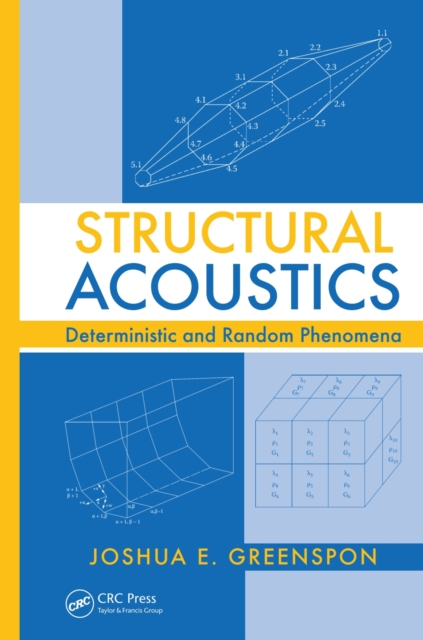
From jet engine noise that generates vibrations in the structure of an aircraft, to the sound radiation from the hull of a ship or submarine that makes it identifiable, an understanding of structural acoustics is key in the design process in maritime, automotive, aerospace, and architectural engineering.
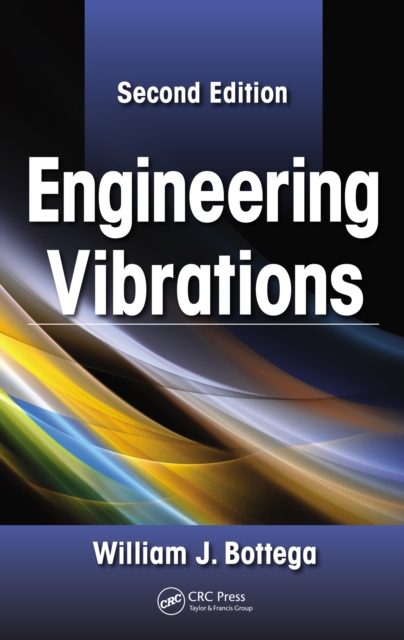
A thorough study of the oscillatory and transient motion of mechanical and structural systems, Engineering Vibrations, Second Edition presents vibrations from a unified point of view, and builds on the first edition with additional chapters and sections that contain more advanced, graduate-level topics.
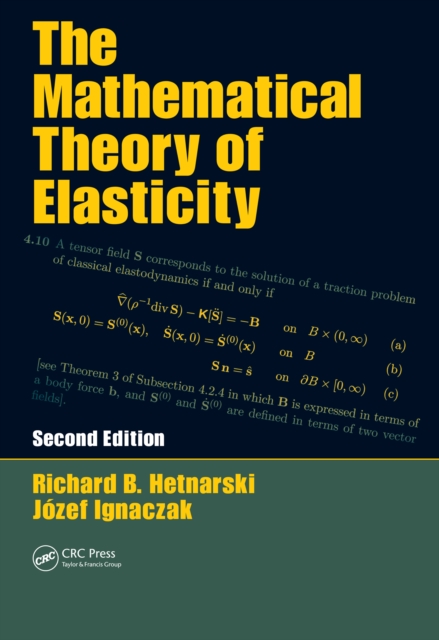
Through its inclusion of specific applications, The Mathematical Theory of Elasticity, Second Edition continues to provide a bridge between the theory and applications of elasticity.
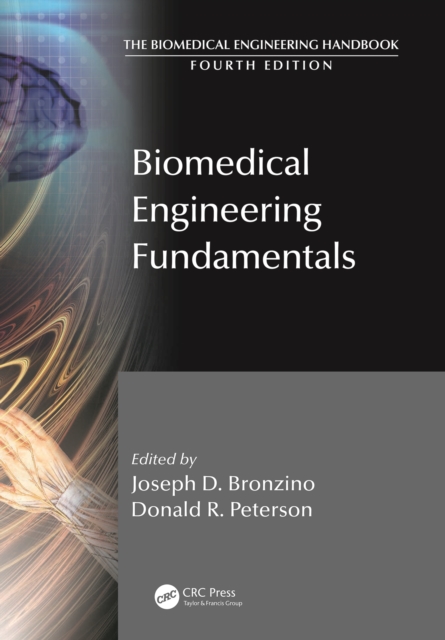
Known as the bible of biomedical engineering, The Biomedical Engineering Handbook, Fourth Edition, sets the standard against which all other references of this nature are measured.
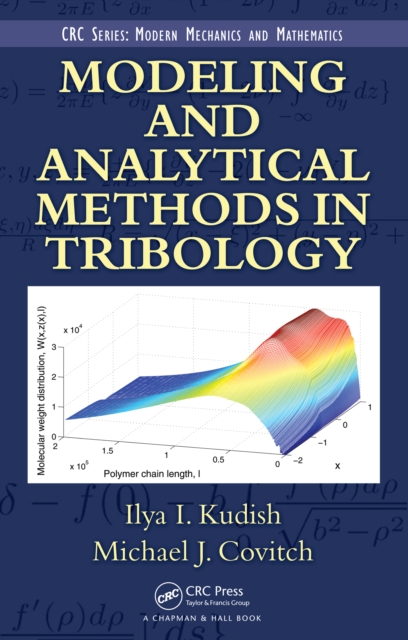
Improving our understanding of friction, lubrication, and fatigue, Modeling and Analytical Methods in Tribology presents a fresh approach to tribology that links advances in applied mathematics with fundamental problems in tribology related to contact elasticity, fracture mechanics, and fluid film lubrication.
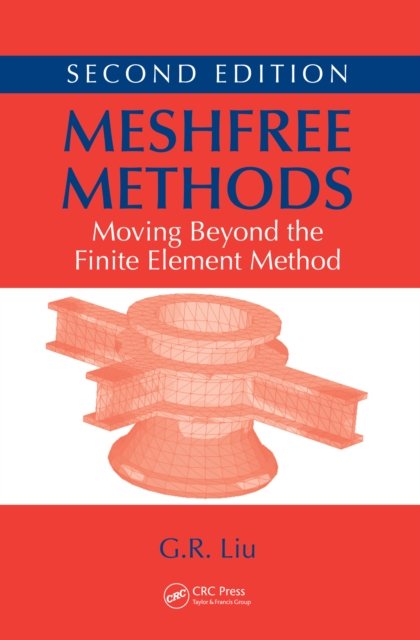
Understand How to Use and Develop Meshfree TechniquesAn Update of a Groundbreaking WorkReflecting the significant advances made in the field since the publication of its predecessor, Meshfree Methods: Moving Beyond the Finite Element Method, Second Edition systematically covers the most widely used meshfree methods.
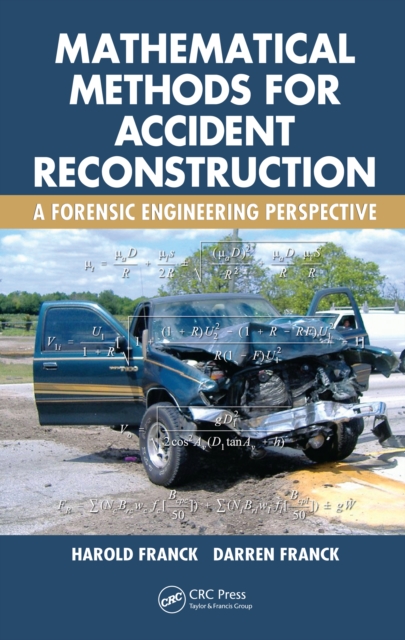
Over the past 25 years, Harold and Darren Franck have investigated hundreds of accidents involving vehicles of almost every shape, size, and type imaginable.
This book presents both differential equation and integral formulations of boundary value problems for computing the stress and displacement fields of solid bodies at two levels of approximation - isotropic linear theory of elasticity as well as theories of mechanics of materials.