Understand why fatigue happens and how to model, simulate, design and test for it with this practical, industry-focused referenceWritten to bridge the technology gap between academia and industry, the Metal Fatigue Analysis Handbook presents state-of-the-art fatigue theories and technologies alongside more commonly used practices, with working examples included to provide an informative, practical, complete toolkit of fatigue analysis.
Numerical Modelling of Failure in Advanced Composite Materials comprehensively examines the most recent analysis techniques for advanced composite materials.
In materials science, dislocations are irregularities within the crystal structure or atomic scale of engineering materials, such as metals, semi-conductors, polymers, and composites.
Welding Deformation and Residual Stress Prevention, Second Edition provides readers with both fundamental theoretical knowledge about welding deformation and stress as well as unique computational approaches for predicting and mitigating the effects of deformation and residual stress on materials.
The third edition of Mechanics of Solids and Structures makes use of computational methods such as the finite element method that has revolutionized the field to solve problems while retaining all the basic principles and foundational information needed for mastering advanced engineering mechanics principles and acquiring problem-solving skills.
This book was developed while I was teaching graduate courses on analysis, design and optimization of structures, in the United States, Europe and Israel.
This special volume of the Journal of Elasticity represents the first in a new p- gram dedicated to the occasional publication of collections of invited, reviewed papers of topical interest.
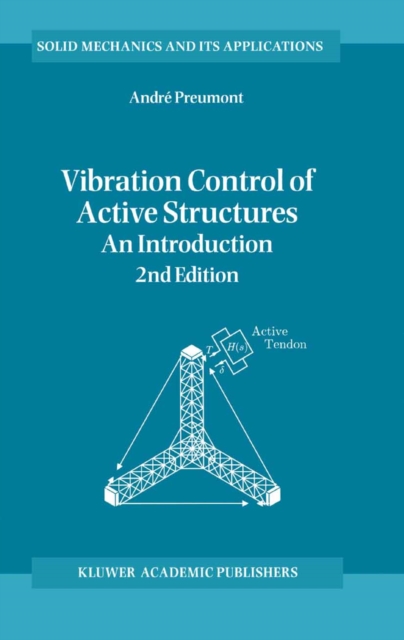
My objective in writing this book was to cross the bridge between the structural dynamics and control communities, while providing an overview of the potential of SMART materials for sensing and actuating purposes in active vibration c- trol.
This book contains 71 papers presented at the symposium on "e;Recent Advances in Experimental Mechanics"e; which was organized in honor of Professor Isaac M.
This book started its life as a series of lectures given by the second author from the 1970's onwards to students in their third and fourth years in the Department of Mechanics and Mathematics at Rostov State University.
Since the first edition of this book was published, there have been major improve- (TM) (TM) ments in symbolic mathematical languages such as Maple and Mathematica and this has opened up the possibility of solving considerably more complex and hence interesting and realistic elasticity problems as classroomexamples.
This book is a collection of selected reviewed papers that were presented at the International Union of Theoretical and Applied Mechanics Symposium "e;Mechanical waves for composite structures characterization"e;.
During the last decades, continuum mechanics of porous materials has achieved great attention, since it allows for the consideration of the volumetrically coupled behaviour of the solid matrix deformation and the pore-fluid flow.
Contributed by world-renowned specialists on the occasion of Paul Germain's 80th birthday, this unique book reflects the foundational works and the intellectual influence of this author.
An eminent engineer and historian tackles one of the most elemental aspects of life: how we experience and utilize physical force"e;Another gem from a master of technology writing.
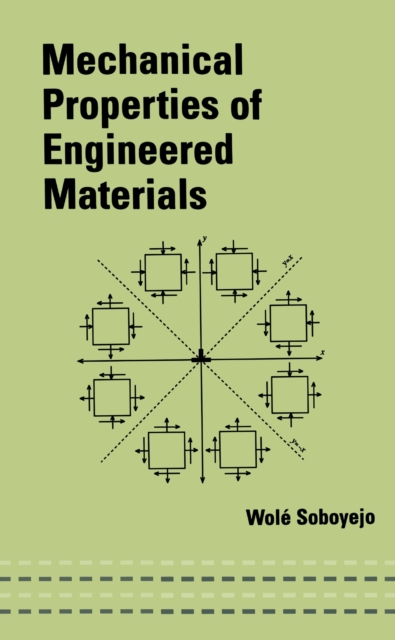
Featuring in-depth discussions on tensile and compressive properties, shear properties, strength, hardness, environmental effects, and creep crack growth, "e;Mechanical Properties of Engineered Materials"e; considers computation of principal stresses and strains, mechanical testing, plasticity in ceramics, metals, intermetallics, and polymers, materials selection for thermal shock resistance, the analysis of failure mechanisms such as fatigue, fracture, and creep, and fatigue life prediction.
Winner of the Japanese Geotechnical Society 2016 publication awardWritten by a veteran geotechnical engineer with a long record of research discoveries, Constitutive Modeling of Geomaterials: Principles and Applications presents a simple and unified approach to modeling various features of geomaterials in general stress systems.
While the theory and application of finite elements methods can be extended to incompatible, hybrid, and mixed element methods, important issues, such as determining the reliability of the solution of incompatible multivariable elements, along with a common perception of impracticality, have hindered the widespread implementation of these methods.
Presenting research papers contributed by experts in dynamics and control, Advances in Dynamics and Control examines new ideas, reviews the latest results, and investigates emerging directions in the rapidly-growing field of aviation and aerospace.
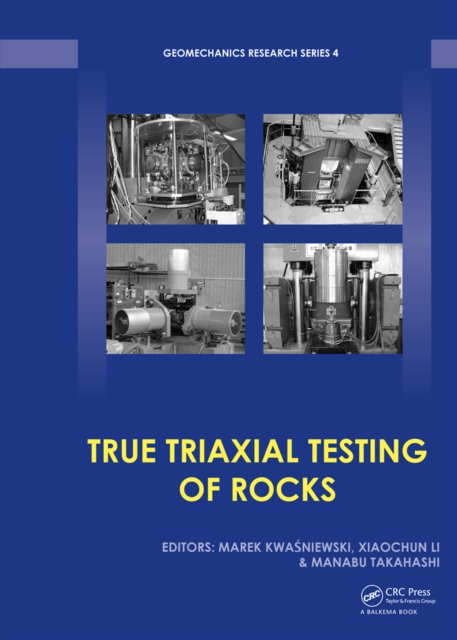
The book provides a guide to rock engineers and engineering geologists as to how to perform laboratory tests and how to use the existing data for solving practical rock engineering design and operating problems.
The book is an excellent text as well as a practical reference for civil, mechanical and aerospace engineers and has been identified as a work that is admirable in its lucidity and complete in itself.
With increasingly sophisticated structures involved in modern engineering, knowledge of the complex vibration behavior of plates, shells, curved membranes, rings, and other complex structures is essential for today's engineering students, since the behavior is fundamentally different than that of simple structures such as rods and beams.
Anisotropic Elasticity offers for the first time a comprehensive survey of the analysis of anisotropic materials that can have up to twenty-one elastic constants.
This monograph describes various methods for solving deformation problems of particulate solids, taking the reader from analytical to computational methods.
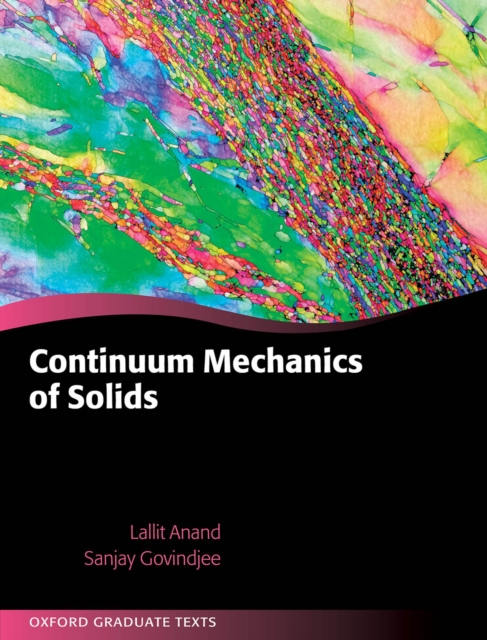
Continuum Mechanics of Solids is an introductory text for graduate students in the many branches of engineering, covering the basics of kinematics, equilibrium, and material response.
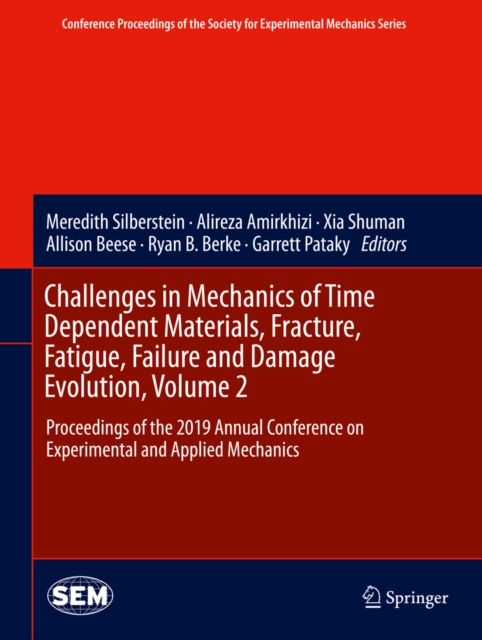
Challenges in Mechanics of Time-Dependent Materials, Volume 2 of the Proceedings of the 2019 SEM Annual Conference& Exposition on Experimental and Applied Mechanics, the second volume of six from the Conference, brings together contributions to this important area of research and engineering.
Fracture Mechanics covers classical and modern methods and introduce new/unique techniques, making this text an important resource for anyone involved in the study or application of fracture mechanics.
Control Theory in Biomedical Engineering: Applications in Physiology and Medical Robotics highlights the importance of control theory and feedback control in our lives and explains how this theory is central to future medical developments.
Input-to-State Stability presents the dominating stability paradigm in nonlinear control theory that revolutionized our view on stabilization of nonlinear systems, design of robust nonlinear observers, and stability of nonlinear interconnected control systems.
This book is a compilation of scientific articles written by recognized researchers, and select students, participating in the Second Conference on the Study of Complex Systems and their Applications (EDIESCA 2021).
In this thesis, the author investigates experimentally and numericallythe fracture behavior of an electron beam welded joint made fromtwo butt S355 plates.
This book summarizes the basic theory of wavelets and some related algorithms in an easy-to-understand language from the perspective of an engineer rather than a mathematician.
This book gives Abaqus users who make use of finite-element models in academic or practitioner-based research the in-depth program knowledge that allows them to debug a structural analysis model.