This exhaustive work in several volumes and over 2500 pages provides a thorough treatment of ultra-high temperature materials (with melting points around or over 2500 (deg)C).
The book explores the two opposite natural trends of composite systems: (i) order and structure emerging from heterogeneity and randomness, and (ii) instability and chaos arising from simple nonlinear rules.
This book is based on the lectures and contributions of the NATO Advanced Study Institute on "e;Nanoscience and Nanotechnology in Security and Protection Against CBRN Threats"e; held in Sozopol, Bulgaria, September 2019.
This book presents a blueprint for researchers in the area of nanotechnology for chemical defense, especially with regard to future research on detection and protection.
This exhaustive work in three volumes and over 1300 pages provides a thorough treatment of ultra-high temperature materials with melting points over 2500 (deg)C.
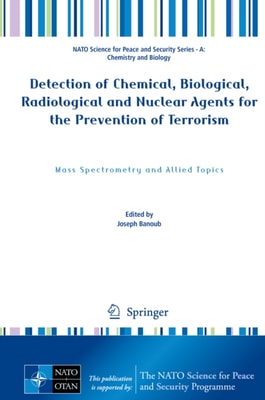
This volume gives a broad overview of advanced technologies for detection and defence against chemical, biological, radiological and nuclear (CBRN) agents.
The 3rd edition of this successful textbook continues to build on the strengths that were recognized by a 2008 Textbook Excellence Award from the Text and Academic Authors Association (TAA).
The 3rd edition of this important dictionary offers more than 12,000 entries with expanded encyclopaedic-style definitions making this major reference work invaluable to practitioners, researchers and students working in the area of polymer science and technology.
The present work offers a snapshot of the state-of-the-art of crystallographic, analytical, and computational methods used in modern drug design and development.
This book contains a collection of the state-of-the-art reviews written by the leading researchers in the areas of nanoscale mechanics, molecular dynamics, nanoscale modeling of nanocomposites and mechanics of carbon nanotubes.
This NATO-ASI installment is designed to provide an advanced overview for doctoral and post-doctoral candidates of the state-of-the-art technologies for bio-detection.
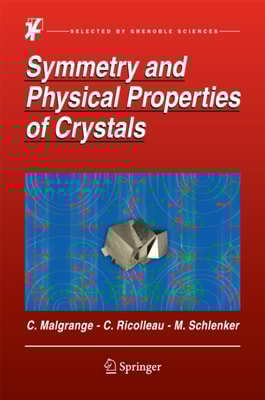
Crystals are everywhere, from natural crystals (minerals) through the semiconductors and magnetic materials in electronic devices and computers or piezoelectric resonators at the heart of our quartz watches to electro-optical devices.
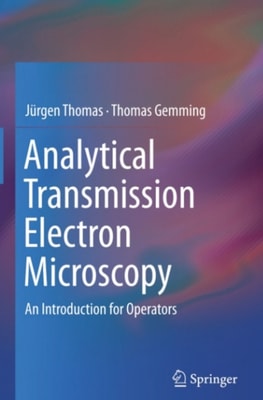
This work is based on experiences acquired by the authors regarding often asked questions and problems during manifold education of beginners in analytical transmission electron microscopy.
The reader will find here a timely update on new THz sources and detection schemes as well as concrete applications to the detection of Explosives and CBRN.
This book coversa broad range of materials science that has been brought to bear on providingsolutions to the challenges of developing self-healing and protective coatingsfor a range of metals.
A brief historical account of the background leading to the publication of the first four editions of the World Directory of Crystallographers was presented by G.
The 9th edition of the World Directory of Crystallographers and of Other Scientists Employing Crystallographic Methods, which contains 7907 entries embracing 72 countries, differs considerably from the 8th edition, published in 1990.
The 10th edition of the World Directory of Crystallographers and of Other Scientists Employing Crystallographic Methods is a revised and up-to-date edition of the World Directory and contains the current addresses, academic status and research interests of over 8000 scientists in 74 countries.
In the past the aim of Structure Reports has been to present critical reports on all work of crystallographic structural interest, whether it is derived directly from X-ray, electron, or neutron diffraction, or even indirectly from other experiments.
In the past the aim of Structure Reports has been to present critical reports on all work of crystallographic structural interest, whether it is derived directly from X-ray, electron, or neutron diffraction, or even indirectly from other experiments.
In many cases rheological measurements are carried out in the simplest of geometries, but the interpretation involved in obtaining the rheological parameters of the test fluids from these measurements is surprisingly complex.
The papers in this volume represent a considerable cross-section of the field of fracture mechanics, a testimony to the breadth of interest that Mel and Max Williams' friends share with them.
On Fracture Mechanics A major objective of engineering design is the determination of the geometry and dimensions of machine or structural elements and the selection of material in such a way that the elements perform their operating function in an efficient, safe and economic manner.
Polymeric materials are widely used during nearly all stages of the manufacturing process of electronics products and this book is intended to give an introductory overview of the chemistry, properties and uses of some of the more important classes of materials likely to be encountered in these applications.
Sizes of electronic and photonic devices are decreasing drastically in order to increase the degree of integration for large-capacity and ultrahigh- speed signal transmission and information processing.
Nonlinear Optical Materials and Devices for Applications in Information Technology takes the reader from fundamental interactions of laser light in materials to the latest developments of digital optical information processing.
We are honoured to present this collection of selected papers from the International Conference on Mixing and Crystallization, held at the Tioman Island, Malaysia in April, 1998.
Modern fracture mechanics considers phenomena at many levels, macro and micro; it is therefore inextricably linked to methods of theoretical and mathematical physics.