This book introduces the latest developments in data-centric engineering, including different artificial intelligence and machine learning approaches, as well as their wide range of applications for long-term monitoring and health assessment of mechanical, aerospace and complex infrastructure systems.
This book contains extended versions of 34 carefully selected and reviewed papers presented at the Third International Conference on Mathematical Methods in Reliability, held in Trondheim, Norway in 2002.
The 2004 Asian International Workshop on Advanced Reliability Modeling is a symposium for the dissemination of state-of-the-art research and the presentation of practice in reliability engineering and related issues in Asia.
As our modern information-age society grows in complexity both in terms of embedded systems and applications, the problems and challenges in reliability become ever more complex.
Authored by the most active scholars in their respective areas, this volume covers the most recent developments, both theoretical and applicative, in multi-disciplinary reliability evaluation areas, many of which are cutting-edge and not discussed elsewhere in book form.
The 2006 Asian International Workshop on Advanced Reliability Modeling (AIWARM) is the second symposium in a series of biennial workshops for the dissemination of state-of-art research and the presentation of practice in reliability and maintenance engineering in Asia.
The necessity of expertise for tackling the complicated and multidisciplinary issues of safety and risk has slowly permeated into all engineering applications so that risk analysis and management has gained a relevant role, both as a tool in support of plant design and as an indispensable means for emergency planning in accidental situations.
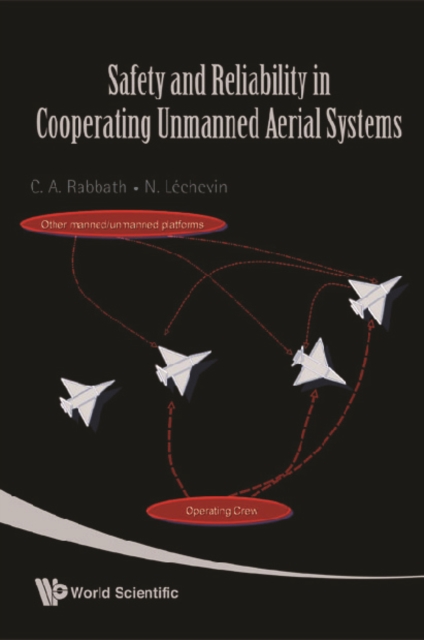
This book provides a comprehensive overview of recent advances in the analysis and design of health management systems for cooperating unmanned aerial vehicles.
The development of Reliability and Maintenance theory and applications has become major concerns of engineers and managers engaged in order to design and product systems that are highly reliable.
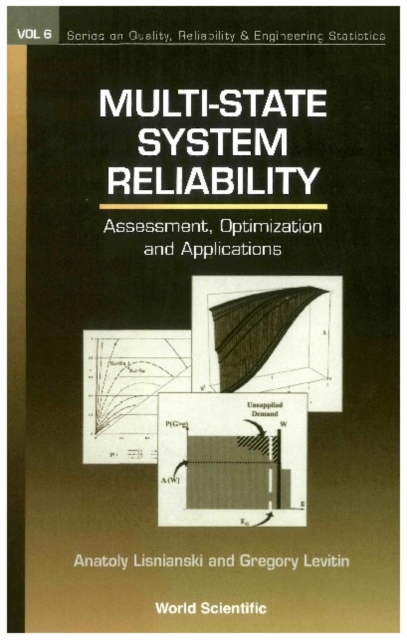
Most books on reliability theory are devoted to traditional binary reliability models allowing for only two possible states for a system and its components: perfect functionality and complete failure.
More and more, the advanced technological systems of today rely on sophisticated control systems designed to assure greater levels of safe operation while optimizing performance.
Written for safety and loss-control, environmental, and quality managers, this is the first comprehensive, integrated guide to developing a complete environmental risk analysis for regulated substances and processes.
Reliability Centered Maintenance - Reengineered: Practical Optimization of the RCM Process with RCM-R(R) provides an optimized approach to a well-established and highly successful method used for determining failure management policies for physical assets.
Authors have attempted to create coherent chapters and sections on how the fundamentals of maintenance cost should be organized, to present them in a logical and sequential order.
Today, engineering systems are an important element of the world economy and each year billions of dollars are spent to develop, manufacture, operate, and maintain various types of engineering systems around the globe.
Artificial Intelligence Tools: Decision Support Systems in Condition Monitoring and Diagnosis discusses various white- and black-box approaches to fault diagnosis in condition monitoring (CM).
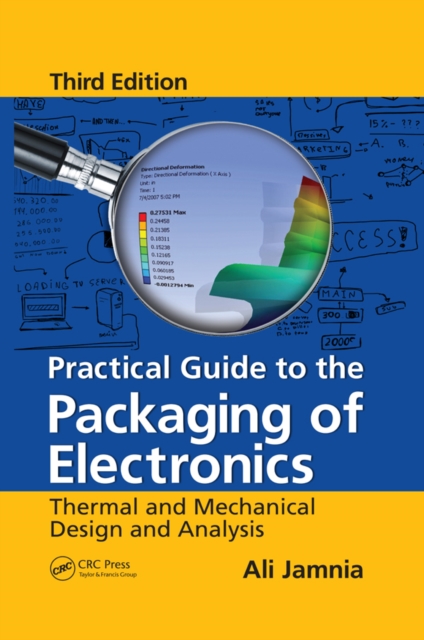
Successfully Estimate the Thermal and Mechanical Characteristics of Electronics SystemsA definitive guide for practitioners new to the field or requiring a refresher course, Practical Guide to the Packaging of Electronics: Thermal and Mechanical Design and Analysis, Third Edition provides an understanding of system failures and helps identify the areas where they can occur.
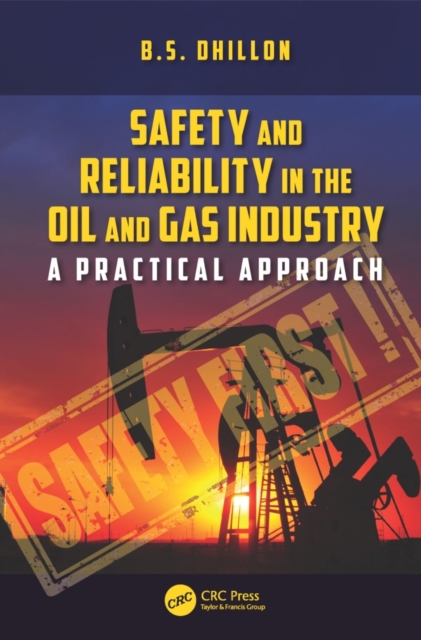
An Insightful Guide to Avoiding Offshore Oil- and Gas-Industry Disaster Designing, constructing, operating, and maintaining offshore oil and gas industry equipment and systems can sometimes result in accidents, injuries, and other serious problems.
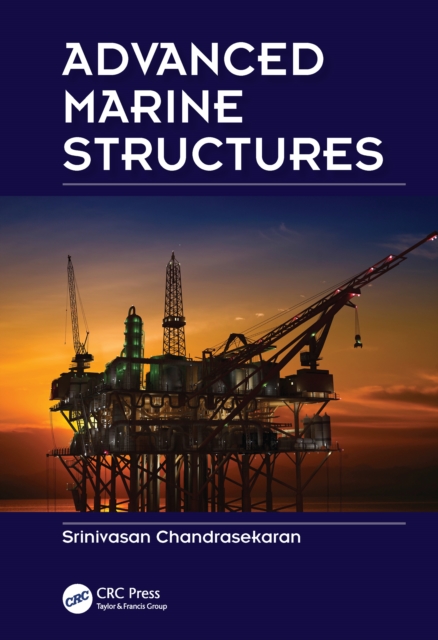
Due in part to a growing demand for offshore oil and gas exploration, the development of marine structures that initially started onshore is now moving into deeper offshore areas.
Fluctuation Mechanism and Control on System Instantaneous Availability facilitates the development of modeling and identification skills for both theoretical research and applications.
Infrastructure Asset Management with Power System Applications is about infrastructure asset management, which can be expressed as the combination of management, financial, economic, and engineering, applied to physical assets with the objective of providing the required level of service in the most cost-effective manner.
Analysis of Failure and Survival Data is an essential textbook for graduate-level students of survival analysis and reliability and a valuable reference for practitioners.
Captures Current Developments in Bridge Design and MaintenanceRecent research in bridge design and maintenance has focused on the serviceability problems of older bridges with aging joints.
This unique single-source reference-the first book of its kind to address systematically the problems involved in the field-offers comprehensive coverage of hydraulic system troubleshooting and encourages change in the trial-and-error methods common in rectifying problems and restoring system downtime, furnishing a new paradigm for troubleshooting
As industries adopt consumer-focused product development strategies, they should offer broader product ranges in shorter design times and the processes that can manufacture in arbitrary lot sizes.
Data-Driven Fault Diagnosis: A Machine Learning Approach for Industrial Components delves into the application of machine learning techniques for achieving robust and efficient fault diagnosis in industrial components.
Data-Driven Fault Diagnosis: A Machine Learning Approach for Industrial Components delves into the application of machine learning techniques for achieving robust and efficient fault diagnosis in industrial components.
Wireless technology has expanded rapidly as a field over recent years, especially in mobile and distance technologies, and collaboration over networks demands increases in speed, security, and reliability.
Wireless technology has expanded rapidly as a field over recent years, especially in mobile and distance technologies, and collaboration over networks demands increases in speed, security, and reliability.
Find the Fault in the Machines- Drawing on the author's more than two decades of experience with machinery condition monitoring and consulting for industries in India and abroad, Machinery Condition Monitoring: Principles and Practices introduces the practicing engineer to the techniques used to effectively detect and diagnose faults in machines.
In engineering and quality control, various situations, including process validation and design verification, require equivalence and noninferiority tests.
Artificial Intelligence Tools: Decision Support Systems in Condition Monitoring and Diagnosis discusses various white- and black-box approaches to fault diagnosis in condition monitoring (CM).