This book is a collective work by many leading scientists, analysts, mathematicians, and engineers who have been working at the front end of reliability science and engineering.
This book is a collective work by many leading scientists, analysts, mathematicians, and engineers who have been working at the front end of reliability science and engineering.
To meet the needs of today, engineered products and systems are an important element of the world economy, and each year billions of dollars are spent to develop, manufacture, operate, and maintain various types of products and systems around the globe.
To meet the needs of today, engineered products and systems are an important element of the world economy, and each year billions of dollars are spent to develop, manufacture, operate, and maintain various types of products and systems around the globe.
When humans are well, they are in a state where body, mind, and spirit are holistically integrated, and, as a result, are healthy, happy, and resilient.
When humans are well, they are in a state where body, mind, and spirit are holistically integrated, and, as a result, are healthy, happy, and resilient.
Introducing a groundbreaking companion book to a bestselling reliability text Reliability is one of the most important characteristics defining the quality of a product or system, both for the manufacturer and the purchaser.
A unique book that describes the practical processes necessary to achieve failure free equipment performance, for quality and reliability engineers, design, manufacturing process and environmental test engineers.
Written by reliability data experts, the book gives plant managers and supervisors the guidance they need to collect, and use with confidence, process equipment reliability data for risk-based decisions.
Smart technologies comprise a dynamic new interdisciplinary research field that encompasses a wide spectrum of engineering applications including, but not limited to, intelligent structures and materials, actuators, sensors and structural observability, control systems and software tools for the design of adaptive structures.
Based on deep theoretical as well as practical experience in Reliability and Quality Sciences, Robust Design Methodology for Reliability constructively addresses practical reliability problems.
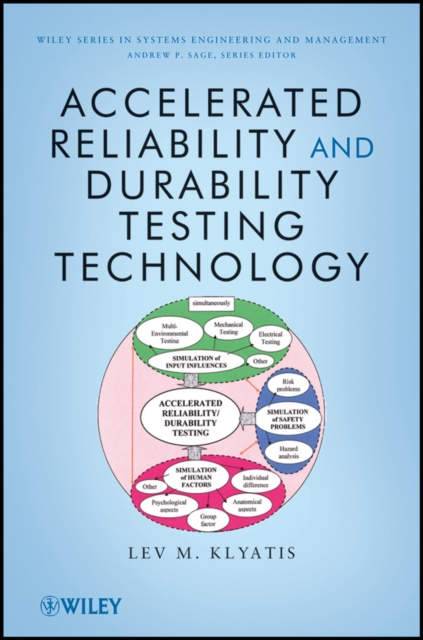
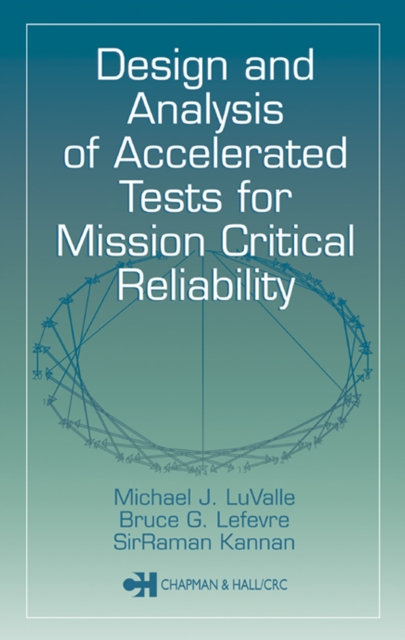
Learn how ART and ADT can reduce cost, time, product recalls, and customer complaints This book provides engineers with the techniques and tools they need to use accelerated reliability testing (ART) and accelerated durability testing (ADT) as key factors to accurately predict a product's quality, reliability, durability, and maintainability during a given time, such as service life or warranty period.
The Second Edition features new content, examples,methods, techniques, and best practices Assurance Technologies Principles and Practices is based on the assertion that safety is not a cost, but an excellent investment.
The field of machinery maintenance is undergoing a remarkable transformation, driven by the convergence of intelligent technologies and data-driven approaches.
Since the publication of the second edition in 2013, there has been an increasing interest in asset management globally, as evidenced by a series of international standards on asset management systems, to achieve excellence in asset management.
This book introduces and explains the parametric accelerated life testing (ALT) methodology as a new reliability methodology based on statistics, to help avoid recalls of products in the marketplace.
Since the publication of the second edition in 2013, there has been an increasing interest in asset management globally, as evidenced by a series of international standards on asset management systems, to achieve excellence in asset management.
This book introduces and explains the parametric accelerated life testing (ALT) methodology as a new reliability methodology based on statistics, to help avoid recalls of products in the marketplace.
Load Testing of Bridges, featuring contributions from almost fifty authors from around the world across two interrelated volumes, deals with the practical aspects, the scientific developments, and the international views on the topic of load testing of bridges.
Load Testing of Bridges, featuring contributions from almost fifty authors from around the world across two interrelated volumes, deals with the practical aspects, the scientific developments, and the international views on the topic of load testing of bridges.
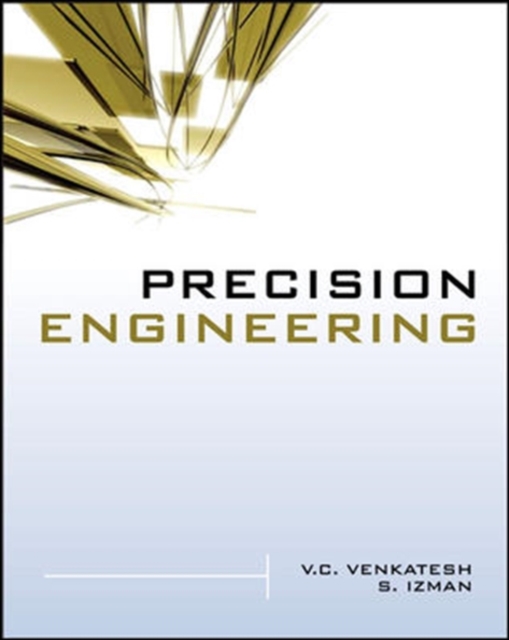
The Latest Techniques of Ultra-Precise Manufacturing for Creating Mechanical, Electronic, and Optical ProductsPrecision Engineering gives expert guidance on the application of manufacturing to micro and nano levels, using state-of-the-art miniaturization technology.
Featuring aerospace examples and applications, Reliability Analysis of Dynamic Systems presents the very latest probabilistic techniques for accurate and efficient dynamic system reliability analysis.
'Fundamentals of Rotating Equipment' is an overview of the main types of rotating machinery in industry, and covers such aspects as system dynamics, surge control, vibration and balancing, radial bearing design, performance parameters, rotor system design and operation, rotor axial (thrust) forces, performance objectives and mechanical restraints, auxiliary systems and seals.
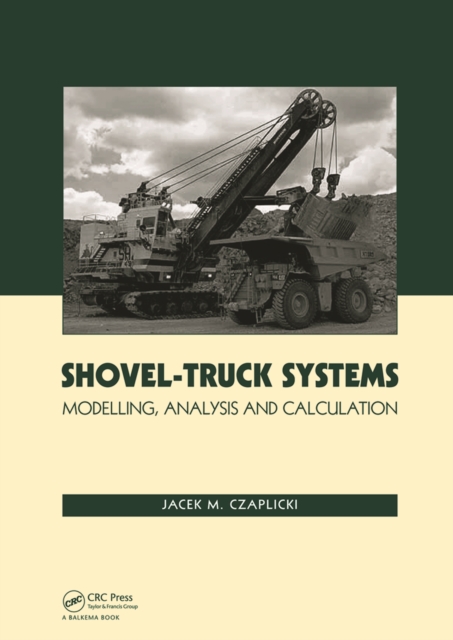
This book provides a comprehensive analysis of the exploitation process of shovel-truck systems using modelling, analysis and calculations following specific procedures:- analyzing the reliability and accessibility of shovels- discussing the functioning of a truck-repair shop system- reliability of trucks- existence of haulers reserve- repair shop
Advanced Ship Design for Pollution Prevention is a collection of papers reflecting the teaching materials for a Master of Naval Architecture course developed in the European ASDEPP (Advanced Ship Design for Pollution Prevention) project.
Early approaches to accelerated testing were based on the assumption that there was a simple acceleration factor that would correspond to a linear scaling of time from the operating stress to the accelerating stress.
With industrial systems becoming ever more mechanized and reliant on advanced technology, the complexity of equipment, especially in risky industries, is increasing on a daily basis.
This book introduces the latest developments in data-centric engineering, including different artificial intelligence and machine learning approaches, as well as their wide range of applications for long-term monitoring and health assessment of mechanical, aerospace and complex infrastructure systems.
Understanding why and how failures occur is critical to failure prevention, because even the slightest breakdown can lead to catastrophic loss of life and asset as well as widespread pollution.
Featuring aerospace examples and applications, Reliability Analysis of Dynamic Systems presents the very latest probabilistic techniques for accurate and efficient dynamic system reliability analysis.
Written specifically for the oil and gas industry, Reliable Maintenance Planning, Estimating, and Scheduling provides maintenance managers and engineers with the tools and techniques to create a manageable maintenance program that will save money and prevent costly facility shutdowns.
Reliability of Large and Complex Systems, previously titled Reliability of Large Systems, is an innovative guide to the current state and reliability of large and complex systems.
'Fundamentals of Rotating Equipment' is an overview of the main types of rotating machinery in industry, and covers such aspects as system dynamics, surge control, vibration and balancing, radial bearing design, performance parameters, rotor system design and operation, rotor axial (thrust) forces, performance objectives and mechanical restraints, auxiliary systems and seals.
Rethinking Risk and the Precautionary Principle challenges the claim that the precautionary principle is an appropriate guide to public policy decision-making in the face of uncertainty.