The National Research Council's Army Research Laboratory Technical Assessment Board (ARLTAB) provides biennial assessments of the scientific and technical quality of the research, development, and analysis programs at the Army Research Laboratory, focusing on ballistics sciences, human sciences, information sciences, materials sciences, and mechanical sciences.
According to recent reports, the United States currently accounts for less than one-third of global research and development spending, and it is projected that this fraction will decline to 18% by 2050.
The National Research Council's Army Research Laboratory Technical Assessment Board provides biennial assessments of the scientific and technical quality of the research, development, and analysis programs at the Army Research Laboratory, focusing on ballistics sciences, human sciences, information sciences, materials sciences, and mechanical sciences.
The charge of the Army Research Laboratory Technical Assessment Board (ARLTAB) is to provide biennial assessments of the scientific and technical quality of the research, development, and analysis programs at the Army Research Laboratory (ARL).
Drawing upon the considerable existing body of technical material related to the Comprehensive Test Ban Treaty, the National Academy of Sciences reviewed and assessed the key technical issues that arose during the Senate debate over treaty ratification.
Naval Analytical Capabilities assesses current Department of Defense initiatives and the Department of the Navy's progress in transitioning from a requirements-based to a capabilities-based organization.
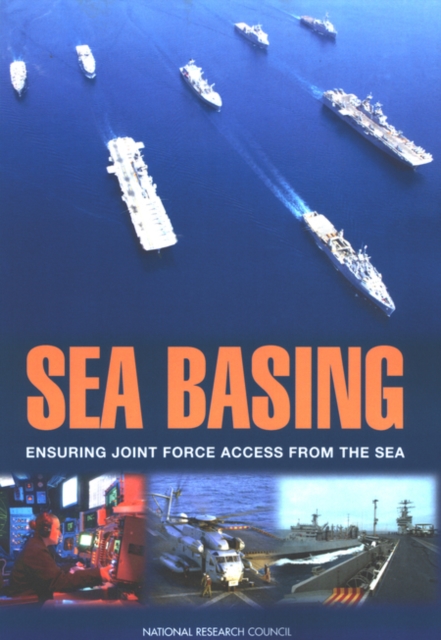
The availability of land bases from which to launch and maintain military, diplomatic, and humanitarian relief operations is becoming increasingly uncertain because of physical or political constraints.
This book documents electric power requirements for the dismounted soldier on future Army battlefields, describes advanced energy concepts, and provides an integrated assessment of technologies likely to affect limitations and needs in the future.
The Office of Naval Research (ONR) contracted with the Naval Studies Board (NSB) of the National Research Council (NRC) to establish a committee to review ONR's Air and Surface Weapons Technology (ASWT) program.
Examines how the United States can employ its massive, high-tech firepower in an effective manner when future conflicts are likely to be limited and of low intensity.
The development of deep space surveillance technology and its later application to near-Earth surveillance, covering work at Lincoln Laboratory from 1970 to 2000.
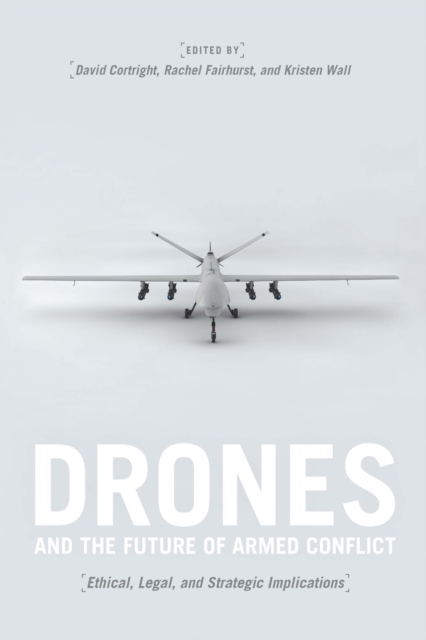
Drone warfare described from the perspectives of drone operators, victims of drone attacks, anti-drone activists, international law, military thinkers, and others.
From the birth of the tank to unmanned vehicles and the tanks of the future, The Tank Book offers a truly definitive look at over 400 different tanks, produced in association with The Tank Museum.
In an era when knowledge can travel with astonishing speed, the need for analysis of intellectual property (IP) law-and its focus on patents, trade secrets, trademarks, and issues of copyright-has never been greater.
As the costs of a preemptive foreign policy in Iraq have become clear, strategies such as containment and deterrence have been gaining currency among policy makers.
Although terrorism is an age-old phenomenon, jihadi ideology is distinctive in its ambition to abandon the principle of state sovereignty, overthrow the modern state system, and replace it with an extremely radical interpretation of an Islamic world order.
In an era when knowledge can travel with astonishing speed, the need for analysis of intellectual property (IP) law-and its focus on patents, trade secrets, trademarks, and issues of copyright-has never been greater.
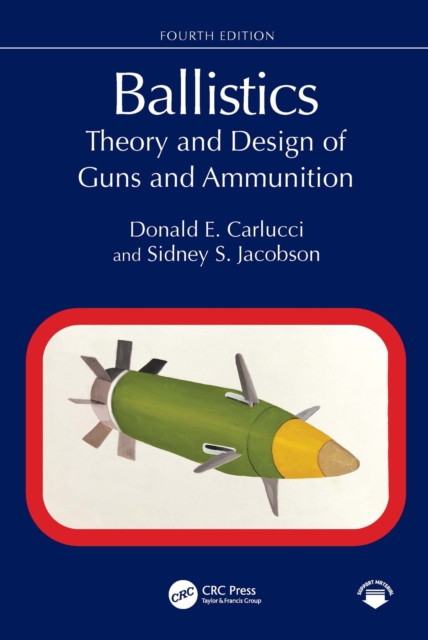
Ballistics examines the analytical and computational tools for predicting a weapon's behavior in terms of pressure, stress, and velocity, demonstrating their applications in ammunition and weapons design.
This book is on inertial confinement fusion, an alternative way to produce electrical power from hydrogen fuel by using powerful lasers or particle beams.
Psychology is the science that will determine who wins and who loses the wars of the 21st century, just as physics ultimately led the United States to victory in World War II.
Psychology is the science that will determine who wins and who loses the wars of the 21st century, just as physics ultimately led the United States to victory in World War II.
The Diffusion of Military Power examines how the financial and organizational challenges of adopting new methods of fighting wars can influence the international balance of power.