Presents and addresses key space law and policy issues for the benefit of wider informed audiences that wish to acquaint themselves with the fundamentals of the space law field.
Quo Vadis: Evolution of Modern Navigation presents an intelligent and intelligible account of the essential principles underlying the design of satellite navigational systems-with introductory chapters placing them in context with the early development of navigational methods.
Topics in Model Validation and Uncertainty Quantification, Volume : Proceedings of the 31st IMAC, A Conference and Exposition on Structural Dynamics, 2013, the fifth volume of seven from the Conference, brings together contributions to this important area of research and engineering.
Topics in Nonlinear Dynamics, Volume 1: Proceedings of the 31st IMAC, A Conference and Exposition on Structural Dynamics, 2013, the first volume of seven from the Conference, brings together contributions to this important area of research and engineering.
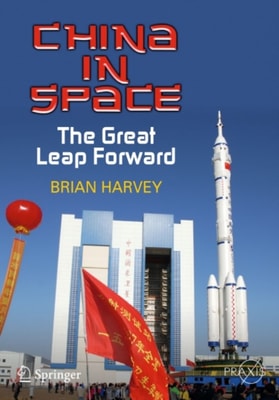
This book addresses why China is going into space and provides up- to-date information on all aspects of the Chinese Space Program in terms of launch vehicles, launch sites and infrastructure, crew vehicles for space exploration, satellite applications and scientific exploration capabilities.
The mounting problem of space debris in low earth orbit and its threat to the operation of application satellites has been increasingly recognized as space activities increase.
Mapping Archaeological Landscapes from Space offers a concise overview of air and spaceborne imagery and related geospatial technologies tailored to the needs of archaeologists.
This first account of commercial spaceflight's most successful venture describes the extraordinary feats of engineering and human achievement that have placed SpaceX at the forefront of the launch industry and made it the most likely candidate for transporting humans to Mars.
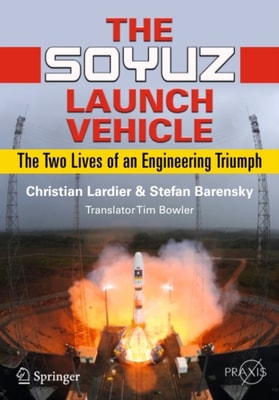
"e;The Soyuz Launch Vehicle"e; tells the story, for the first time in a single English-language book, of the extremely successful Soyuz launch vehicle.
Rockets were invented in China, the home of many modern inventions, including ancient astronomy, and were used originally for military purposes in the 13th century.
In Robotic Exploration of the Solar System, Paolo Ulivi and David Harland provide a comprehensive account of the design and management of deep-space missions, the spacecraft involved - some flown, others not - their instruments, and their scientific results.
"e;Manned Spaceflight Log"e; discusses over 40 recent spaceflights from September 2006 through September 2012, a time of great change in human spaceflight history.
Often lost in the shadow of the first group of astronauts for the Mercury missions, the second and third groups included the leading figures for NASA's activities for the following two decades.
The definition of all space systems starts with the establishment of its fundamental parameters: requirements to be fulfilled, overall system and satellite design, analysis and design of the critical elements, developmental approach, cost, and schedule.
Beginning with the basic elements that differentiate space programs from other management challenges, Space Program Management explains through theory and example of real programs from around the world, the philosophical and technical tools needed to successfully manage large, technically complex space programs both in the government and commercial environment.
Airbreathing Propulsion covers the physics of combustion, fluid and thermo-dynamics, and structural mechanics of airbreathing engines, including piston, turboprop, turbojet, turbofan, and ramjet engines.
Remote Sensing provides information on how remote sensing relates to the natural resources inventory, management, and monitoring, as well as environmental concerns.
This title presents a uniquely human perspective on the quest to explore space and to understand the universe through the lens of the arts, humanities, and social sciences.
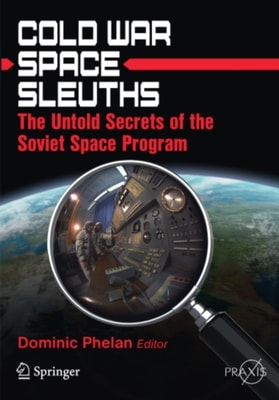
"e;Space Sleuths of the Cold War"e; relates for the first time the inside story of the amateur spies who monitored the Soviet space program during the Cold War.
Topics in Nonlinear Dynamics, Volume 3, Proceedings of the 30th IMAC, A Conference and Exposition on Structural Dynamics, 2012, the third volume of six from the Conference, brings together 26 contributions to this important area of research and engineering.
Topics in Model Validation and Uncertainty Quantification, Volume 4, Proceedings of the 30th IMAC, A Conference and Exposition on Structural Dynamics, 2012, the fourth volume of six from the Conference, brings together 19 contributions to this important area of research and engineering.
Performing in a high G environment is extremely demanding on the body: pulling G forces blood to the body's extremities, putting the pilot, astronaut or driver at risk of G-Induced Lack of Consciousness (G-LOC).
The technology of the next few decades could possibly allow us to explore with robotic probes the closest stars outside our Solar System, and maybe even observe some of the recently discovered planets circling these stars.
Advanced Control of Turbofan Engines describes the operational performance requirements of turbofan (commercial) engines from a controls systems perspective, covering industry-standard methods and research-edge advances.
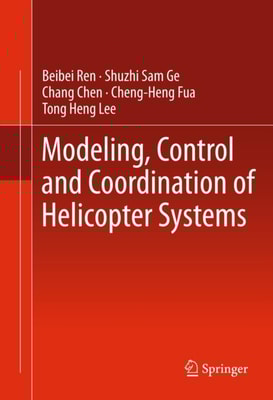
Modeling, Control and Coordination of Helicopter Systems provides a comprehensive treatment of helicopter systems, ranging from related nonlinear flight dynamic modeling and stability analysis to advanced control design for single helicopter systems, and also covers issues related to the coordination and formation control of multiple helicopter systems to achieve high performance tasks.
The Third Symposium on Numerical and Physical Aspects of Aerodynamic Flows, like its immediate predecessor, was organized with emphasis on the calculation of flows relevant to aircraft, ships, and missiles.
The Joint Institute for Aeronautics and Acoustics at Stanford University was established in October 1973 to provide an academic environment for long-term cooperative research between Stanford and NASA Ames Research Center.
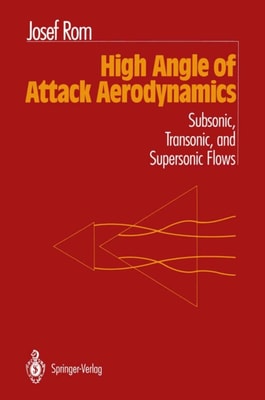
The aerodynamics of aircraft at high angles of attack is a subject which is being pursued diligently, because the modern agile fighter aircraft and many of the current generation of missiles must perform well at very high incidence, near and beyond stall.
These three volumes entitled Advances in Hypersonics contain the Proceedings of the Second and Third Joint US/Europe Short Course in Hypersonics which took place in Colorado Springs and Aachen.
These three volumes entitled Advances in Hypersonics contain the Proceedings of the Second and Third Joint US/Europe Short Course in Hypersonics which took place in Colorado Springs and Aachen.