Mounting pressure in the early 1960s from the National Academy of Sciences (NAS) to study ways of expanding the role of astronauts to conduct science on future space missions led to NASA's conclusion that flying scientifically trained crewmembers would generate greater returns from each mission.
Public interest in the first lunar landing transcended political, economic and social borders - the world was briefly united by the courage of the crew, and the wonder of the accomplishment.
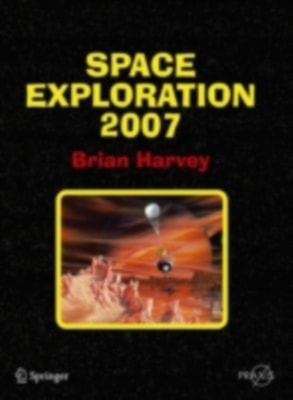
The aim of the Space Exploration - 2007 is to provide an annual update on recent space launches, missions and results, to be published every year in September.
Paolo Ulivi and David Harland provide in Robotic Exploration of the Solar System a detailed history of unmanned missions of exploration of our Solar System.
Lunar Outpost provides a detailed account of the various technologies, mission architectures, medical requirements and training needed to return humans to the Moon within the next decade.
Astronauts, cosmonauts, and a very limited number of people have experienced eating space food due to the unique processing and packaging required for space travel.
Take a trip to outer space with this weird and wonderful guide to our universe, the perfect gift for both young and old Vargic's beautifully innovative designs will help to explain all of the bizarre and fascinating aspects of the cosmos; from the history of the universe to what makes up our solar system and even how human life fits into the wider picture.
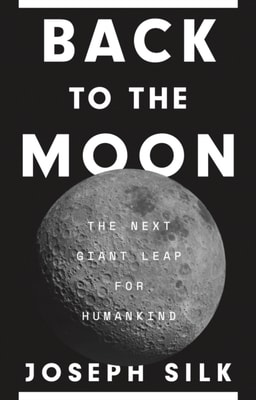
A scientist's inspiring vision of our return to the Moon as humanity's next thrilling step in space explorationJust over half a century since Neil Armstrong first stepped foot on the lunar surface, a new space race to the Moon is well underway and rapidly gaining momentum.
Space exploration, especially the recent push for the commercialization and militarization of space, is attracting increased attention not only from the wider public and the private sector but also from scholars in a wide range of disciplines.
Space exploration, especially the recent push for the commercialization and militarization of space, is attracting increased attention not only from the wider public and the private sector but also from scholars in a wide range of disciplines.
A narrative history of the men and women who have explored Mars and mapped its surface from afar, and in so doing conditioned our understanding of our nearest planetary neighbour.
Space Nuclear Propulsion for Human Mars Exploration identifies primary technical and programmatic challenges, merits, and risks for developing and demonstrating space nuclear propulsion technologies of interest to future exploration missions.
The advent of highly precise space-based geodetic techniques has led to the application of these techniques to the solution of global earth and ocean problems.
"e;Star Wars"e;as the Strategic Defense Initiative (SDI) is dubbedwill require reliable sources of immense amounts of energy to power such advanced weapons as lasers and particle beams.
Ignition of upholstered furniture by small open flames from matches, cigarette lighters, and candles is one of the leading causes of residential-fire deaths in the United States.
The Global Positioning System, with its capability for both precisely positioning and navigating an aircraft, has created new scientific opportunities for studying the earth.
If the United States hopes to continue as a leader in space, it must invest now in better earth-to-orbit technology by replacing obsolete launch facilities while also developing a new class of more robust and reliable vehicles.
This workshop report examines the capability of the forecast system to efficiently transfer weather and climate research findings into improved operational forecast capabilities.
NASA's Human Exploration and Development of Space (HEDS) program within the Office of Space Flight has proposed a new framework for space technology and systems developmentAdvanced Systems, Technology, Research, and Analysis (ASTRA) for future space flight capabilities.