Space Science and Public Engagement: 21st Century Perspectives and Opportunities critically examines the many dimensions of public engagement with space science by exploring case studies that show a spectrum of public engagement formats, ranging from the space science community's efforts to communicate developments to the public, to citizenry attempting to engage with space science issues.
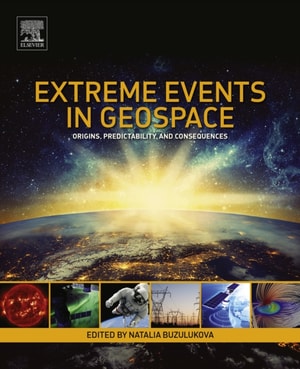
Extreme Events in Geospace: Origins, Predictability, and Consequences helps deepen the understanding, description, and forecasting of the complex and inter-related phenomena of extreme space weather events.
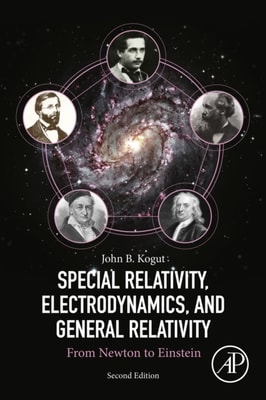
Special Relativity, Electrodynamics, and General Relativity: From Newton to Einstein is intended to teach students of physics, astrophysics, astronomy, and cosmology how to think about special and general relativity in a fundamental but accessible way.
The sixteen papers collected in this volume are expanded and revised versions of talks delivered at the Second International Conference on the Ontology of Spacetime, organized by the International Society for the Advanced Study of Spacetime (John Earman, President) at Concordia University (Montreal) from 9 to 11 June 2006.
Big Data in Radio Astronomy: Scientific Data Processing for Advanced Radio Telescopes provides the latest research developments in big data methods and techniques for radio astronomy.
Space agencies are now realizing that much of what has previously been achieved using hugely complex and costly single platform projects-large unmanned and manned satellites (including the present International Space Station)-can be replaced by a number of smaller satellites networked together.
Extreme Space Weather not only allows readers to learn the basics of complex space weather phenomena and future directions for research in space physics and extreme space events.
Experiments in Reduced Gravity: Sediment Settling on Mars is the first book to be published that reflects experiments conducted on Martian geomorphology in reduced gravity.
Planetary Exploration Horizon 2061: A Long-Term Perspective for Planetary Exploration synthesizes all the material elaborated and discussed during three workshops devoted to the Horizon 2061 foresight exercise.
This concise, sophisticated introduction to planetary climates explains the global physical and chemical processes that determine climate on any planet or major planetary satellite--from Mercury to Neptune and even large moons such as Saturn's Titan.
Topics in Modal Analysis II, Volume 6: Proceedings of the 30th IMAC, A Conference and Exposition on Structural Dynamics, 2012, is the sixth volume of six from the Conference and brings together 65 contributions to this important area of research and engineering.
This is the first book of its kind to cover the unique challenges of creating, maintaining, and operating a system that operates in both outer space and cyber space.
Bold Endeavors: Lessons from Polar and Space Exploration presents the results of 15 years of research for NASA and the Department of Defense concerning the factors that contribute to adjustment and sustained human performance under conditions of isolation and confinement.