As humans continue to degrade and destroy our planet s resources, leading to predictions of total ecological collapse, some (such as the entrepreneur Elon Musk) now suggest that a human colony elsewhere may be our species best hope for survival.
Dodging the Death Rays: A Medical Look at Our Deep Space Policy alerts the public to the little recognized dangers of ionizing radiation throughout deep space.
This book explores the concepts of possible unified field theory, vehicles that can travel at the speed of light or faster, photon absorption, and alternative green energy.
Unidentified phenomena in space, in the Earth's atmosphere, and in waters are too important to leave their exploration to the military and scientific laypersons.
A space enthusiast goes inside mission control with a motley crew of rocket scientists in this "e;fascinating journey of discovery peppered with humor"e; (Publishers Weekly).
A space enthusiast goes inside mission control with a motley crew of rocket scientists in this "e;fascinating journey of discovery peppered with humor"e; (Publishers Weekly).
Wireless sensor Networks: Vehicle and Space Applications describes the practical perspectives in using wireless sensor networks (WSN) to develop real world applications that can be used for space exploration.
This monograph presents the state of the art in aeroservoelastic (ASE) modeling and analysis and develops a systematic theoretical and computational framework for use by researchers and practicing engineers.
The reality of sunlight-based sailing in space began in May 2010, and solar sail technology and science have continued to evolve rapidly through new space missions.
On-orbit operations optimization among multiple cooperative or noncooperative spacecraft, which is often challenged by tight constraints and shifting parameters, has grown to be a hot issue in recent years.
This SpringerBrief provides a general overview of the role of satellite applications for disaster mitigation, warning, planning, recovery and response.
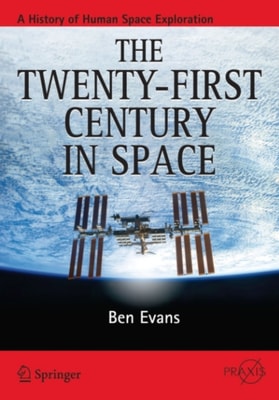
This final entry in the History of Human Space Exploration mini-series by Ben Evans continues with an in-depth look at the latter part of the 20th century and the start of the new millennium.
This book contributes to the advancement of aerospace technology and the optimization of navigation systems, thereby fostering innovation and progress in the field.
This is the first book of its kind to cover the unique challenges of creating, maintaining, and operating a system that operates in both outer space and cyber space.
Vistas in Astronomy, Volume 1: Co-operation and Organization, History and Philosophy, Dynamics, Theoretical Astrophysics, Instruments, Radio Astronomy, Solar Physics brings together the ideas that form the structural units of what is known about astronomy.
Cospar Life Sciences and Space Research, Volume XVI covers the proceedings of the Open Meetings of the Working Group on Space Biology of the 20th Plenary Meeting of COSPAR, held in Tel Aviv, Israel, on June 7-18, 1977.
This book contains the proceedings ofthe meeting on "e;Applied Mathematics in the Aerospace Field,"e; held in Erice, Sicily, Italy from September 3 to September 10, 1991.
Mechanical engineering, an engineering discipline born of the needs of the in- dustrial revolution, is once again asked to do its substantial share in the call for industrial renewal.
'Masterly' New York Times'Riveting' Scott Kelly'Remarkable' The TimesWhen Richard Branson founded Virgin Galactic in 2004, his goal was simple: to offer paying customers a trip to space by the end of the decade.
Selected as a Book of the Year 2017 in Sky at Night'Just the thing to captivate a bright child or anyone, in fact, who aspires to be the next Tim Peake' Daily TelegraphAN IMAGINATIVE EXPLORATION INTO THE 'WHAT IF' OF SPACE TRAVELImagine taking a hike along the windswept red plains of Mars to dig for signs of life, or touring one of Jupiter s sixty-four moons where you can take photos of its swirling storms.