Rapid progress in information and communications technologies is dramatically enhancing the strategic role of information, positioning effective exploitation of these technology advances as a critical success factor in military affairs.
Network-Centric Naval Forces: A Transition Strategy for Enhancing Operational Capabilities is a study to advise the Department of the Navy regarding its transition strategy to achieve a network-centric naval force through technology application.
The past decade has seen a remarkable revolution in genomic research, the discoveries of extreme environments in which organisms can live and even flourish on Earth, the identification of past and possibly present liquid-water environments in our solar system, and the detection of planets around other stars.
One of the highest-priority activities in the planetary sciences identified in published reports of the Space Studies Board's Committee on Planetary and Lunar Exploration (COMPLEX) and in reports of other advisory groups is the collection and return of extraterrestrial samples to Earth for study in terrestrial laboratories.
In March 2000, NASA's Office of Space Flight asked the Aeronautics and Space Engineering Board of the National Research Council to perform an independent assessment of the space solar power program's technology investment strategy to determine its technical soundness and its contribution to the roadmap that NASA has developed for this program.
In 1986, the FFC requested that the NRC appoint a committee to examine the field and propose ways by which the POE process could be improved to better serve public and private sector organizations.
The Office of Naval Research (ONR) contracted with the Naval Studies Board (NSB) of the National Research Council (NRC) to establish a committee to review ONR's Aircraft Technology Program (ATP).
In its fiscal year 2002 budget summary document the Bush administration expressed concernbased in part on the findings and conclusions of two National Research Council studiesabout recent trends in the federal funding of astronomy and astrophysics research.
This report evaluates the Defense Threat Reduction Agency prior and present sponsored efforts; assess the present state of the art in thermionic energy conversion systems; assess the technical challenges to the development of viable thermionic energy conversion systems for both space and terrestrial applications; and recommend a prioritized set of objectives for a future research and development program for advanced thermionic systems for space and terrestrial applications.
A workshop to assess the science and technology of life detection techniques was organized by the Committee on the Origins and Evolution of Life (COEL) of the Board on Life Sciences (BLS) and the Space Studies Board (SSB).
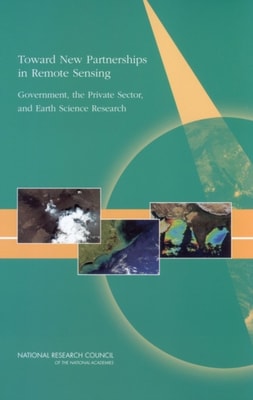
The technical, scientific, policy, and institutional environment for conducting Earth science research has been changing rapidly over the past few decades.
Knowledge of time is essential to precise knowledge of location, and for this reason the Navy, with its need to navigate on the high seas, has historically played an important role in the development and application of advanced time realization and dissemination technologies.
This study, commissioned by the National Aeronautics and Space Administration (NASA), examines the role of robotic exploration missions in assessing the risks to the first human missions to Mars.
The 1998 Committee on Space Biology and Medicine (CSBM) report A Strategy for Research in Space Biology and Medicine in the New Century assessed the known and potential effects of spaceflight on biological systems in general and on human physiology, behavior, and performance in particular, and recommended directions for research sponsored over the next decade by the National Aeronautics and Space Administration (NASA).
Protecting Earth's environment and other solar system bodies from harmful contamination has been an important principle throughout the history of space exploration.
When discussing the risk of introducing drones into the National Airspace System, it is necessary to consider the increase in risk to people in manned aircraft and on the ground as well as the various ways in which this new technology may reduce risk and save lives, sometimes in ways that cannot readily be accounted for with current safety assessment processes.
Prior to 2012, unmanned aircraft systems (UAS) technology had been primarily used by the military and hobbyists, but it has more recently transitioned to broader application, including commercial and scientific applications, as well as to expanded military use.
The radio frequency spectrum is a limited resource with ever increasing demand from an expansive range of applicationsall the way from commercial, such as mobile phones, to scientific, such as hurricane monitoring from space.
The search for life is one of the most active fields in space science and involves a wide variety of scientific disciplines, including planetary science, astronomy and astrophysics, chemistry, biology, chemistry, and geoscience.
This is the fourth in a series of five letter reports that provide an independent review of the more than 30 evidence reports that NASA has compiled on human health risks for long-duration and exploration spaceflights.
In response to a request from the National Oceanic and Atmospheric Administration - and with the support of the National Aeronautics and Space Administration and the National Science Foundation - the National Academies of Sciences, Engineering, and Medicine conducted a two-part virtual workshop, "e;Space Weather Operations and Research Infrastructure,"e; on June 16-17 and September 9-11, 2020.
The Federal Aviation Administration (FAA) is currently undertaking a broad program known as Next Generation Air Transportation System (NextGen) to develop, introduce, and certify new technologies into the National Airspace System.
Active remote sensing is the principal tool used to study and to predict short- and long-term changes in the environment of Earth - the atmosphere, the oceans and the land surfaces - as well as the near space environment of Earth.
New astronomical facilities, such as the under-construction Large Synoptic Survey Telescope and planned 30-meter-class telescopes, and new instrumentation on existing optical and infrared (OIR) telescopes, hold the promise of groundbreaking research and discovery.
The Transport Airplane Risk Assessment Methodology (TARAM) is a process for calculating risk associated with continued operational safety issues in the U.
Review of NASA's Evidence Reports on Human Health Risks 2014 Letter Report is the second in a series of five reports from the Institute of Medicine that will independently review more than 30 evidence reports that the National Aeronautics and Space Administration has compiled on human health risks for long-duration and exploration space flights.
The radio frequency spectrum is a limited resource for which there is an ever-increasing demand from an expansive range of applications - all the way from commercial, such as mobile phones, to scientific, such as hurricane monitoring from space.
The United States has publicly funded its human spaceflight program on a continuous basis for more than a half-century, through three wars and a half-dozen recessions, from the early Mercury and Gemini suborbital and Earth orbital missions, to the lunar landings, and thence to the first reusable winged crewed spaceplane that the United States operated for three decades.
Opportunities for High-Power, High-Frequency Transmitters to Advance Ionospheric/Thermospheric Research is the summary of a workshop convened by the Space Studies Board of the National Research Council in May 2013.
NASA's Science Mission Directorate (SMD) is engaged in the final stages of a comprehensive, agency-wide effort to develop a new strategic plan at a time when its budget is under considerable stress.
Review of NASA's Evidence Reports on Human Health Risks: 2013 Letter Report is the first in a series of five reports from the Institute of Medicine that will independently review more than 30 evidence reports that the National Aeronautics and Space Administration has compiled on human health risks for long-duration and exploration space flights.
The NASA Science Mission Directorate/Earth Science Division's (SMD/ESD's) Earth Venture (EV) is a program element within the Earth System Science Pathfinder Program.
The National Research Council (NRC) has been conducting decadal surveys in the Earth and space sciences since 1964, and released the latest five surveys in the past 5 years, four of which were only completed in the past 3 years.