The Handbook of Neurophotonics provides a dedicated overview of neurophotonics, covering the use of advanced optical technologies to record, stimulate, and control the activity of the brain, yielding new insight and advantages over conventional tools due to the adaptability and non-invasive nature of light.
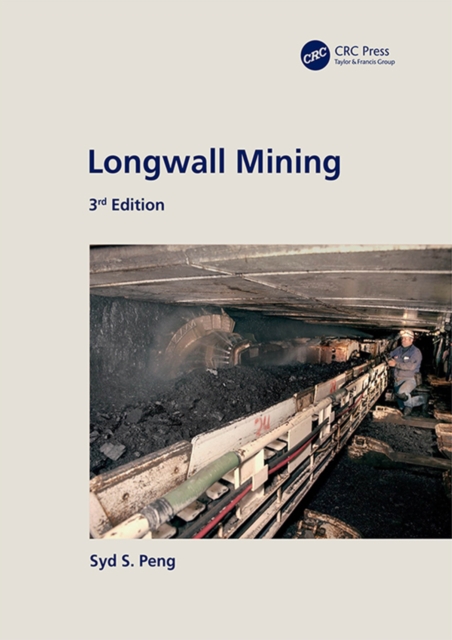
In the past 13 years since the publication of Longwall Mining, 2nd edition in 2006, although there have been no major changes in longwall mining technology and operations, many incremental developments in the whole system as well as various subsystems of the existing longwall mining operational technologies as detailed in the 2nd edition have been added to this edition.
This book draws together international contributors to analyse a wide range of aspects of mining history across the globe including mining archaeology, technologies of mining, migration and mining, the everyday life of the miner, the state and mining, industrial relations in mining, gender and mining, environment and mining, mining accidents, the visual history of mining, and mining heritage.
This book draws together international contributors to analyse a wide range of aspects of mining history across the globe including mining archaeology, technologies of mining, migration and mining, the everyday life of the miner, the state and mining, industrial relations in mining, gender and mining, environment and mining, mining accidents, the visual history of mining, and mining heritage.
Just like the previous edition, this new edition aims to provide practical advice on how to create, develop, or improve office environments so that those individuals who work within them can do so comfortably and contently.
Just like the previous edition, this new edition aims to provide practical advice on how to create, develop, or improve office environments so that those individuals who work within them can do so comfortably and contently.
In spite of the increasing importance of microcavities, device physics or the observable phenomena in optical microcavities such as enhanced or inhibited spontaneous emission and its relation with the laser oscillation has not been systematically well-described-until now.
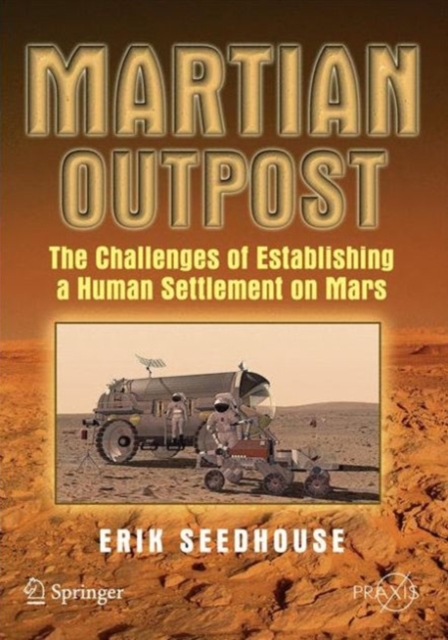
Mars Outpost provides a detailed insight into the various technologies, mission architectures, medical requirements, and training needed to send humans to Mars.
This is the first comprehensive text-atlas that shows how to use ultrasound technology and nerve stimulation techniques to guide regional blockade in children.
The First Soviet Cosmonaut Team will relate who these men were and offer far more extensive background stories, in addition to those of the more familiar names of early Soviet space explorers from that group.
To commemorate the momentous 50th anniversary of Yuri Gagarin's pioneering journey into space on 12th April 2011, a series of five books - to be published annually - will explore this half century, decade by decade, to discover how humanity's knowledge of flying, working and living in space has changed.
The aim of this popular science text is to explain aerodynamic and astrodynamic flight without the use of mathematics, in an informal style, for non-technical readers who are interested in spaceflight and spacecraft.
Paolo Ulivi and David Harland provide in "e;Robotic Exploration of the Solar System"e; a detailed history of unmanned missions of exploration of our Solar System As in their previous book Lunar Exploration, the subject will be treated wherever possible from an engineering and scientific standpoint.
A comprehensive, highly readable account of complex, technical, political and human endeavor and a worthy successor to Creating the International Space Station (Springer Praxis, January 2002) by David Harland and John Catchpole.
Ultrasound has become established as the diagnostic procedure of choice in guidelines for the management of thyroid nodules by essentially every professional organization of endocrino- gists.
With the boom of Internet, IP-based applications, such as WWW and multimedia, have been an essential part of our life, and there is an ever-increasing demand for accessing high-speed Internet services anywhere and anytime.
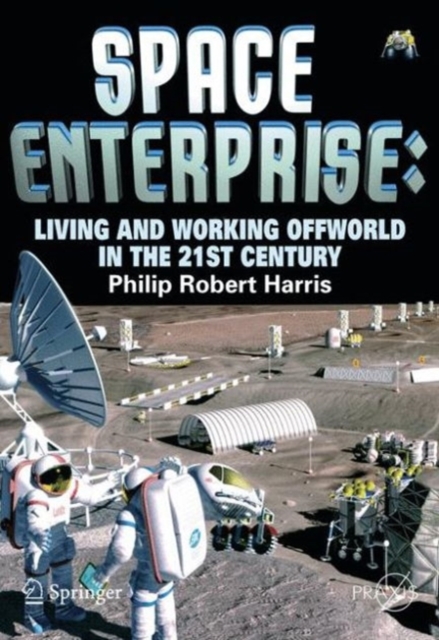
In Space Enterprise - Living and Working Offworld, Dr Philip Harris provides the vision and rationale as to why humanity is leaving its cradle, Earth, to use space resources, as well as pursuing lunar industrialization and establishing offworld settlements.
David Harland opens with a review of the robotic probes, namely the Rangers which returned television before crashing into the Moon, the Surveyors which 'soft landed' in order to investigate the nature of the surface, and the Lunar Orbiters which mapped prospective Apollo landing sites.
Paolo Ulivi and David Harland provide in Robotic Exploration of the Solar System a detailed history of unmanned missions of exploration of our Solar System.
Praxis Log of Manned Spaceflight 1961-2006 will open with a section entitled: Quest for Space, which will provide an explanation of the methods employed to get in and out of orbit and brief overviews of the different international space programmes.
Cassini At Saturn - Huygens Results brings the story of the Cassini-Huygens mission and their joint exploration of the Saturnian system right up to date.
This successor edition picks up the story where the first edition left off in 1997, and runs through to Mir's de-orbiting in March 2001, providing the definitive account of the Mir Space Station.
When, in July 1969, the Americans decisively beat the Soviet Union in the race to put an astronaut on the moon, this event had profound historical, scientific and political implications.
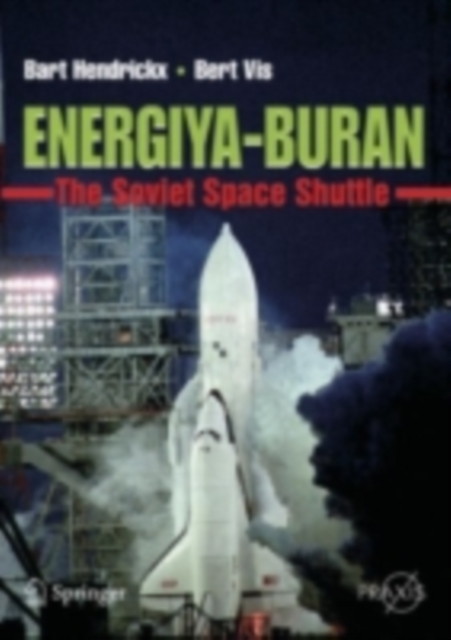
In Energiya-Buran: the Soviet Space Shuttle, the authors describe the long development path of the Soviet space shuttle system, consisting of the Energiya rocket and the Buran orbiter.
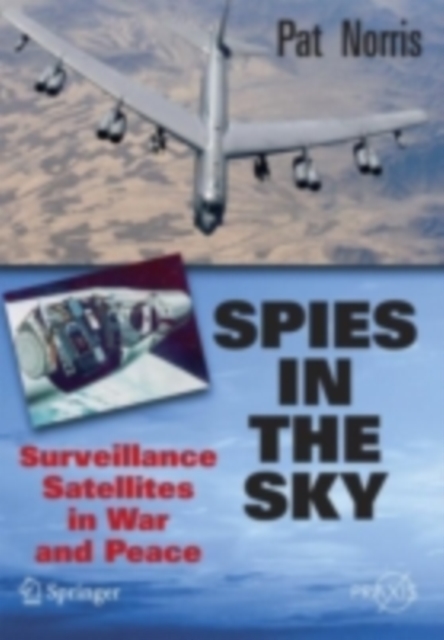
In Spies in the Sky Patrick Norris responds to the occasion of the 50th Anniversary of the dawn of the Space Age - the launch of Sputnik 1 - with a review of the most important historical applications of space science for the benefit of the human race during that half century, focusing particularly on the prevention of nuclear war.
The Wheels of Apollo and the Quest for Mars fills a need for a complete history of the Lunar Roving Vehicle used on Apollo 15, 16 and 17, drawing on many photographs never before published.
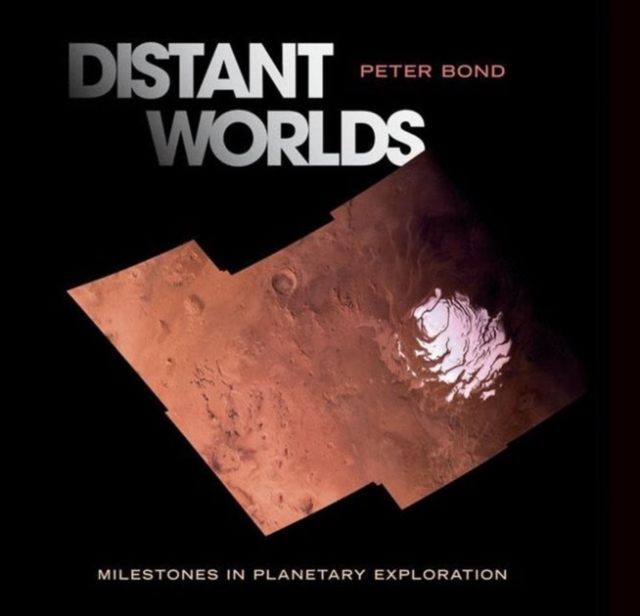
CHAPTER 1: DISCOVERING DISTANT WORLDS 3 CHAPTER 2: MERCURY: THE IRON PLANET 21 CHAPTER 3: VENUS: THE RUNAWAY GREENHOUSE 45 CHAPTER 4: THE MOON: QUEEN OF THE NIGHT 69 5: MARS: THE RED PLANET CHAPTER 101 CHAPTER 6: ASTEROIDS: VERMIN OF THE SKIES 129 CHAPTER 7: JUPITER: KING OF THE PLANETS 147 CHAPTER 8: SATURN: LIGHTWEIGHT LORD OF THE RINGS 185 CHAPTER 9: URANUS: THE TOPPLED GIANT 217 CHAPTER 10: NEPTUNE: THE LAST GIANT 237 CHAPTER 11: PLUTO: KING OF THE KUIPER BELT 257 CHAPTER 12: COMETS: COSMIC ICEBERGS 269 APPENDICES 1: Lunar and Planetary Missions 285 2: Planetary Data 298 3: Satellite Data 299 4: Planetary Rings 305 5: The Largest Known Kuiper Belt Objects 307 6: Lunar and Planetary Firsts 308 7: Selected Reading List 310 8: Selected Websites 314 INDEX 317 VII Until about 500 years ago, the Earth was believed to lie at Pluto and its recently discovered, larger cousin in the far the center of the Universe, with the Sun and five planets reaches of the Sun's realm.