Given the dramatic changes in the environment for national defense, concurrent with rapid improvements in commercial manufacturing capabilities, the Department of Defense (DOD) requires a new approach to designing, engineering, manufacturing, buying, and upgrading weapon systems.
If the United States hopes to continue as a leader in space, it must invest now in better earth-to-orbit technology by replacing obsolete launch facilities while also developing a new class of more robust and reliable vehicles.
The United States and the Soviet Union could drastically reduce their nuclear arsenals below the levels prescribed by the new Strategic Arms Reduction Treaty (START).
In this volume, the National Research Council examines problems arising throughout government-owned, contractor-operated facilities in the United States engaged in activities to build nuclear weapons.
Reports of closed beaches, restricted shellfish beds, oil spills, and ailing fisheries are some of the recent evidence that our marine environment is in trouble.
Basic Research Opportunities in Earth Science identifies areas of high-priority research within the purview of the Earth Science Division of the National Science Foundation, assesses cross-disciplinary connections, and discusses the linkages between basic research and societal needs.
This nontechnical overview of developments in nuclear arms control describes how the United States and the Soviet Union arrived at their present positionsand where they might go from here.
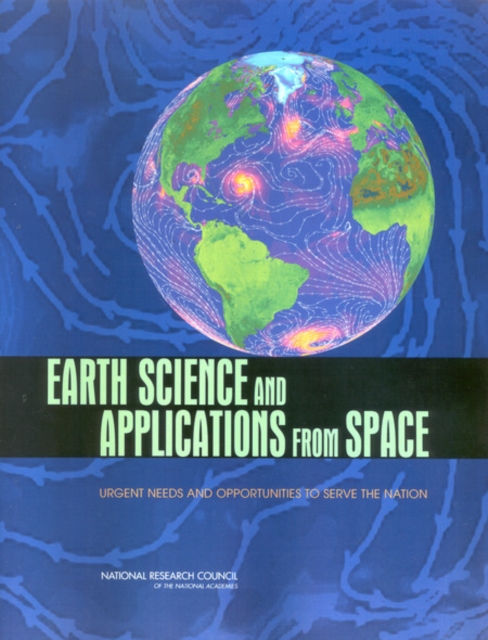
The Earth is a dynamic planet whose changes and variations affect our communications, energy, health, food, housing, and transportation infrastructure.
This workshop report examines the capability of the forecast system to efficiently transfer weather and climate research findings into improved operational forecast capabilities.
Extending the spatial and temporal boundaries of human space flight are important goals for the National Aeronautics and Space Administration (NASA), yet human space flight remains an endeavor with substantial risks.
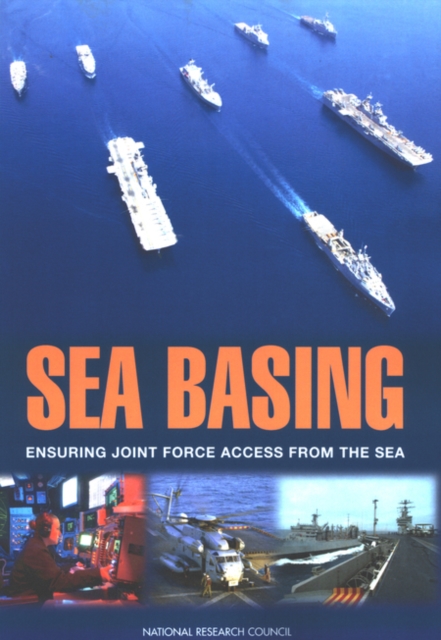
The availability of land bases from which to launch and maintain military, diplomatic, and humanitarian relief operations is becoming increasingly uncertain because of physical or political constraints.
Naval Analytical Capabilities assesses current Department of Defense initiatives and the Department of the Navy's progress in transitioning from a requirements-based to a capabilities-based organization.
NASA's Human Exploration and Development of Space (HEDS) program within the Office of Space Flight has proposed a new framework for space technology and systems developmentAdvanced Systems, Technology, Research, and Analysis (ASTRA) for future space flight capabilities.
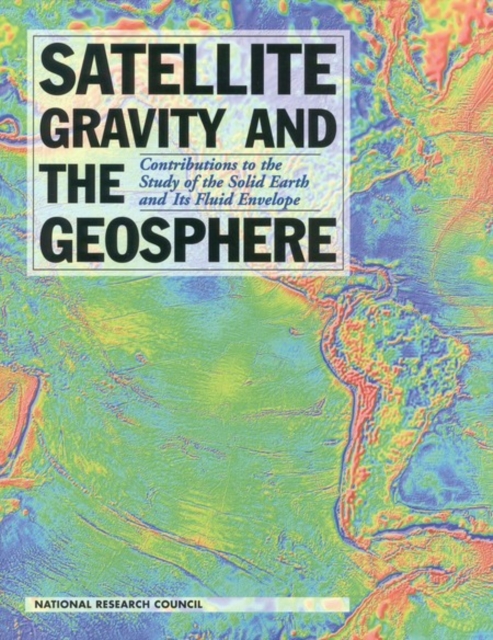
The report reviews NASA's solid-earth science strategy, placing particular emphasis on observational strategies for measuring surface deformation, high-resolution topography, surface properties, and the variability of the earth's magnetic and gravity fields.
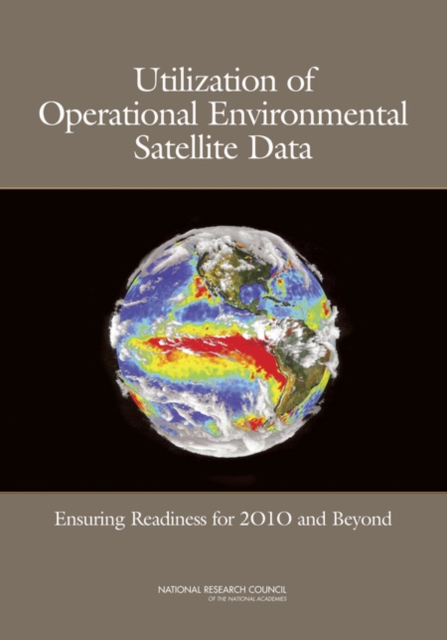
The system of satellites in place to provide environmental data-data to monitor events such as forest fires and floods; to make weather predictions; and to assess crops, transportation impacts, fisheries, land-use patterns, sea temperature, and soil moisture, among other things- serves a wide and growing array of users.
The Committee for the Review of NASA's Pioneering Revolutionary Technology (PRT) Program and its three supporting panels were charged by the National Aeronautics and Space Administration (NASA) with assessing the overall scientific and technical quality of the PRT program and its component programs, along with their associated elements and individual research tasks.
As part of its ongoing commitment to the nation's space program, NASA's medical leadership asked the Institute of Medicine (IOM) to review specific aspects of the scientific basis, policies, and procedures associated with the Longitudinal Study of Astronaut Health (LSAH).
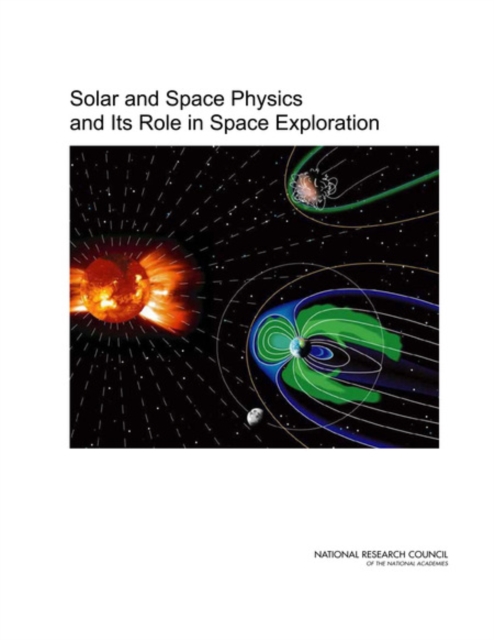
This volume, The Sun to the Earth-and Beyond: Panel Reports, is a compilation of the reports from five National Research Council (NRC) panels convened as part of a survey in solar and space physics for the period 2003-2013.
For thirty years the NASA microgravity program has used space as a tool to study fundamental flow phenomena that are important to fields ranging from combustion science to biotechnology.
Effective science, clearly a mandate for the National Aeronautics and Space Administration (NASA), involves asking significant questions about the physical and biological world and seeking definitive answers.
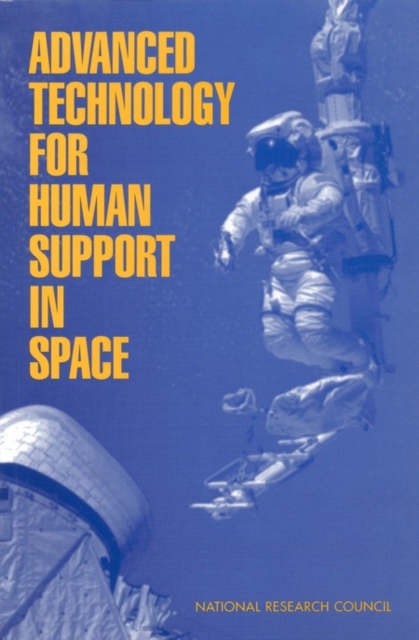
Advanced Technology for Human Support in Space was written in response to a request from NASA's Office of Life and Microgravity Sciences and Applications (OLMSA) to evaluate its Advanced Human Support Technology Program.
The Space Studies Board of the National Research Council (NRC) serves as the primary adviser to the National Aeronautics and Space Administration (NASA) on planetary protection policy, the purpose of which is to preserve conditions for future biological and organic exploration of planets and other solar system objects and to protect Earth and its biosphere from potential extraterrestrial sources of contamination.
This book assesses the state of practice and use of ship-bridge simulators in the professional development and licensing of deck officers and marine pilots.
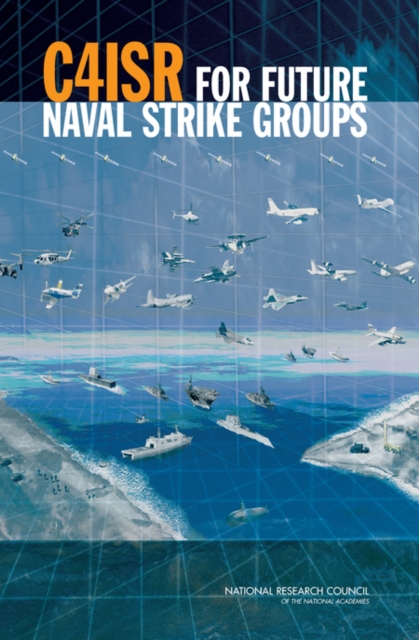
Rapid progress in information and communications technologies is dramatically enhancing the strategic role of information, positioning effective exploitation of these technology advances as a critical success factor in military affairs.