This book assesses the state of practice and use of ship-bridge simulators in the professional development and licensing of deck officers and marine pilots.
The United States faces decisions requiring information about the oceans in vastly expanded scales of time and space and from oceanic sectors not accessible with the suite of tools now used by scientists and engineers.
In 2006, the NRC published a Decadal Survey of Civil Aeronautics: Foundation for the Future, which set out six strategic objectives for the next decade of civil aeronautics research and technology.
In 2000, the nation's next-generation National Polar-orbiting Operational Environmental Satellite System (NPOESS) program anticipated purchasing six satellites for $6.
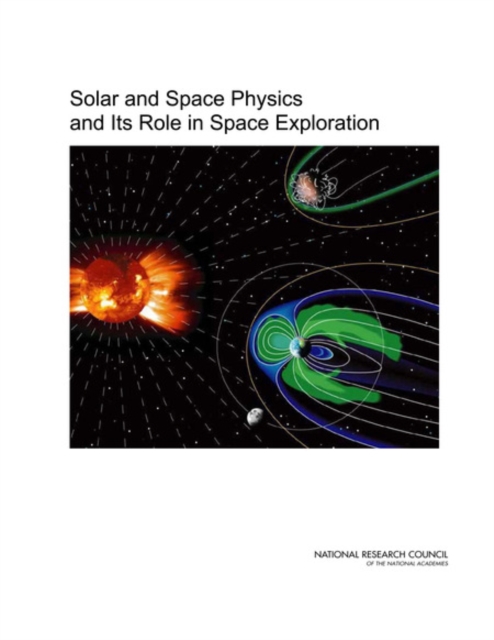
The adverse effects of extreme space weather on modern technologypower grid outages, high-frequency communication blackouts, spacecraft anomaliesare well known and well documented, and the physical processes underlying space weather are also generally well understood.
Since the beginning of space flight, the collision hazard in Earth orbit has increased as the number of artificial objects orbiting the Earth has grown.
To begin implementation of the Vision for Space Exploration (recently renamed "e;United States Space Exploration Policy"e;), NASA has begun development of new launch vehicles and a human-carrying spacecraft that are collectively called the Constellation System.
The Space Studies Board of the National Research Council (NRC) serves as the primary adviser to the National Aeronautics and Space Administration (NASA) on planetary protection policy, the purpose of which is to preserve conditions for future biological and organic exploration of planets and other solar system objects and to protect Earth and its biosphere from potential extraterrestrial sources of contamination.
Advanced Technology for Human Support in Space was written in response to a request from NASA's Office of Life and Microgravity Sciences and Applications (OLMSA) to evaluate its Advanced Human Support Technology Program.
This book documents electric power requirements for the dismounted soldier on future Army battlefields, describes advanced energy concepts, and provides an integrated assessment of technologies likely to affect limitations and needs in the future.
One of the highest-priority activities in the planetary sciences identified in published reports of the Space Studies Board's Committee on Planetary and Lunar Exploration (COMPLEX) and in reports of other advisory groups is the collection and return of extraterrestrial samples to Earth for study in terrestrial laboratories.
Ignition of upholstered furniture by small open flames from matches, cigarette lighters, and candles is one of the leading causes of residential-fire deaths in the United States.
Network-Centric Naval Forces: A Transition Strategy for Enhancing Operational Capabilities is a study to advise the Department of the Navy regarding its transition strategy to achieve a network-centric naval force through technology application.
This workshop report examines the capability of the forecast system to efficiently transfer weather and climate research findings into improved operational forecast capabilities.
The 1998 Committee on Space Biology and Medicine (CSBM) report A Strategy for Research in Space Biology and Medicine in the New Century assessed the known and potential effects of spaceflight on biological systems in general and on human physiology, behavior, and performance in particular, and recommended directions for research sponsored over the next decade by the National Aeronautics and Space Administration (NASA).
Currently, the Departments of Defense (DOD) and Commerce (DOC) acquire and operate separate polarorbiting environmental satellite systems that collect data needed for military and civil weather forecasting.
Basic Research Opportunities in Earth Science identifies areas of high-priority research within the purview of the Earth Science Division of the National Science Foundation, assesses cross-disciplinary connections, and discusses the linkages between basic research and societal needs.
Rapid progress in information and communications technologies is dramatically enhancing the strategic role of information, positioning effective exploitation of these technology advances as a critical success factor in military affairs.
Effective science, clearly a mandate for the National Aeronautics and Space Administration (NASA), involves asking significant questions about the physical and biological world and seeking definitive answers.
In March 2000, NASA's Office of Space Flight asked the Aeronautics and Space Engineering Board of the National Research Council to perform an independent assessment of the space solar power program's technology investment strategy to determine its technical soundness and its contribution to the roadmap that NASA has developed for this program.
This report evaluates the Defense Threat Reduction Agency prior and present sponsored efforts; assess the present state of the art in thermionic energy conversion systems; assess the technical challenges to the development of viable thermionic energy conversion systems for both space and terrestrial applications; and recommend a prioritized set of objectives for a future research and development program for advanced thermionic systems for space and terrestrial applications.
A workshop to assess the science and technology of life detection techniques was organized by the Committee on the Origins and Evolution of Life (COEL) of the Board on Life Sciences (BLS) and the Space Studies Board (SSB).
In 1986, the FFC requested that the NRC appoint a committee to examine the field and propose ways by which the POE process could be improved to better serve public and private sector organizations.
This study, commissioned by the National Aeronautics and Space Administration (NASA), examines the role of robotic exploration missions in assessing the risks to the first human missions to Mars.
The past decade has seen a remarkable revolution in genomic research, the discoveries of extreme environments in which organisms can live and even flourish on Earth, the identification of past and possibly present liquid-water environments in our solar system, and the detection of planets around other stars.
The technical, scientific, policy, and institutional environment for conducting Earth science research has been changing rapidly over the past few decades.
The report reviews NASA's solid-earth science strategy, placing particular emphasis on observational strategies for measuring surface deformation, high-resolution topography, surface properties, and the variability of the earth's magnetic and gravity fields.
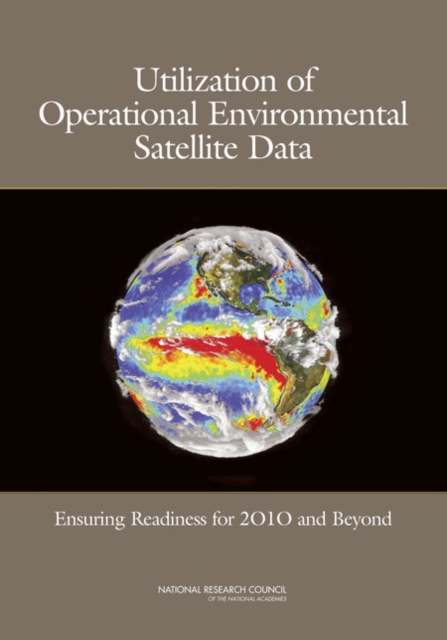
The system of satellites in place to provide environmental data-data to monitor events such as forest fires and floods; to make weather predictions; and to assess crops, transportation impacts, fisheries, land-use patterns, sea temperature, and soil moisture, among other things- serves a wide and growing array of users.