This proceedings volume gathers selected, peer-reviewed papers presented at the Dynamical Systems Theory and Applications International Conference - DSTA 2021, held virtually on December 6-9, 2021, organized by the Department of Automation, Biomechanics, and Mechatronics at Lodz University of Technology, Poland.
This book presents a curated selection of contemporary research, capturing the progress of Ukrainian and international scientists in addressing the complex issues surrounding energy systems, sustainable fuels, and efficient transport solutions.
This Second Volume in the series Handbook of Dynamic Data Driven Applications Systems (DDDAS) expands the scope of the methods and the application areas presented in the first Volume and aims to provide additional and extended content of the increasing set of science and engineering advances for new capabilities enabled through DDDAS.
This book covers research methods such as Systematic Literature Review (SLR) or Multifocal Literature Review (MLR), case studies, experiments, surveys, and Design Science Research using quantitative and qualitative approaches.
Das Ziel dieses Buches ist die Charakterisierung und Beschreibung des Ausbreitungsverhaltens geführter Ultraschallwellen (GUW) in Faserverbund-Metall-Laminaten (FML).
The current book, Advanced Fluid Mechanics and Heat Transfer is based on author's four decades of industrial and academic research in the area of thermofluid sciences including fluid mechanics, aero-thermodynamics, heat transfer and their applications to engineering systems.
This book has unique features that set it apart from conventional books on the prevention of system failures in that it provides a method that views human activities from a meta-methodological perspective based upon an inter-disciplinary understanding of human activities.
In recent times, polynomial chaos expansion has emerged as a dominant technique to determine the response uncertainties of a system by propagating the uncertainties of the inputs.
In an era defined by technological breakthroughs such as AI, blockchain, and IoT, this book offers a fresh and practical approach to Business Model Innovation (BMI).
This contributed volume guides researchers and practitioners on resource collaborative management of supply chains and manufacturing enterprises within an industrial internet technological environment.
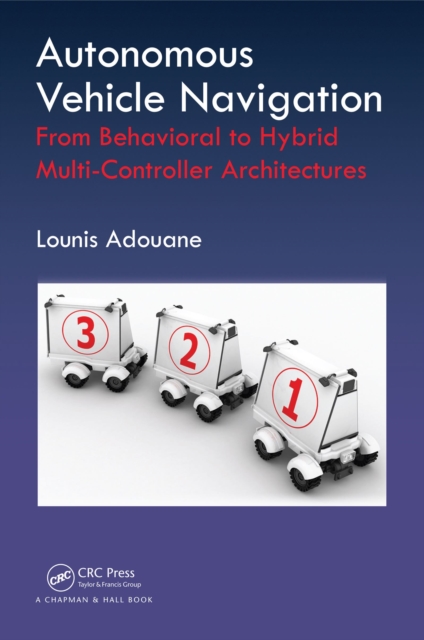
Improve the Safety, Flexibility, and Reliability of Autonomous Navigation in Complex EnvironmentsAutonomous Vehicle Navigation: From Behavioral to Hybrid Multi-Controller Architectures explores the use of multi-controller architectures in fully autonomous robot navigation-even in highly dynamic and cluttered environments.
This monograph aims to provide a rigorous yet accessible presentation of some fundamental concepts used in modeling brain mechanics and give a glimpse of the insights and advances that have arisen as a result of the nascent interaction of the mathematical and neurosurgical sciences.
This book presents broadly applicable methods for the large deviation and moderate deviation analysis of discrete and continuous time stochastic systems.
This book describes methods for designing and analyzing experiments that are conducted using a computer code, a computer experiment, and, when possible, a physical experiment.
This text presents a highly original treatment of the fundamentals of FEM, developed using computer algebra, based on undergraduate-level engineering mathematics and the mechanics of solids.
This textbook aims to fill the gap between those that offer a theoretical treatment without many applications and those that present and apply formulas without appropriately deriving them.
Now in its second edition, this book continues to give readers a broad mathematical basis for modelling and understanding the wide range of wave phenomena encountered in modern applications.
This monograph presents a novel numerical approach to solving partial integro-differential equations arising in asset pricing models with jumps, which greatly exceeds the efficiency of existing approaches.
This book presents a comprehensive and self-contained treatment of the authors' newly developed scalable algorithms for the solutions of multibody contact problems of linear elasticity.
This textbook, now in its third edition, offers a rigorous and self-contained introduction to the theory of continuous-time stochastic processes, stochastic integrals, and stochastic differential equations.
This monograph presents the state of the art in aeroservoelastic (ASE) modeling and analysis and develops a systematic theoretical and computational framework for use by researchers and practicing engineers.
This three-part book provides a comprehensive and systematic introduction to these challenging topics such as model calibration, parameter estimation, reliability assessment, and data collection design.
On-orbit operations optimization among multiple cooperative or noncooperative spacecraft, which is often challenged by tight constraints and shifting parameters, has grown to be a hot issue in recent years.
This book represents the HELS (Helmholtz equation least squares) theory and its applications for visualizing acoustic radiation from an arbitrarily shaped vibrating structure in free or confined space.
This textbook's methodological approach familiarizes readers with the mathematical tools required to correctly define and solve problems in continuum mechanics.
This handbook consists of seventeen chapters written by eminent scientists from the international mathematical community, who present important research works in the field of mathematical analysis and related subjects, particularly in the Ulam stability theory of functional equations.
As Richard Bellman has so elegantly stated at the Second International Conference on General Inequalities (Oberwolfach, 1978), "e;There are three reasons for the study of inequalities: practical, theoretical, and aesthetic.
This book follows the methodologies of complex adaptive systems research in their application to addressing the problems of terrorism, specifically terrorist networks, their structure and various methods of mapping and interdicting them as well as exploring the complex landscape of network-centric and irregular warfare.
The revised and expanded edition of this textbook presents the concepts and applications of random processes with the same illuminating simplicity as its first edition, but with the notable addition of substantial modern material on biological modeling.
This pioneering text provides a comprehensive introduction to systems structure, function, and modeling as applied in all fields of science and engineering.
One of the greatest challenges facing the computational engineering community is to extend the success of computational mechanics to fields outside traditional engineering, in particular to biology, the biomedical sciences and medicine.