This volume includes the proceedings of the 3rd International Conference on "e;From Smart Cities to Smart Factories for a Sustainable Future"e; (SCFF25), held at VSB - Technical University of Ostrava from May 13 to 15, 2025.
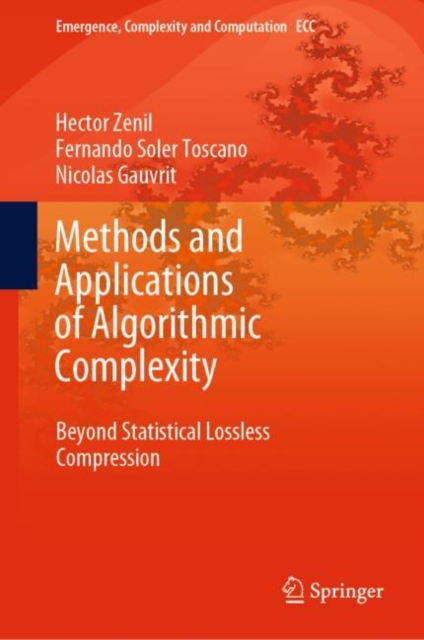
This book explores a different pragmatic approach to algorithmic complexity rooted or motivated by the theoretical foundations of algorithmic probability and explores the relaxation of necessary and sufficient conditions in the pursuit of numerical applicability, with some of these approaches entailing greater risks than others in exchange for greater relevance and applicability.
This book aims to democratize MATLAB’s power, making its advanced computational capabilities accessible to a wider audience, including those less familiar with traditional command-line programming.
This book aims to democratize MATLAB’s power, making its advanced computational capabilities accessible to a wider audience, including those less familiar with traditional command-line programming.
This book presents contributions from the 21st DepCoS RELCOMEX Conference that addresses the reliability, safety, security, and performance of modern information systems—domains that are rapidly evolving under the influence of artificial intelligence, quantum technologies, and emerging cybersecurity challenges.
Ambient intelligence is the vision of a technology that will become invisibly embedded in our natural surroundings, present whenever we need it, enabled by simple and effortless interactions, attuned to all our senses, adaptive to users and context-sensitive, and autonomous.
This book explores a different pragmatic approach to algorithmic complexity rooted or motivated by the theoretical foundations of algorithmic probability and explores the relaxation of necessary and sufficient conditions in the pursuit of numerical applicability, with some of these approaches entailing greater risks than others in exchange for greater relevance and applicability.
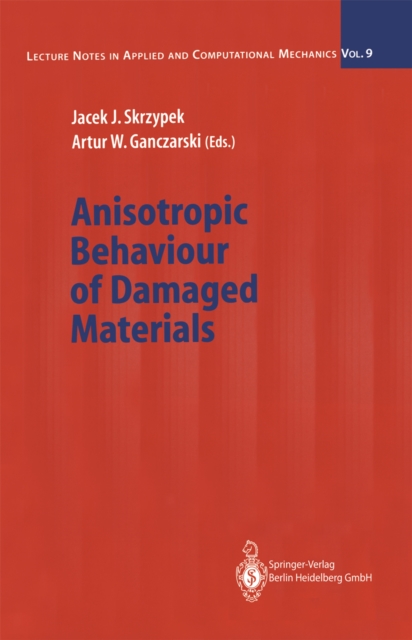
The scope of this book is based on the keynote lectures delivered during the Inter- national Symposium on Anisotropic Behaviour of Damaged Materials ABDM, held in Krakow-Przegorzaiy, Poland, September 9-11, 2002.
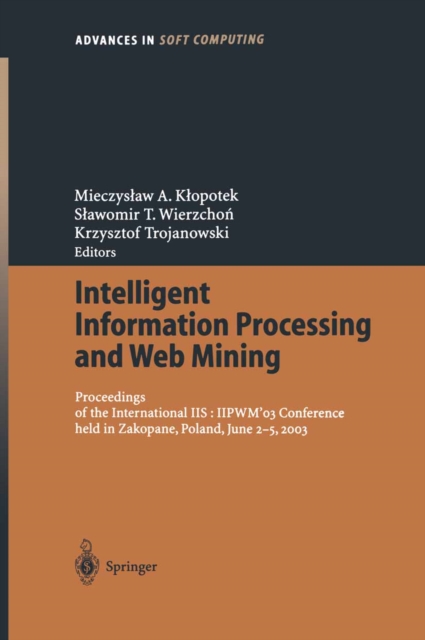
This volume contains articles accepted for presentation during The Intelligent Information Processing and Web Mining Conference IIS:IIPWM'03 which was held in Zakopane, Poland, on June 2-5, 2003.
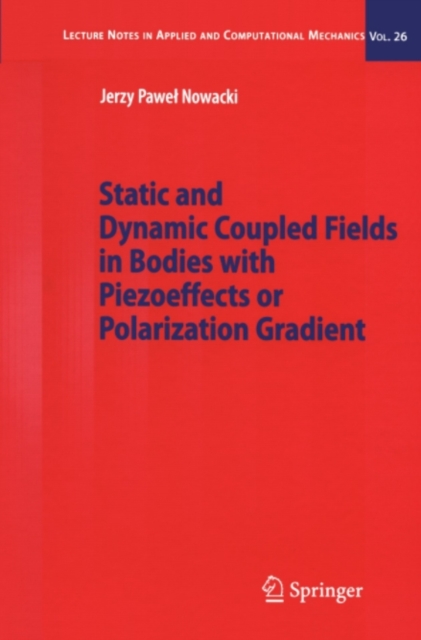
The basic subject chosen for this book is directly associated with physics of piezoelectricity and some other electro-magneto-thermo-elastic coupling phe- nomena in solids.
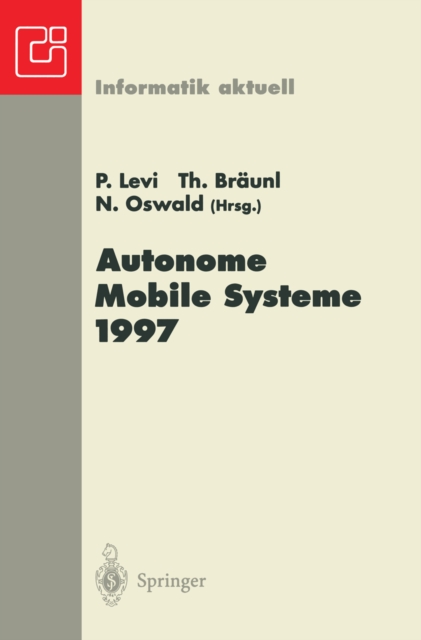
Systeme für graphisch-interaktive betriebliche Anwendungen - Gegenstand dieses Buches - reichen von datenbankbasierten Informationssystemen im PPS-Bereich bis hin zu Programmier-, Diagnose- und Planungswerkzeugen im Werkstattbereich.
Stockholm, home to the author and also known as "e;Beauty on the Sea"e;, has much to offer, including a rare insight into ship construction and architecture in the early seventeenth century.
Harmonic and biharmonic boundary value problems (BVP) arising in physical situations in fluid mechanics are, in general, intractable by analytic techniques.
As the Boundary Element Method develops into a tool of engineering analysis more effort is dedicated to studying new applications and solving different problems.
Agent based evolutionary search is an emerging paradigm in computational int- ligence offering the potential to conceptualize and solve a variety of complex problems such as currency trading, production planning, disaster response m- agement, business process management etc.
This book presents contributions from the 21st DepCoS RELCOMEX Conference that addresses the reliability, safety, security, and performance of modern information systems—domains that are rapidly evolving under the influence of artificial intelligence, quantum technologies, and emerging cybersecurity challenges.
This volume includes the proceedings of the 3rd International Conference on "e;From Smart Cities to Smart Factories for a Sustainable Future"e; (SCFF25), held at VSB - Technical University of Ostrava from May 13 to 15, 2025.