"e;Molecular Materials with Specific Interactions: Modeling and Design"e; has a very interdisciplinary character and is intended to provide basic information as well as the details of theory and examples of its application to experimentalists and theoreticians interested in modeling molecular properties and putting into practice rational design of new materials.
Design for Manufacturability and Yield for Nano-Scale CMOS walks the reader through all the aspects of manufacturability and yield in a nano-CMOS process and how to address each aspect at the proper design step starting with the design and layout of standard cells and how to yield-grade libraries for critical area and lithography artifacts through place and route, CMP model based simulation and dummy-fill insertion, mask planning, simulation and manufacturing, and through statistical design and statistical timing closure of the design.
Calixarenes have been widely exploited in all areas of supramolecular chemistry over the past three decades and many recent developments have concerned their applications in the production of chemical entities with the dimensions of nanometres, as in "e;nanochemistry"e;.
In September 2005 a NATO Advanced Research Workshop convened in Kiev to discuss the current state of the art in surface chemistry and nanomaterials research, with a view towards biomedical and environmental applications.
Recently, it was reported that nanostructured materials processed under high pressure by HPT and ECAP have an extraordinary combination of both high strength and high ductility, which are two desirable, but rarely co-existing properties.
Ambient Intelligence is one of the new paradigms in the development of information and communication technology, which has attracted much attention over the past years.
Low-Power Low-Voltage Sigma-Delta Modulators in Nanometer CMOS addresses the low-power low-voltage Sigma-Delta ADC design in nanometer CMOS technologies at both the circuit-level and the system level.
With the convergence of Nanotechnology, Biotechnology, Information technology and Cognitive science (NBIC) fields promising to change our competitive, operational, and employment landscape in fundamental ways, we find ourselves on the brink of a new technological and science-driven business revolution.
"e;Molecular Gels: Materials with Self-Assembled Fibrillar Networks"e; is a comprehensive treatise on gelators, especially low molecular-mass gelators and the properties of their gels.
The principal aim of this NATO Advanced Study Institute (ASI) "e;Nanostructured and Advanced Materials for Applications in Sensor, Optoelectronic and Photovoltaic Technology"e; was to present a contemporary overview of the field of nanostructured and advanced electronic materials.
A critical assessment of state-of-the-art of emerging ("e;breakthrough"e;) biosensor technologies that will allow for the rapid identification of biological threat agents in the environment and human population.
A biofilm is a collection of microbial cells that have adhered to biotic surfaces such as plant cuticles or animal epithelia, as well as abiotic surfaces such as rocky substratum or catheter exteriors.
The realm of ultra precision mechanisms, for example in controlling motion to small fractions of a micrometer, is encroaching into many fields of technology.
The realm of ultra precision mechanisms, for example in controlling motion to small fractions of a micrometer, is encroaching into many fields of technology.
The field of molecular medicine covers the medical interventions targeting molecular structures and mechanisms that are involved in disease progression.
The field of molecular medicine covers the medical interventions targeting molecular structures and mechanisms that are involved in disease progression.
This book provides an introduction to nanofluidics in a simple manner and can be easily followed by senior undergraduate students, graduate students, and other researchers who have some background in fluid mechanics.
This book provides an introduction to nanofluidics in a simple manner and can be easily followed by senior undergraduate students, graduate students, and other researchers who have some background in fluid mechanics.
The research community lacks both the capability to explain the effectiveness of existing techniques and the metrics to predict the security properties and vulnerabilities of the next generation of nano-devices and systems.
The research community lacks both the capability to explain the effectiveness of existing techniques and the metrics to predict the security properties and vulnerabilities of the next generation of nano-devices and systems.
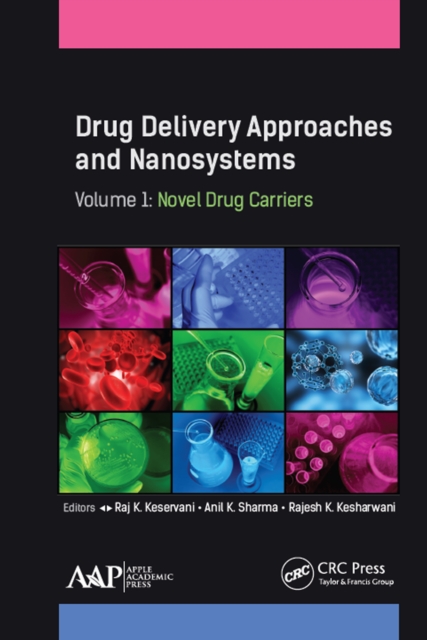
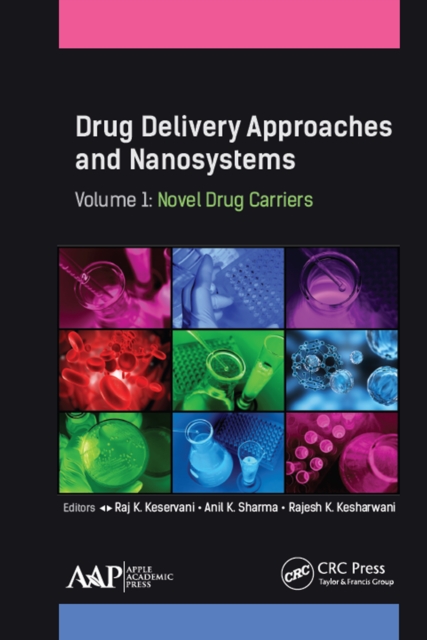
This volume, the first of the two-volume Drug Delivery Approaches and Nanosystems series, presents a full picture of the state-of-the-art research and development in drug delivery systems using nanotechnology and its applications.
This volume, the first of the two-volume Drug Delivery Approaches and Nanosystems series, presents a full picture of the state-of-the-art research and development in drug delivery systems using nanotechnology and its applications.
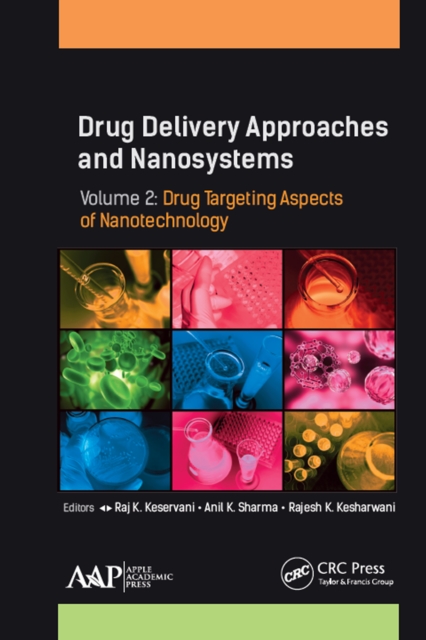
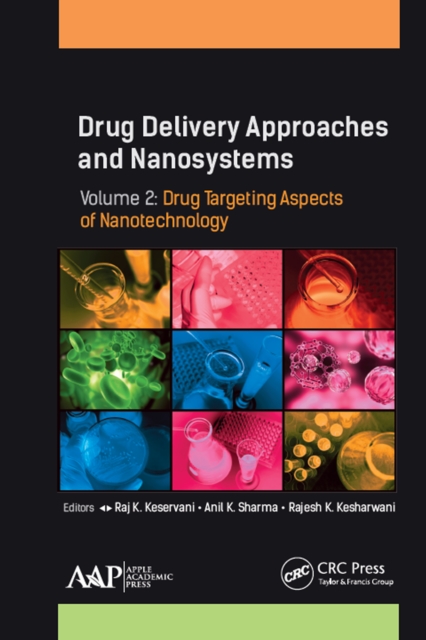
This volume is a thorough presentation of the state-of-the-art research and developments in drug delivery systems using nanotechnology and its applications.
This volume is a thorough presentation of the state-of-the-art research and developments in drug delivery systems using nanotechnology and its applications.
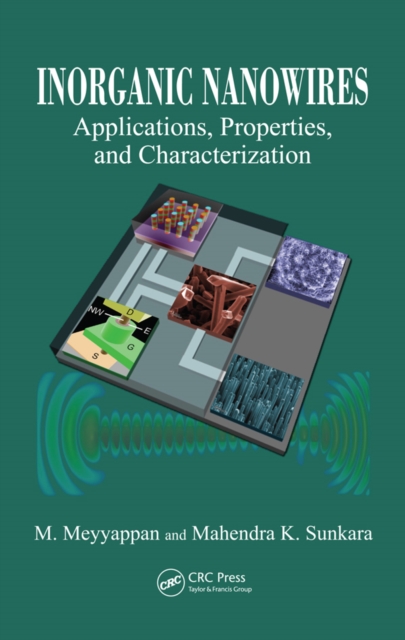
Advances in nanofabrication, characterization tools, and the drive to commercialize nanotechnology products have contributed to the significant increase in research on inorganic nanowires (INWs).
Considering the fluid nature of nano breakthroughs-and the delicate balance between benefits and consequences as they apply to medicine-readers at all levels require a practical, understandable base of information about these developments to take greatest advantage of them.
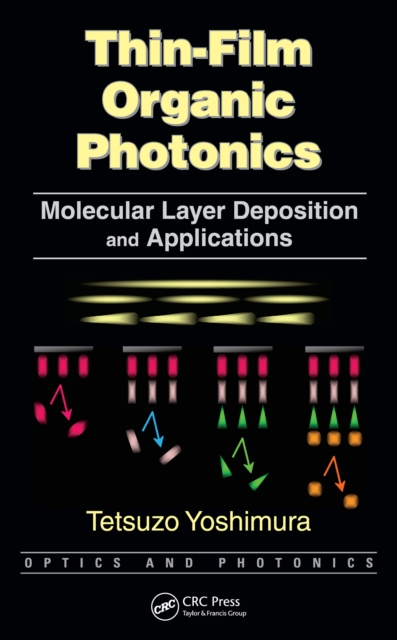
Among the many atomic/molecular assembling techniques used to develop artificial materials, molecular layer deposition (MLD) continues to receive special attention as the next-generation growth technique for organic thin-film materials used in photonics and electronics.
While ion-beam techniques have been used to create thin films in the semiconductor industry for several decades, these methods have been too costly for other surface treatment applications.
Technological advancement in chip development, primarily based on the downscaling of the feature size of transistors, is threatening to come to a standstill as we approach the limits of conventional scaling.