Since their discovery more than a decade ago, carbon nanotubes (CNTs) have held scientists and engineers in captive fascination, seated on the verge of enormous breakthroughs in areas such as medicine, electronics, and materials science, to name but a few.
Applications of nanotechnology continue to fuel significant innovations in areas ranging from electronics, microcomputing, and biotechnology to medicine, consumer supplies, aerospace, and energy production.
No longer the hidden genius of scientists, nanotechnology is now appearing in products manufactured for everyday life-products that can heal, save lives, be more durable, and last longer.
According to Moore's Law, not only does the number of transistors in an integrated circuit double every two years, but transistor size also decreases at a predictable rate.
The rise of collaborative consumption, peer-to-peer systems, and not-for-profit social enterprise heralds the emergence of a new era of human collectivity.
We are at a critical evolutionary juncture in the research and development of low-temperature plasmas, which have become essential to synthesizing and processing vital nanoscale materials.
Computational Finite Element Methods in Nanotechnology demonstrates the capabilities of finite element methods in nanotechnology for a range of fields.
Focusing on control and manipulation of plasmons at nanometer dimensions, nanoplasmonics combines the strength of electronics and photonics, and is predicted to replace existing integrated circuits and photonic devices.
Developments at the nanoscale are leading to new possibilities and challenges for nuclear applications in areas ranging from medicine to international commerce to atomic power production/waste treatment.
Biosensors Based on Nanomaterials and Nanodevices links interdisciplinary research from leading experts to provide graduate students, academics, researchers, and industry professionals alike with a comprehensive source for key advancements and future trends in nanostructured biosensor development.
Micro/nano-scale engineering-especially the design and implementation of ultra-fast and ultra-scale energy devices, sensors, and cellular and molecular systems-remains a daunting challenge.
Graphene, Carbon Nanotubes, and Nanostructures: Techniques and Applications offers a comprehensive review of groundbreaking research in nanofabrication technology and explores myriad applications that this technology has enabled.
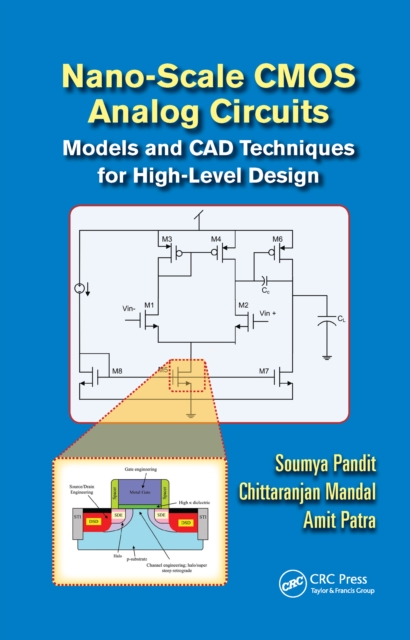
Reliability concerns and the limitations of process technology can sometimes restrict the innovation process involved in designing nano-scale analog circuits.
The Finite Difference Time Domain (FDTD) method is an essential tool in modeling inhomogeneous, anisotropic, and dispersive media with random, multilayered, and periodic fundamental (or device) nanostructures due to its features of extreme flexibility and easy implementation.
Nanomaterials are being incorporated into products all around us, having an incredible impact on durability, strength, functionality, and other material properties.
Micro- and Nanoelectronics: Emerging Device Challenges and Solutions presents a comprehensive overview of the current state of the art of micro- and nanoelectronics, covering the field from fundamental science and material properties to novel ways of making nanodevices.
Understanding the physical properties and dynamical behavior of nanochannel flows has been of great interest in recent years and is important for the theoretical study of fluid dynamics and engineering applications in physics, chemistry, medicine, and electronics.
An Alternative to Copper-Based Interconnect TechnologyWith an increase in demand for more circuit components on a single chip, there is a growing need for nanoelectronic devices and their interconnects (a physical connecting medium made of thin metal films between several electrical nodes in a semiconducting chip that transmit signals from one point to another without any distortion).
Computational Multiscale Modeling of Multiphase Nanosystems: Theory and Applications presents a systematic description of the theory of multiscale modeling of nanotechnology applications in various fields of science and technology.
Synthesis and design of new nanocatalysts is an important area of research that aims to introduce multiple types of useful applications in a greener market.
Synthesis and design of new nanocatalysts is an important area of research that aims to introduce multiple types of useful applications in a greener market.
This book focusses on the spacer engineering aspects of novel MOS-based device-circuit co-design in sub-20nm technology node, its process complexity, variability, and reliability issues.
This book focusses on the spacer engineering aspects of novel MOS-based device-circuit co-design in sub-20nm technology node, its process complexity, variability, and reliability issues.
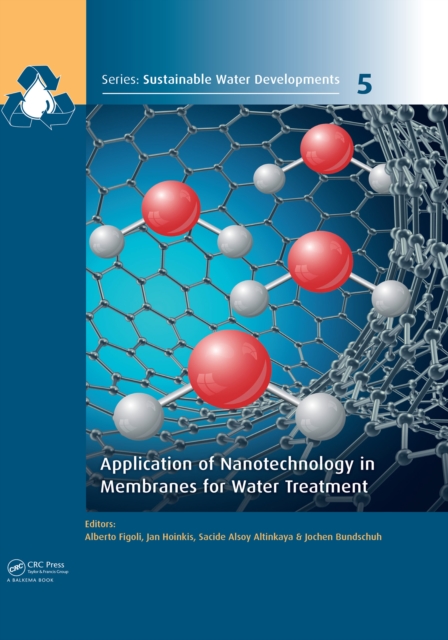
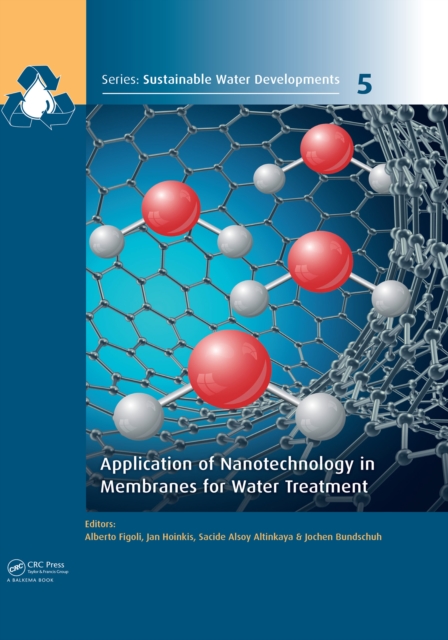
The book focuses on Application of Nanotechnology in Membranes for Water Treatment but not only provides a series of innovative solutions for water reclamation through advanced membrane technology but also serves as a medium to promote international cooperation and networking for the development of advanced membrane technology for Universal well-being and to achieve the common goal of supplying economically, environmentally and societally sustainable freshwater and better sanitation systems.
The book focuses on Application of Nanotechnology in Membranes for Water Treatment but not only provides a series of innovative solutions for water reclamation through advanced membrane technology but also serves as a medium to promote international cooperation and networking for the development of advanced membrane technology for Universal well-being and to achieve the common goal of supplying economically, environmentally and societally sustainable freshwater and better sanitation systems.
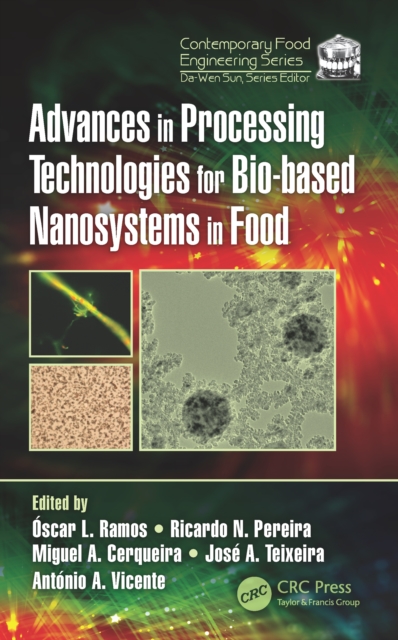
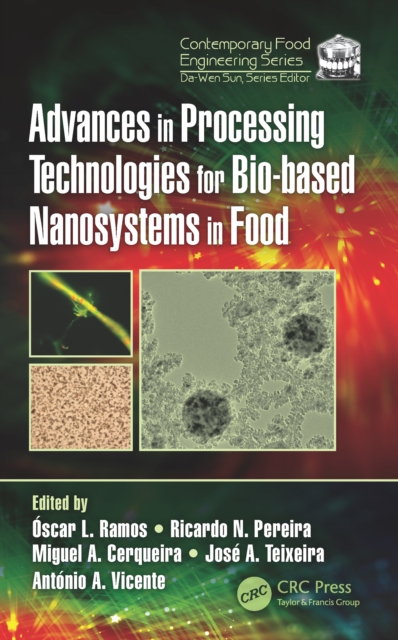
Nanotechnology can be used to address challenges faced by the food and bioprocessing industries for developing and implementing improved or novel systems that can produce safer, nutritious, healthier, sustainable, and environmental-friendly food products.
Nanotechnology can be used to address challenges faced by the food and bioprocessing industries for developing and implementing improved or novel systems that can produce safer, nutritious, healthier, sustainable, and environmental-friendly food products.
With contributions from experts from both academia and industry, this book provides up-to-date reviews and promising approaches for corrosion control of metals and alloys via sustainable biopolymers and carbon nanomaterials coatings, focusing on the wonder material "e;graphene"e; which is more solid than steel.
With contributions from experts from both academia and industry, this book provides up-to-date reviews and promising approaches for corrosion control of metals and alloys via sustainable biopolymers and carbon nanomaterials coatings, focusing on the wonder material "e;graphene"e; which is more solid than steel.
Sustainable Biological Systems for Agriculture: Emerging Issues in Nanotechnology, Biofertilizers, Wastewater, and Farm Machines explores and introduces the use of nanotechnology, biofertilizers, and design of farm machines in agriculture.
Sustainable Biological Systems for Agriculture: Emerging Issues in Nanotechnology, Biofertilizers, Wastewater, and Farm Machines explores and introduces the use of nanotechnology, biofertilizers, and design of farm machines in agriculture.
The primary aim of this book is to discuss various aspects of nanoscale device design and their applications including transport mechanism, modeling, and circuit applications.
The primary aim of this book is to discuss various aspects of nanoscale device design and their applications including transport mechanism, modeling, and circuit applications.
This comprehensive tutorial guide to silicon nanomaterials spans from fundamental properties, growth mechanisms, and processing of nanosilicon to electronic device, energy conversion and storage, biomedical, and environmental applications.
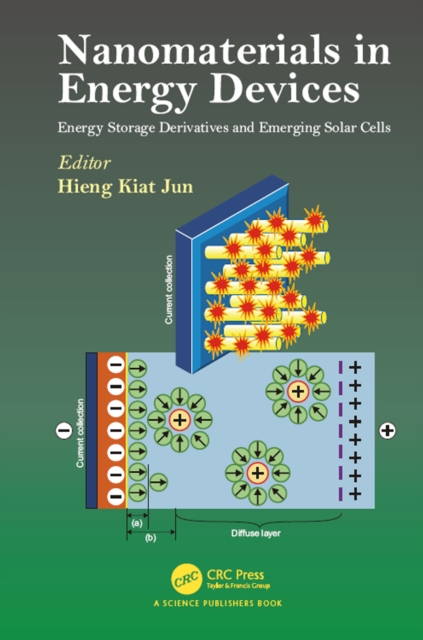
The main aims of this book are to summarize the fundamentals, synthesis methods, properties and applications of nanomaterials, so as to provide readers with a systematic knowledge on nanomaterials.
Potential applications of nanotechnology in food industry include: encapsulation and delivery of substances in targeted sites, increasing flavor, introducing antibacterial nanoparticles into food, enhancing shelf life, sensing contamination, improved food storage, tracking, tracing, and brand protection.