In recent years, with the advent of fine line lithographical methods, molecular beam epitaxy, organometallic vapour phase epitaxy and other experimental techniques, low dimensional structures having quantum confinement in one, two and three dimensions (such as ultrathin films, inversion layers, accumulation layers, quantum well superlattices, quantum well wires, quantum wires superlattices, magneto-size quantizations, and quantum dots) have attracted much attention not only for their potential in uncovering new phenomena in nanoscience and technology, but also for their interesting applications in the areas of quantum effect devices.
Nanofabrication: Principles, Capabilities and Limits presents a one-stop description at the introductory level on most technologies that have been developed which are capable of making structures below 100nm.
In the past decades, the main stream of microelectronics progress has been mainly powered by Moore's law which focuses on IC miniaturization down to nanoscale.
Adopting new fabrication technologies not only provides higher integration and enhances performance, but also increases the types of manufacturing defects.
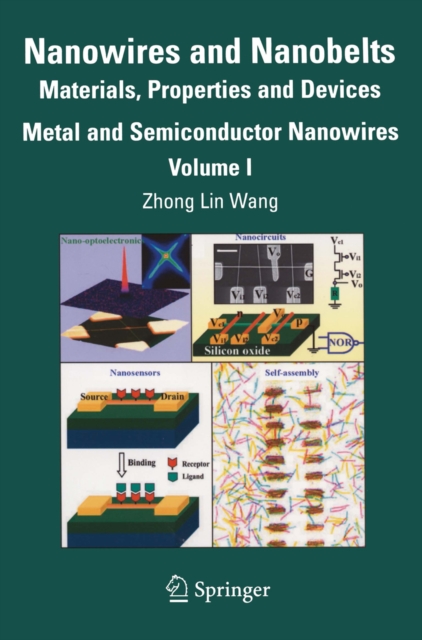
One-dimensional (1D) nanostructures, including nanowires, nanotubes and quantum wires, have been regarded as the most promising building blocks for nanoscale electronic and optoelectronic devices.
Nature has long used nucleic acid aptamers and enzymes for regulatory activities, such as the recently discovered "e;riboswitches"e; involved in gene expression.
Nanotechnology is the result of the continuing technological trend toward device miniaturization and the characterization, manipulation, and fine control of structure and function at diminishing length scales.
As the scaling limits of the conventional Si technology is approached, many have pursued alternative and revolutionary concepts as means to further improve the performance of future electronics.
Introduction The description, planning and governance of nanotechnology development require data on knowledge creation and innovation in various areas of application, how these evolve in time and what is the international context.
Nanocomposites have been receiving more and more attention given the improvement of synthesis techniques and the availability of powerful characterization techniques.
Ultra-Low Voltage Nano-Scale Memories provides an in-depth discussion of the state-of-the-art nanometer and sub-1-V memory LSIs that are playing decisive roles in power conscious systems.
We are especially pleased to present our edited book in an area that is quickly emerging as one of the most active research areas that integrate both engineering and medicine.
In addition to domestic animals the earliest records of mankind indicate that slavery, until the use of coal became widespread, has always been a significant aspect, or part, of nearly every society.
Dynamics of Microelectromechanical Systems is a systematic overview of the dynamics of MEMS (microelectromechanical systems), microstructures, and their responses.
Nanotechnology provides us with tools to create functional materials, devices, and systems by controlling materials at the atomic and molecular scales by making use of novel properties and phenomena.
The high level of attention and interest of the global community to NANO science and technology to a large extent is linked to the GIGAntic challenges for the c- tinuing growth of information technology, which sparked an unprecedented level of interdisciplinary and international cooperation among industrial and academic researchers, companies, IT market rivals, and countries, including former political and military rivals .
Bulk metallic glasses are a new emerging field of materials with many desirable and unique properties, such as high strength, good hardness, good wear resistance, and high corrosion resistance that can be produced in near net shape components.
This work presents fundamental and other relevant properties of nanostructured materials that can be the basis of improved performance in a wide range of alternative energy devices.
Controlling the performance of structures and components of all sizes and shapes through the use of engineered coatings has long been a key strategy in materials processing and technological design.
Nanotechnologies are being applied to microelectronics packaging, primarily in the applications of nanoparticle nanocomposites, or in the exploitation of the superior mechanical, electrical, or thermal properties of carbon nanotubes.
Atomistic and Continuum Modeling of Nanocrystalline Materials develops a complete and rigorous state-of-the-art analysis of the modeling of the mechanical behavior of nanocrystalline (NC) materials.
BioNanoFluidic MEMS explains biosensor development fundamentals and initiates an awareness in engineers and scientists who would like to develop and implement novel biosensors for agriculture, biomedicine, home land security, environmental needs, and disease identification.
This book deals with a "e;bottom-up"e; approach to building nanostructured systems, where one starts with atoms and molecules, which constitute the molecular building blocks (MBBs), and assembles them to build a nanostructured material.
Scanning electron microscopy (SEM) can be exploited not only for nanomaterials characterization but also integrated with new technologies for in-situ nanomaterials engineering and manipulation.
Nanobiotechnology of Biomimetic Membranes describes the current state of research and development in biomimetic membranes for nanobiotechnology applications.
Scanning Probe Microscopy is a comprehensive source of information for researchers, teachers, and graduate students about the rapidly expanding field of scanning probe theory.
Biotechnological Applications of Photosynthetic Proteins: Biochips, Biosensors and Biodevices provides an overview of the recent photosystem II research and the systems available for the bioassay of pollutants using biosensors that are based on the photochemical activity.
With the advent of nanoscience and nanotechnology, the dream of scientists to engineer new functional materials combining the best specific properties of organic and inorganic materials is closer to reality.
This text book will bring together a mix of both internationally known and established senior scientists along side up and coming (but already accomplished) junior scientists that have varying expertise in fundamental and applied nanotechnology to biology and medicine.
The book examines the suitability of nanoscale zero-valent iron (ZVI) for degradation of agrochemicals for the purpose of developing a cost-effective treatment technology.
In the last few years there has been significant progress in the development of microfluidics and nanofluidics at the application as well as at the fundamental and simulation levels.
Silicon technology continues to progress, but device scaling is rapidly taking the metal oxide semiconductor field-effect transistor (MOSFET) to its limit.