Controlling the performance of structures and components of all sizes and shapes through the use of engineered coatings has long been a key strategy in materials processing and technological design.
Nanotechnologies are being applied to microelectronics packaging, primarily in the applications of nanoparticle nanocomposites, or in the exploitation of the superior mechanical, electrical, or thermal properties of carbon nanotubes.
Atomistic and Continuum Modeling of Nanocrystalline Materials develops a complete and rigorous state-of-the-art analysis of the modeling of the mechanical behavior of nanocrystalline (NC) materials.
BioNanoFluidic MEMS explains biosensor development fundamentals and initiates an awareness in engineers and scientists who would like to develop and implement novel biosensors for agriculture, biomedicine, home land security, environmental needs, and disease identification.
This book deals with a "e;bottom-up"e; approach to building nanostructured systems, where one starts with atoms and molecules, which constitute the molecular building blocks (MBBs), and assembles them to build a nanostructured material.
Scanning electron microscopy (SEM) can be exploited not only for nanomaterials characterization but also integrated with new technologies for in-situ nanomaterials engineering and manipulation.
Considered one of the major fields of photonics of the beginning 21st century, plasmonics offers the potential to confine and guide light below the diffraction limit and promises a new generation of highly miniaturized photonic devices.
Nanobiotechnology of Biomimetic Membranes describes the current state of research and development in biomimetic membranes for nanobiotechnology applications.
Scanning Probe Microscopy is a comprehensive source of information for researchers, teachers, and graduate students about the rapidly expanding field of scanning probe theory.
Biotechnological Applications of Photosynthetic Proteins: Biochips, Biosensors and Biodevices provides an overview of the recent photosystem II research and the systems available for the bioassay of pollutants using biosensors that are based on the photochemical activity.
With the advent of nanoscience and nanotechnology, the dream of scientists to engineer new functional materials combining the best specific properties of organic and inorganic materials is closer to reality.
This text book will bring together a mix of both internationally known and established senior scientists along side up and coming (but already accomplished) junior scientists that have varying expertise in fundamental and applied nanotechnology to biology and medicine.
In the last few years there has been significant progress in the development of microfluidics and nanofluidics at the application as well as at the fundamental and simulation levels.
Silicon technology continues to progress, but device scaling is rapidly taking the metal oxide semiconductor field-effect transistor (MOSFET) to its limit.
Medical devices and surgical tools that contain micro and nanoscale features allow surgeons to perform clinical procedures with greater precision and safety while monitoring physiological and biomechanical parameters more accurately.
Because of their structural and dynamical properties, microheterogeneous systems have been employed as solvent and reaction media both to synthesize and stabilize nanoparticles.
Principles and Applications of NanoMEMS Physics presents the first unified exposition of the physical principles at the heart of NanoMEMS-based devices and applications.
Scanning and stationary-beam electron microscopes have become an indespensible tool for both research and routine evaluation in materials science, the semiconductor industry, nanotechnology and the biological, forensic, and medical sciences.
Nanotechnology has received tremendous interest over the last decade, not only from the scientific community but also from a business perspective and from the general public.
As miniaturization, batch fabrication, and integrated electronics rapidly enable the development of a broad range of smart products, MEMs, MOEMS, and NEMS are creating enormous opportunities for commerce and functionality.
Ordered porous nanostructures have emerged in the last ten years in different kinds of materials and with different pore diameters and interpore spacing.
Advanced magnetic nanostructures is an emerging field in magnetism and nanotechnology, but the literature consists of a rich variety of original papers and parts of reviews and books whose scope is comparatively broad.
Mechanical engineering, an engineering discipline borne of the needs of the industrial revolution, is once again asked to do its substantial share in the call for industrial renewal.
This book grew out of my desire to understand the mechanics of nanomaterials, and to be able to rationalize in my own mind the variety of topics on which the people around me were doing research at the time.
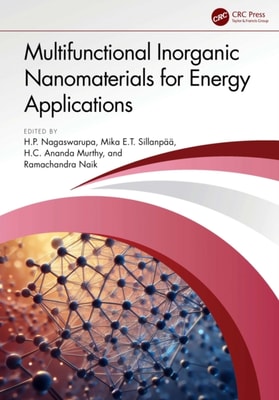
Multifunctional Inorganic Nanomaterials for Energy Applications provides deep insight into the role of multifunctional nanomaterials in the field of energy and power generation applications.
Nanotechnology for Food Packaging: Materials, Processing Technologies, and Safety Issues showcases the latest research in the use of nanotechnology in food packaging, providing an in-depth and interdisciplinary overview of the field.