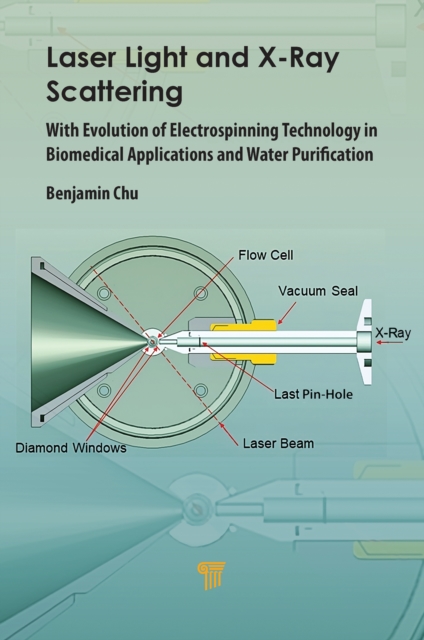
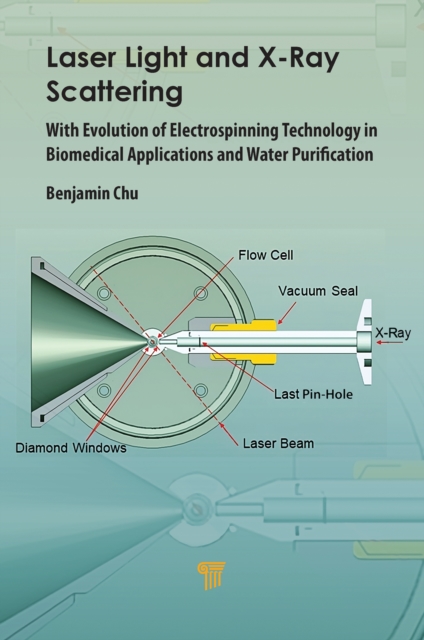
This book serves as a teaching tool for beginning graduate students and new researchers interested in two seemingly divergent themes whereby one theme deals with synchrotron X-ray scattering and laser cross correlation function techniques, while the other theme is concerned mainly with the use of electrospun nanofibers for application to water purification.
Perovskite solar cells (PSCs) have received significant attention in academia and industry due to their low cost and high-power conversion efficiency (PCE).
Understanding the Basics of Nanoindentation and Why It Is ImportantContact damage induced brittle fracture is a common problem in the field of brittle solids.
This book covers the formation, properties, characterization, and application of different kinds of colloidal delivery systems that can be utilized within the food industry, including surfactant-based, emulsion-based, and biopolymer-based systems.
The text begins by discussing the processing and characterization of nano-manufactured resorbable bionanocomposites and presents the latest advances in carbon-based polymer nanocomposite materials for sensing applications.
This book serves as a teaching tool for beginning graduate students and new researchers interested in two seemingly divergent themes whereby one theme deals with synchrotron X-ray scattering and laser cross correlation function techniques, while the other theme is concerned mainly with the use of electrospun nanofibers for application to water purification.
Addressed to physical and chemical scientists and engineers, this book provides information on the design, manufacture, and assessment of components with critical dimensions or critical tolerances in the 0.
This book focuses on the research on chitin, chitosan, and their derivatives and covers the related developments in the fields of textiles, wastewater treatment, biomedicine, and food industry.
This book focuses on the research on chitin, chitosan, and their derivatives and covers the related developments in the fields of textiles, wastewater treatment, biomedicine, and food industry.
Carbon-Based Nanocomposite Applications and Microelectronic Technologies covers the fundamentals of carbon-based nanomaterials (CNMs) and their potential for technological and industrial applications.
Brings the Band Structure of Carbon-Based Devices into the LimelightA shift to carbon is positioning biology as a process of synthesis in mainstream engineering.
From science fiction to science laboratoriesDiscover the State of the Art in Photonic MetamaterialsMetamaterials-composite media with unusual optical properties-have revolutionized the landscape of optical science and engineering over the past decades.
Carbon-Based Nanomaterials for Sustainable and Technological Applications covers the fundamentals of carbon-based nanomaterials (CNMs) and their potential for technological and industrial applications.
In recent years, rapid strides have been made in the fields of microbiological aspects of food safety and quality, predictive microbiology and microbial risk assessment, microbiological aspects of food preservation, and novel preservation techniques.
This book covers developments in multi-scale and multifunctional coatings, including strategies in the preparation, characterization, and properties of both thin and thick multifunctional coatings along with their corresponding application.
This book explains the physical principles and theoretical basis of acoustics of nanofluids with mathematical rigor, focusing on concepts and points of view that have proven effective in applications such as heat transfer, petroleum science and technology, wastewater treatment, food processing, and hydrogen production.
The integration of nanoparticles with classical drugs to create biocompatible delivery platforms for the treatment of cardiovascular diseases can make a major impact on patient welfare.
Integrating nanotechnology and sustainable energy frontiers, Advanced Hybrid Nanomaterials for Energy Storage explores the groundbreaking field of material design at the nanoscale for next generation energy storage solutions.
The incorporation of nanomaterials into products can improve performance, efficiency, and durability in various fields ranging from construction, energy management, catalysis, microelectronics, plastics, coatings, and paints to consumer articles such as foods and cosmetics.
The field of materials science and technology has undergone revolutionary advances due to the development of novel analytical tools, functional materials, and multidisciplinary approaches to engineering.
Tomorrow's nanoscientist will have a truly interdisciplinary and nano-centric education, rather than, for example, a degree in chemistry with a specialization in nanoscience.
Spintronics, being a part of electronics, is under intense development for about forty years and mainly concerns transport of electronics spin in low-dimensional structures.
Unlock the mysteries of nanotechnology's transformative role in the food industry with Nanotechnology in the Food Industry: Applications, Recent Trends, and Future Perspectives.
Gold is used in a wide range of industrial and medical applications and accounts for over 10 percent of the annual demand for metal, worth billions of dollars annually.
Addressed to physical and chemical scientists and engineers, this book provides information on the design, manufacture, and assessment of components with critical dimensions or critical tolerances in the 0.
Polymeric and hybrid nanoparticles have received increased scientific interest in terms of basic research as well as commercial applications, promising a variety of uses for nanostructures in fields including bionanotechnology and medicine.
This book covers the most cutting-edge developments in the field of magnetic nanoparticles and nanomagnetism, such as novel synthetic and fabrication technologies, diverse magnetic characterization techniques and highly proved and most innovative applications of magnetic nanoparticles.