Recent studies have shown that novel processing and modeling techniques may be used to create patient-specific prostheses, artificial tissues, and other implants using data obtained from magnetic resonance imaging, computed tomography, or other imaging techniques.
Nanodiamonds: Applications in Biology and Nanoscale Medicine highlights the translation of nanodiamonds toward clinical relevance and medical applications.
Nanosystems use new, nanoscopic electrical and/or mechanical devices which, as constituents of electronic and electromechanical systems, find application primarily in computing, embedded control and biomedical data acquisition.
Carbon nanotubes (CNTs) and Boron nitride nanotubes (BNNTs) are part of the so-called B-C-N material system, which includes novel nanostructures of carbon (C), doped-carbon, boron (B), boron nitride (BN), carbon nitride (CNx), boron-carbon nitride (BxCyNz), and boron carbide (BxCy).
Since overall circuit performance has depended primarily on transistor properties, previous efforts to enhance circuit and system speed were focused on transistors as well.
"e;Piezoelectric-Based Vibration-control Systems: Applications in Micro/Nano Sensors and Actuators"e; covers: Fundamental concepts in smart (active) materials including piezoelectric and piezoceramics, magnetostrictive, shape-memory materials, and electro/magneto-rheological fluids; Physical principles and constitutive models of piezoelectric materials; Piezoelectric sensors and actuators; Fundamental concepts in mechanical vibration analysis and control with emphasis on distributed-parameters and vibration-control systems; and Recent advances in piezoelectric-based microelectromechanical and nanoelectromechanical systems design and implementation.
Computational Finite Element Methods in Nanotechnology demonstrates the capabilities of finite element methods in nanotechnology for a range of fields.
Continuously studied since its discovery, graphene offers truly unique opportunities, because unlike most semiconductor systems, its 2D electronic states are not buried deep under the surface and it can be easily accessed directly by tunneling or by other local probes.
Composite Materials and Processing provides the science and technology of processing several composites using different processing methods, and includes collective information on the processing of common and advanced composite materials.
The completely revised Third Edition to the bestselling Microlithography: Science and Technology provides a balanced treatment of theoretical and operational considerations, from fundamental principles to advanced topics of nanoscale lithography.
Most current applications of biomaterials involve structural functions, even in those organs and systems that are not primarily structural in their nature, or very simple chemical or electrical functions.
Developments at the nanoscale are leading to new possibilities and challenges for nuclear applications in areas ranging from medicine to international commerce to atomic power production/waste treatment.
Featuring contributions by leading researchers in the field, Nanoparticle Heat Transfer and Fluid Flow explores heat transfer and fluid flow processes in nanomaterials and nanofluids, which are becoming increasingly important across the engineering disciplines.
Polymeric and hybrid nanoparticles have received increased scientific interest in terms of basic research as well as commercial applications, promising a variety of uses for nanostructures in fields including bionanotechnology and medicine.
Offering the latest information in magnetic nanoparticle (MNP) research, this volume reveals the in-depth knowledge behind this highly important and emerging area of nanotechnology.
The rise of collaborative consumption, peer-to-peer systems, and not-for-profit social enterprise heralds the emergence of a new era of human collectivity.
Through their application in energy-efficient and environmentally friendly devices, zinc oxide (ZnO) and related classes of wide gap semiconductors, including GaN and SiC, are revolutionizing numerous areas, from lighting, energy conversion, photovoltaics, and communications to biotechnology, imaging, and medicine.
Through their application in energy-efficient and environmentally friendly devices, zinc oxide (ZnO) and related classes of wide gap semiconductors, including GaN and SiC, are revolutionizing numerous areas, from lighting, energy conversion, photovoltaics, and communications to biotechnology, imaging, and medicine.
This book provides an overview of the state of the art in optical and chemical nanosensors for industrial, environmental, diagnostic, security, and medical applications.
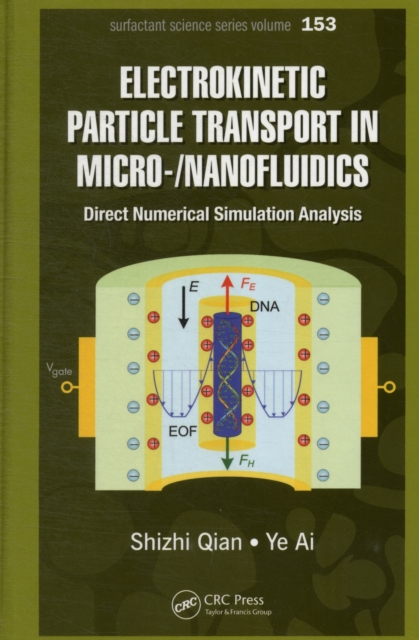
Numerous applications of micro-/nanofluidics are related to particle transport in micro-/nanoscale channels, and electrokinetics has proved to be one of the most promising tools to manipulate particles in micro/nanofluidics.
A complete panorama of self-healing strategies, Self-Healing at the Nanoscale: Mechanisms and Key Concepts of Natural and Artificial Systems focuses on the development of new nanoscale self-healing systems, from general concepts to physical chemical mechanisms.
According to Moore's Law, not only does the number of transistors in an integrated circuit double every two years, but transistor size also decreases at a predictable rate.
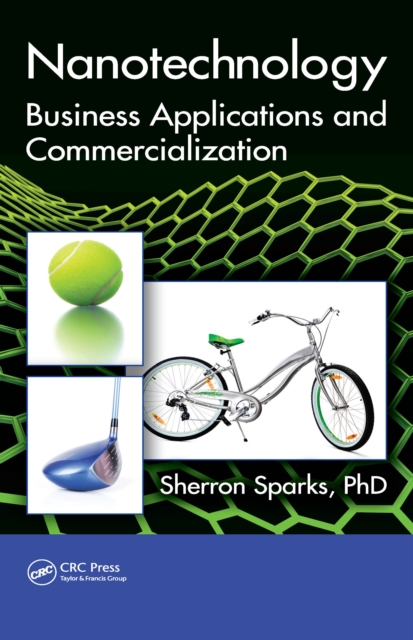
No longer the hidden genius of scientists, nanotechnology is now appearing in products manufactured for everyday life-products that can heal, save lives, be more durable, and last longer.
Biomedical Applications of Magnetic Particles discusses fundamental magnetic nanoparticle physics and chemistry and explores important biomedical applications and future challenges.
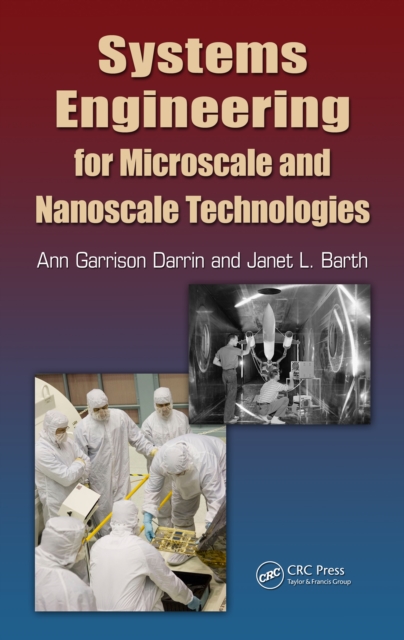
To realize the full potential of micro- and nanoscale devices in system building, it is critical to develop systems engineering methodologies that successfully integrate stand-alone, small-scale technologies that can effectively interface with the macro world.
Photoluminescence spectroscopy is an important approach for examining the optical interactions in semiconductors and optical devices with the goal of gaining insight into material properties.
Applications of nanotechnology continue to fuel significant innovations in areas ranging from electronics, microcomputing, and biotechnology to medicine, consumer supplies, aerospace, and energy production.