A Complete Toolbox of Theories and TechniquesThe second edition of a bestseller, Handbook of Virtual Environments: Design, Implementation, and Applications presents systematic and extensive coverage of the primary areas of research and development within VE technology.
This book provides to manufacturers, designers and evaluation professionals the necessary tools for balancing design and the assessment phases during the product lifecycle.
In the last three or four decades, studies of biomechanics have expanded from simple topical applications of elementary mechanics to entire areas of study.
Completely revised and updated, Hazardous Materials Compliance for Public Research Organizations: A Case Study, Second Edition presents a case study of one university's policies and practices with regard to the procurement, use, storage and disposal of HAZMAT in the context of a changing internal structure and regulatory environment.
Learn How to Design Effective Visualization SystemsVisualization Analysis and Design provides a systematic, comprehensive framework for thinking about visualization in terms of principles and design choices.
Each of the four volumes in the Handbook of Safety and Health for the Service Industry demonstrates how to tackle particular safety and health dangers in sub sectors of the service industry.
In an approach that combines coverage of safety and human error into a single volume, Safety and Human Error in Engineering Systems eliminates the need to consult many different and diverse sources for those who need information about both topics.
This full-color volume proposes an innovative methodology that uses the functional aspects of nature to inspire improvements in building design and form, encouraging designers to apply biomimetic principles to architectural processes.
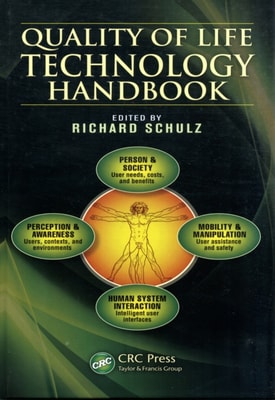
A collaboration between leading scientists, practitioners, and researchers at Carnegie-Mellon University and the University of Pittsburgh, this book is a comprehensive resource describing Quality of Life technologies and their development, evaluation, adoption, and commercialization.
As the baby boom generation ages, it is crucial that designers understand all they can about bringing this group, as well as all others, design that will offer function, aesthetics, and quality of life.
Environmental Ergonomics: Principles, Methods, and Applications provides the philosophy, principles and application of environmental ergonomics as a universal concept and considers total environments as an integration of environmental factors to which people are exposed.
Focusing on operational excellence, this book will take readers through the practicalities of product development, market launch, and ongoing product support.
This book investigates over 30 major catastrophes and reveals the critical necessity of transitioning from identifying lessons to implementing actionable changes in workplace safety.
As healthcare challenges such as human aging and traffic accidents continue to increase exponentially, the biomedical sector faces a significant obstacle in arranging patient-specific biomedical products.
A complete introduction to the field, Ergonomics: Foundational Principles, Applications and Technologies discusses scientific principles, research, applications, and emerging trends in technology.
Now in its fourth edition, Behavioral Research and Analysis: An Introduction to Statistics within the Context of Experimental Design presents an overview of statistical methods within the context of experimental design.
In the almost ten years since the publication of the first edition of Motor Fleet Safety and Security Management, the availability of new methods of transportation has made travel faster, and consequently, safety and security have become more important and more complex.
With the help of guides and tables, this book assists readers in making the right lighting technology choices for specific applications, introduces readers to the topic of dynamic lighting that can accommodate a range of needs and tasks under one system, and helps a variety of professionals (from local authorities to doctors) to design the appropriate living and working environments for a wide spectrum of people with special requirements.
Since computer scientists make decisions every day that have societal context and influence, an understanding of society and computing together should be integrated into computer science education.
Reflecting changes in the field during the ten years since the publication of the first edition, Developing a Safety and Health Program, Second Edition examines the elements of a safety and health program and delineates how to incorporate them into an organization's safety efforts.
The advent of augmented reality technologies used to assist human operators in complex manipulative operations-has brought an urgency to research into the modeling and training of human skills in Virtual Environments.
An easily accessible guide to scientific information on safety management of chemical substances for students and occupational health professionals, this book covers proper management, related care, and precautions, and related global regulations.
The availability of electric lighting has changed the lives of people the world over, yet as a major user of electricity it has come under increasing scrutiny in recent years.
With unintended harm during hospital care costing billions of dollars to the world economy, not to mention millions of deaths each year, it's no wonder the issue is equally front and center in the minds of healthcare providers and the public.
In most schools you will probably see one, if not all of the following:Metal detectors to prevent handguns and other weapons from being brought onto school propertyStudents in standardized uniforms to prevent the appearance of gang affiliationsPolice officers patrolling the property to deter violent activity as well as respond to incidentsSuch evol
Human factors and ergonomics have made considerable contributions to the research, design, development, operation and analysis of transportation systems and their complementary infrastructure.
Principles of Emergency Management: Hazard Specific Issues and Mitigation offers preparedness and mitigation recommendations for advanced emergency planning.
Based on recent research, this book discusses physical ergonomics, which is concerned with human anatomical, anthropometric, physiological and biomechanical characteristics as they relate to physical activity.
Meeting the needs of the manufacturing and service sectors of contemporary industry, this volume is concerned with the human factors, ergonomics, and safety issues related to the design of products, processes, and systems, as well as the operation and management of business enterprises.
If there is any one element to the engineering of service systems that is unique, it is the extent to which the suitability of the system for human use, human service, and excellent human experience has been and must always be considered.
An in depth review of social ergonomics- also known as organizational ergonomics- this book discusses the optimization of sociotechnical systems, including their organizational structures, policies, and processes.