First published two decades ago, the first edition of Handbook of Control Room Design and Ergonomics: A Perspective for the Future became a benchmark for the field.
Written by experts from various fields, this edited collection explores a wide range of issues pertaining to how computers evoke human social expectations.
During the course of any sporting event, critical cognitive and physical tasks are performed within a dynamic, complex, collaborative system comprising multiple humans and artifacts, under pressurized, complex, and rapidly changing conditions.
Discussing issues and concepts relating to human factors in simulation, this book covers theory and application in fields such as space, ships, submarines, naval aviation, and commercial aviation.
Written clearly and concisely, using jargon-free language that is easily understood, this book compresses research from the past few decades into an accessible resource.
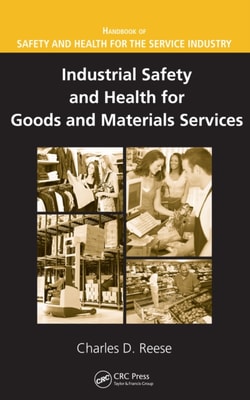
Industrial Safety and Health for Goods and Materials Services focuses on the safety requirements of the wholesale and retail trades, including warehousing.
Industrial Safety and Health for Infrastructure Services provides an in-depth look into the areas of transportation, utilities, administrative, waste management, and remediation.
Industrial Safety and Health for Administrative Services constitutes a much-needed source for the identification and prevention of most of the injuries and illnesses occurring in the financial and information sectors.
Industrial Safety and Health for People-Oriented Services focuses on the safety requirements of the tertiary sector of industry's education, health, and hospitality services.
Advocating a user-centered approach to medical technology design, this book covers the essential processes and specific techniques necessary to produce safe, effective, usable, and appealing medical systems and products.
Bridging the gap between human-computer engineering and control engineering, Human Behavior Learning and Transfer delineates how to abstract human action and reaction skills into computational models.
Detailing methods for preparing organizations for disasters, this book discusses not only tried and true tactics, but also areas often overlooked during the reactive and post-disaster phases.
The Illustrated Dictionary and Resource Directory of Environmental and Occupational Health, Second Edition is a one-of-a-kind, comprehensive reference source for the vast and diverse collection of interrelated terms and topics that encompass the fields of environmental science, occupational health and safety, and preventive medicine.
Addressing occupational exposure assessment for air contaminants as a coherent body of knowledge, this is the first book to explore occupational air contaminant measurement and properties, human exposure assessment, design of exposure strategies, and the statistical interpretation of exposure measurements in one comprehensive source.
Fundamentally, fire prevention and control refer to systems and practices that increase a facility's ability to avoid fires, limit the development and spread of fires, and rapidly and effectively control fires.
Whether you are a bioengineer designing prosthetics, an aerospace scientist involved in life support, a kinesiologist training athletes, or an occupational physician prescribing an exercise regimen, you need the latest edition of Biomechanics and Exercise Physiology: Quantitative Modeling.
Standing firmly on the foundation built by the previous two editions, each a bestseller in its own right, Definitions, Conversions, and Calculations for Occupational Safety and Health Professionals, Third Edition is bound to repeat this success.
While its importance is widely recognized, the theoretical basis and practical applications of Activity Theory have not yet been firmly established in the field of human factors and ergonomics, experimental, and work psychology.
Using clear, approachable examples, Universal and Accessible Design for Products, Services, and Processes defines and differentiates accessible versus universal design, and explores their relationship in a broad societal and global context.
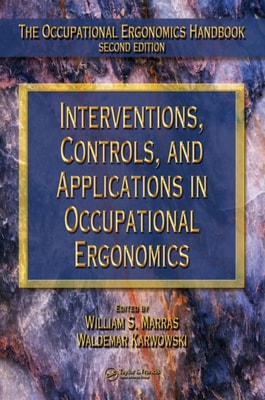
Completely revised and updated, taking the scientific rigor to a whole new level, the second edition of the Occupational Ergonomics Handbook is now available in two volumes.
Completely revised and updated, taking the scientific rigor to a whole new level, the second edition of the Occupational Ergonomics Handbook is now available in two volumes.
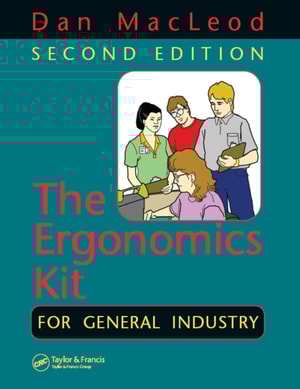
Written by Dan MacLeod, one of the most experienced practitioners in the field, The Ergonomics Kit for General Industry, Second Edition contains everything you need to set up or improve your workplace ergonomics process.
Synthesizing basic results on how to design human work with complex systems, Joint Cognitive Systems: Patterns in Cognitive Systems Engineering provides examples of successful cognitive systems engineering research and design.
In today's ultra-competitive global business environment, it is becoming increasingly important for companies to reduce spending while simultaneously improving their efficiency and productivity.
This volume is the fruit of the 5th conference on Naturalistic Decision Making which focused on the importance of studying people who have some degree of expertise in the domain in which they make decisions.
Today, more and more Web sites are providing content in multiple languages for targeted countries, and more and more products are being designed for cultural differences in mind.
Covering field history and discussing actual modern-day pilot actions and tasks, the editors of this volume have integrated contributions from leaders in aviation to present psychological principles and research pertinent to the interface between a pilot and the cockpit.