Reflecting changes in the field during the ten years since the publication of the first edition, Developing a Safety and Health Program, Second Edition examines the elements of a safety and health program and delineates how to incorporate them into an organization's safety efforts.
The advent of augmented reality technologies used to assist human operators in complex manipulative operations-has brought an urgency to research into the modeling and training of human skills in Virtual Environments.
In most schools you will probably see one, if not all of the following:Metal detectors to prevent handguns and other weapons from being brought onto school propertyStudents in standardized uniforms to prevent the appearance of gang affiliationsPolice officers patrolling the property to deter violent activity as well as respond to incidentsSuch evol
If there is any one element to the engineering of service systems that is unique, it is the extent to which the suitability of the system for human use, human service, and excellent human experience has been and must always be considered.
An in depth review of social ergonomics- also known as organizational ergonomics- this book discusses the optimization of sociotechnical systems, including their organizational structures, policies, and processes.
With annual cost in excess of $150 billion from workplace related illnesses and injuries, any knowledge that can reduce this burden contributes to the overall welfare of the work force and business performance.
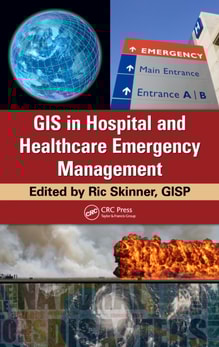
Although many books have been published on the application of GIS in emergency management and disaster response, this is the first one to bring together a comprehensive discussion of the critical role GIS plays in hospital and healthcare emergency management and disaster response.
Cultural factors, in both the narrow sense of different national, racial, and ethnic groups, and in the broader sense of different groups of any type, play major roles in individual and group decisions.
Edited by Jussi Kantola, the founding faculty member of the world's first university Knowledge Service Engineering Department at Korea Advanced Institute of Science and Technology, and Waldemar Karwowski from the Department of Industrial Engineering and Management Systems at UCF, Knowledge Service Engineering Handbook defines what knowledge services engineering means and how it is different from service engineering and service production.
The third edition of a bestseller, Hazardous Materials Chemistry for Emergency Responders continues to provide the fundamentals of "e;street chemistry"e; required by emergency response personnel.
Current and emerging trends in the domains of health management and the work sector, the abundance of new consumer products pervading the marketplace, and the desires of many older adults to undertake new learning experiences means that older adults, like their younger counterparts, will need to continually engage in new learning and training.
Published more than ten years ago, the first edition of Accident/Incident Prevention Techniques provided clear, comprehensive guidance on how to mitigate the cost, in personnel and to the bottom line, of accidents/incidents in the workplace.
A collection of works authored by leading scientists from the US and Russia, Human-Computer Interaction and Operators' Performance: Optimizing Work Design with Activity Theory describes applied and systemic-structural activity theory as it is used to study human-computer interaction, aviation, design, and training.
This volume is concerned with the human factors, ergonomics, and safety issues related to the design of products, processes, and systems, as well as operation and management of business enterprises in both manufacturing and service sectors of contemporary industry.
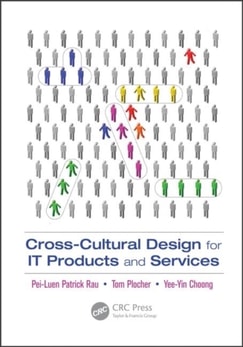
With the increase of globalization of business and industry, IT products and services are produced and marketed across geographical cultural boundaries without any consideration of culture.
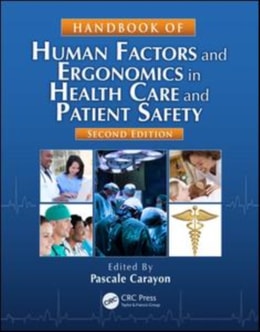
The first edition of Handbook of Human Factors and Ergonomics in Health Care and Patient Safety took the medical and ergonomics communities by storm with in-depth coverage of human factors and ergonomics research, concepts, theories, models, methods, and interventions and how they can be applied in health care.
When confronted with a fire protection problem, building management is often desperately short on information and know-how in this critical component of protection for their own facility.
The Handbook of Human Factors in Web Design covers basic human factors issues relating to screen design, input devices, and information organization and processing, as well as addresses newer features which will become prominent in the next generation of Web technologies.
Providing up-to-date, practical advice on how to design, select, and structure telemedicine interventions with older adults, this book discusses the age-related changes that can affect the efficacy of these systems.
Although many books have been published on the application of GIS in emergency management and disaster response, this is the first one to bring together a comprehensive discussion of the critical role GIS plays in hospital and healthcare emergency management and disaster response.
A big challenge for safety professionals is how to incorporate, build, and sustain a safety program into different business models during times of change.
Terrorist or criminal attack, fire emergency, civil or geographic disruption, or major electrical failure-recent years have witnessed an increase in the number of natural disasters and man-made events that have threatened the livelihoods of businesses and organizations worldwide.
Although speech is the most natural form of communication between humans, most people find using speech to communicate with machines anything but natural.
An examination of the safety laws and regulations, particularly in the areas of labor and employment, this book provides a working knowledge of the impacts, requirements, and implications of safety professionals' actions and inactions as related to state and federal laws.
Written by international contributors, Learning Curves: Theory, Models, and Applications first draws a learning map that shows where learning is involved within organizations, then examines how it can be sustained, perfected, and accelerated.
Using an interdisciplinary approach, this book presents a wide range of methods and specific criteria for assessing hazard and exposure in the workplace environment, offering ways to reduce these hazards.
Of the billions of dollars spent on plant management and operation annually, an estimated 80% of the total amount is spent to rectify the chronic failure of systems, machines, and humans.