The development of advanced 2D materials beyond graphene presents a paradigm shift in energy research, offering unprecedented opportunities to revolutionize energy storage, conversion, and efficiency technologies.
In a time defined by accelerating complexity, where technological breakthroughs-from artificial intelligence to blockchain to the emerging contours of Industry 5.
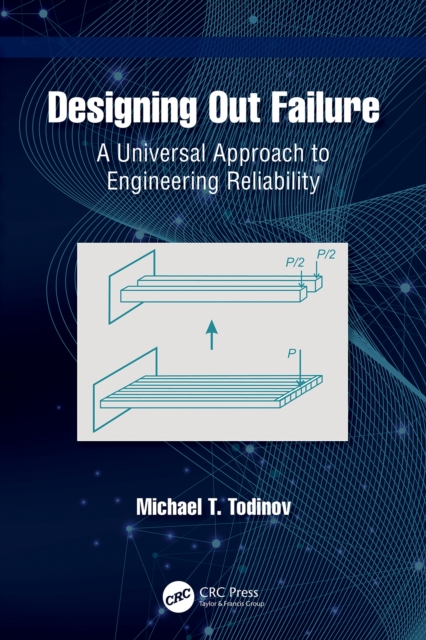
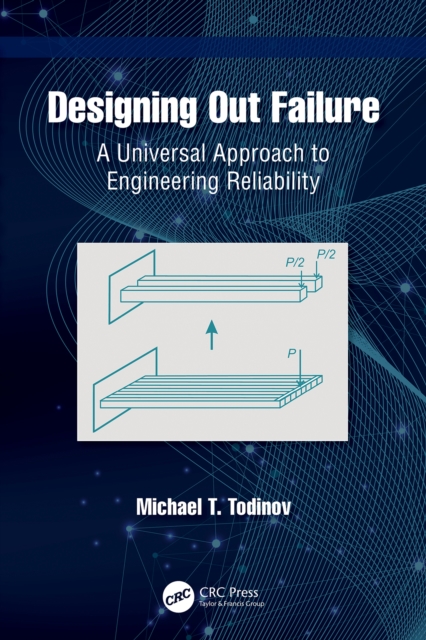
Designing Out Failure is a comprehensive textbook that introduces a unique, domain-independent methodology for eliminating failure modes and improving reliability across all engineering disciplines.
Digitalizing Material Innovations for Net-Zero Applications navigates the critical intersection of advanced materials science, cutting-edge digital engineering, and global sustainability goals.
This new edition of Risk Management: Concepts and Guidance is a contemporary look at project risk while still covering well-established and time-proven practices.
Designing Out Failure is a comprehensive textbook that introduces a unique, domain-independent methodology for eliminating failure modes and improving reliability across all engineering disciplines.
This Brief is an essay at the interface of philosophy and complexity research, trying to inspire the reader with new ideas and new conceptual developments of cellular automata.
Model integration - the process by which different modelling efforts can be brought together to simulate the target system - is a core technology in the field of Systems Biology.
Aerodynamics is a science engaged in the investigation of the motion of air and other gases and their interaction with bodies, and is one of the most important bases of the aeronautic and astronautic techniques.
This book focuses the recent progress in nanophotonics technology to be used to develop novel nano-optical devices, fabrication technology, and advanced systems.
This monograph presents key method to successfully manage the growing complexity of systems where conventional engineering and scientific methodologies and technologies based on learning and adaptability come to their limits and new ways are nowadays required.
This book constitutes the refereed proceedings of the First International Conference on Discovery Science, DS'98, held in Fukuoka, Japan, in December 1998.
An important part of the science of complexity is the study of emergent properties arising through dynamical processes in various types of natural and artificial systems.
Authored by the developer of dressed photon science and technology as well as nanophotonics, this book outlines concepts of the subject using a novel theoretical framework that differs from conventional wave optics.
Real-life problems are often quite complicated in form and nature and, for centuries, many different mathematical concepts, ideas and tools have been developed to formulate these problems theoretically and then to solve them either exactly or approximately.
Intellectual Courage in the Age of AI: Thinking Freely in a World of Intelligent Machines explores how artificial intelligence is transforming the way humans think, learn, and make decisions.
This book provides an in-depth exploration of the transformative role of smart nanomaterials in biomedical science, with a specific focus on their mechanical properties, characterization techniques, and functional performance.
As the interconnectivity between humans through technical devices is becoming ubiquitous, the next step is already in the making: ambient intelligence, i.
Bringing together over fifty contributions on all aspects of nonlinear and complex dynamics, this impressive topical collection is both a scientific and personal tribute, on the occasion of his 70th birthday, by many outstanding colleagues in the broad fields of research pursued by Prof.
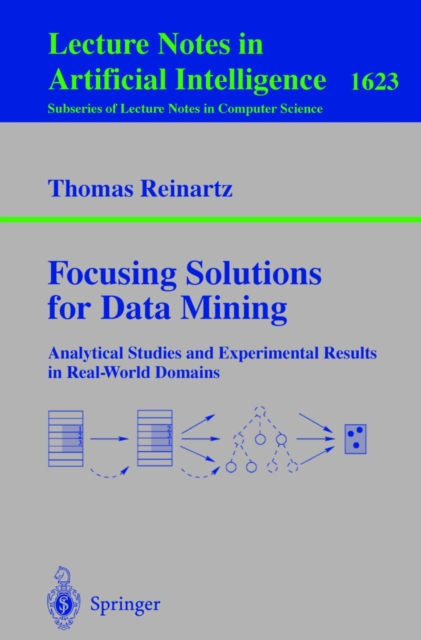
In the first part, this book analyzes the knowledge discovery process in order to understand the relations between knowledge discovery steps and focusing.
In this book for the first time two scientific fields - consensus formation and synchronization of communications - are presented together and examined through their interrelational aspects, of rapidly growing importance.
The LNCS journal Transactions on Computational Science reflects recent developments in the field of Computational Science, conceiving the field not as a mere ancillary science but rather as an innovative approach supporting many other scientific disciplines.
Synchronization of chaotic systems, a patently nonlinear phenomenon, has emerged as a highly active interdisciplinary research topic at the interface of physics, biology, applied mathematics and engineering sciences.
For more than 60 years, Jim Lambek has been a profoundly inspirational mathematician, with groundbreaking contributions to algebra, category theory, linguistics, theoretical physics, logic and proof theory.
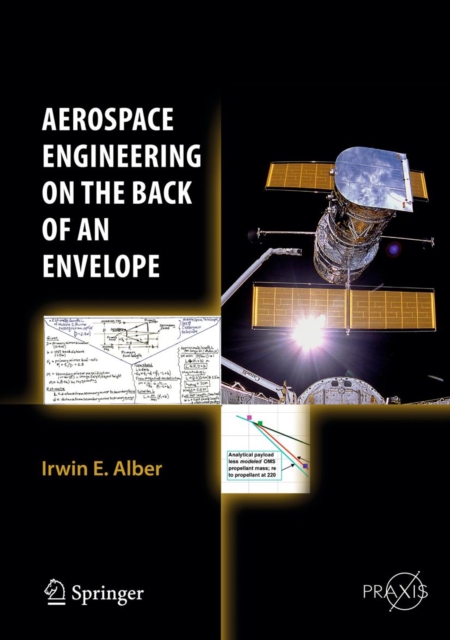
Engineers need to acquire "e;Back-of-the-Envelope"e; survival skills to obtain rough quantitative answers to real-world problems, particularly when working on projects with enormous complexity and very limited resources.
One of the major contemporary challenges in both physical and social sciences is modeling, analyzing, and understanding the self-organization, evolution, behavior, and eventual decay of complex dynamical systems ranging from cell assemblies to the human brain to animal societies.
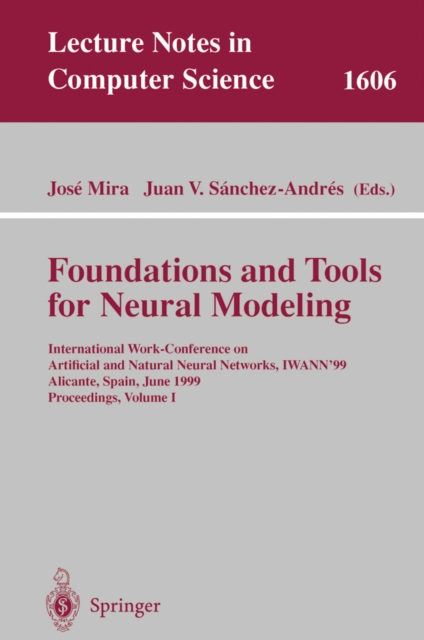
This book constitutes, together with its compagnion LNCS 1607, the refereed proceedings of the International Work-Conference on Artificial and Natural Neural Networks, IWANN'99, held in Alicante, Spain in June 1999.