Responding to Titanic's distress calls in the early hours of 15 April 1912, Captain Arthur Rostron raced the Cunard liner Carpathia to the scene of the sinking, rescued the seven hundred survivors of the world's most famous shipwreck and then carried them to safety at New York.
Responding to Titanic's distress calls in the early hours of 15 April 1912, Captain Arthur Rostron raced the Cunard liner Carpathia to the scene of the sinking, rescued the seven hundred survivors of the world's most famous shipwreck and then carried them to safety at New York.
This book presents a collection of selected and peer reviewed papers of 10th International Conference on Coastal and Ocean Engineering, which is held during April 14-16, 2023.
The passagemaking bible updated to help you live your long-distance voyaging dreamsFirst published in 1975, Robert Beebe's Voyaging Under Power revolutionized long-distance cruising, encouraging powerboaters to enjoy what was once exclusive to sailboats and their crews: crossing oceans to exotic, interesting, and beautiful places in comfort with a minimum of problems and expense.
From sewn planked boats in Early Dynastic Egypt to Late Roman wrecks in Italy, and the design of Venetian Merchant Galleys, this huge volume gathers together fifty-three papers presenting new research on the archaeology and history of ancient ships and shipbuilding traditions.
From sewn planked boats in Early Dynastic Egypt to Late Roman wrecks in Italy, and the design of Venetian Merchant Galleys, this huge volume gathers together fifty-three papers presenting new research on the archaeology and history of ancient ships and shipbuilding traditions.
This is an important study of the new types of warships which evolved in the navies of the Mediterranean in the 4th and 3rd centuries BC, and of their use by Greeks, Phoenicians and Romans in the fleets and naval battles in the second and first centuries, culminating in the Battle of Aktion.
This is an important study of the new types of warships which evolved in the navies of the Mediterranean in the 4th and 3rd centuries BC, and of their use by Greeks, Phoenicians and Romans in the fleets and naval battles in the second and first centuries, culminating in the Battle of Aktion.
With over two-thirds of the globe covered by water, the ability to navigate safely and quickly across the oceans has been crucial throughout human history.
With over two-thirds of the globe covered by water, the ability to navigate safely and quickly across the oceans has been crucial throughout human history.
In the past three centuries the ship has developed from the relatively unsophisticated sail-driven vessel which would have been familiar to the sailors of the Tudor navy, to the huge motor-driven container ships, nuclear submarines and vast cruise liners that ply our seas today.
Since the end of the nineteenth century there has been a stunning succession of transatlantic liners, from the White Star Line's Oceanic of 1899 to the Cunard Line's Queen Mary 2 of 2004.
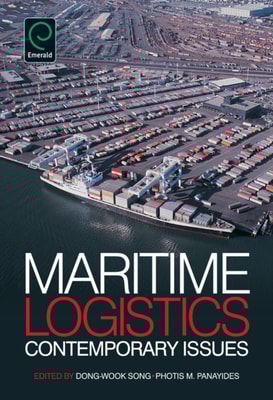
Contemporary practice and scientific innovation consider the logistics aspects of shipping or maritime and seaport operations as one of the most important areas for future development of competitive advantages in business and for study and research.
In a government-aided research project carried out at Cochin University, the inventor of the Water-Train demonstrated that his invention requires only 24 BTU/ton-km of energy whereas barges use 328 BTU in the same Inland water transportation situation.
Traveling across the great northern expanses from Dawson Creek, British Columbia, to Delta Junction, Alaska, the 1,500-mile Alaska Highway remains one of the greatest driving adventures of all time.
Designed as a technical reference for instrument-rated pilots who want to maximize their skills in an "e;Instrument Flight Rules"e; environment, the Federal Aviation Administration's Instrument Procedures Handbook contains the most current information on FAA regulations, the latest changes to procedures, and guidance on how to operate safely within the National Airspace System in all conditions.
In Superyacht Captain, a professional at the zenith of one of the world's most lavish and exclusive industries gives a rare insight into a career that makes for eyebrow-raising reading, as entertaining as it is instructive.
Now in its sixth edition, Yachtmaster for Sail and Power is an essential companion for anyone enrolling on the RYA Coastal Skipper/Yachtmaster Offshore course.
Service Oriented Architecture (SOA) is the paradigm for software and system specification, design, implementation and management that intends to shape and dominate IT and business landscapes in the near future.
The Essentials of Composite Materials: A Guide for Engineering and Beyond combines the theory of composite materials and their applications, with a focus on the main industries where they are used.
Decreasing the magnetic field signature of a naval vessel will reduce its susceptibility to detonating naval influence mines and the probability of a submarine being detected by underwater barriers and maritime patrol aircraft.
Ferromagnetic models of ships and submarines that predict or reproduce their magnetic signatures have found applications in the development of both offensive and defensive military systems from World War II to the present.
This volume contains a curated collection of classic articles on sailing yachts, with information on subjects including flags, nautical etiquette, maintaining yachts, equipment, and many other related aspects.
This fully illustrated volume details every aspect of the WWII battleship, from plans, building, and modifications to active service and final breaking.
This fully illustrated volume details every aspect of the WWII battleship, from plans, building, and modifications to active service and final breaking.
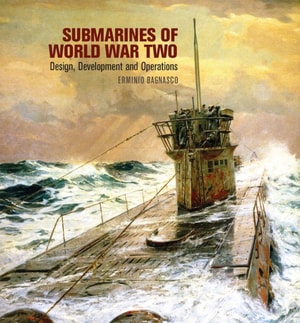
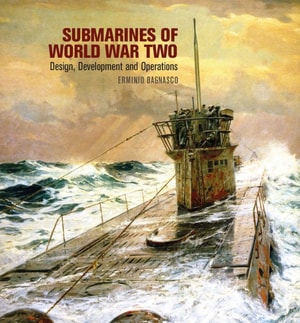
For the first time in naval warfare submarines played a major role in the war at sea in the years 1939–45, and this major reference book describes all the classes of vessel that were deployed by the eighteen combatant nations during those years.
For the first time in naval warfare submarines played a major role in the war at sea in the years 1939–45, and this major reference book describes all the classes of vessel that were deployed by the eighteen combatant nations during those years.