Soak up carbon into beautiful, healthy buildings that heal the climate "e;Green buildings"e; that slash energy use and carbon emissions are all the rage, but they aren't enough.
This book offers the first comprehensive report on the topic of organizational innovation and sustainability of urban regeneration from the public manager's perspective.
This book explains how energy demand and energy consumption in new buildings can be predicted and how these aspects and the resulting CO2 emissions can be reduced.
This book introduces a ten-year-long design research project in the Yangtze River Delta (YRD), China, based on international cooperation studios, design workshops, a Ph.
Logistikimmobilien leisten in modernen Volkswirtschaften seit jeher einen enormen Beitrag für eine reibungslos funktionierende Lieferkette zwischen Industrie, Handel und Konsument.
Build your own passive solar greenhouse for year-round food production in any climate The Year-round Solar Greenhouse is the one-stop guide to designing and building greenhouses that harness and store energy from the sun to create naturally heated, lush growing environments even in the depths of winter, covering principles of solar greenhouse design and siting, glazing material properties and selection, controlling heat loss, ventilation, and construction methods.
There are significant returns to be made from private equity, infrastructure, real estate and other illiquid investments, but a competitive strategy is essential for investment success and for meeting objectives.
Assesses to what extent increased international cooperation could help selected financial centres in Europe respond to the future risks and opportunities facing them.
The Science of People and Office Design: Planning for Thinking, Discussing and Achieving has been written for practitioners who would like to apply evidence-based and human-centric design principles to office and workplace design.
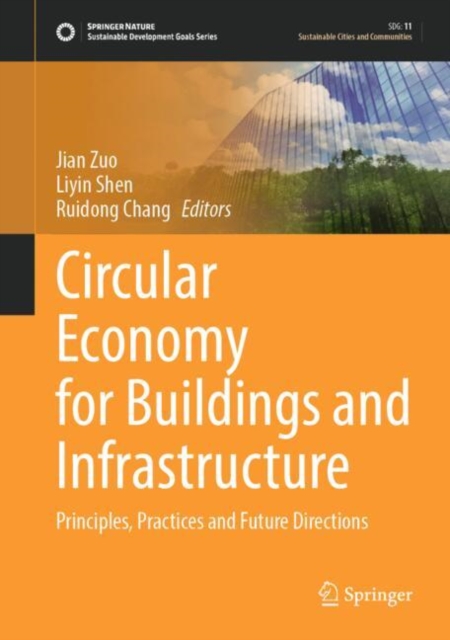
This edited volume covers theoretical and practical aspects of circular economy in building development, offering chapters dealing with topics such as material design, affordability of housing development, waste management and recycling, smart metering, and more.
Teniendo en cuenta que la industria de la construcción consume alrededor del 50% de los recursos naturales mundiales, situación que la convierte en la actividad del hombre menos sostenible del planeta, resulta necesario para el arquitecto, en tanto diseñador del hábitat, pensar en un cambio paradigmático hacia el desarrollo sustentable, a fin de asegurar la satisfacción de las necesidades del hombre, no solo actuales, sino también de las generaciones futuras.
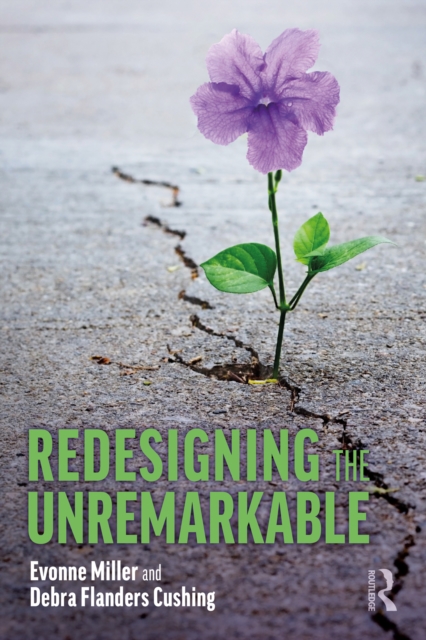
Redesigning the Unremarkable is a timely and necessary reminder that the often neglected elements and spaces of our built environment - from trash bins, seats, stairways, and fences to streets, bikeways, underpasses, parking lots, and shopping centres - must be thoughtfully redesigned to enhance human and planetary health.
Redesigning the Unremarkable is a timely and necessary reminder that the often neglected elements and spaces of our built environment - from trash bins, seats, stairways, and fences to streets, bikeways, underpasses, parking lots, and shopping centres - must be thoughtfully redesigned to enhance human and planetary health.
This book describes results of research conducted with the goal of providing a framework, selected tools, and guidelines to significantly reduce energy use (by more than 50%) in government and public buildings.
This book reports on a large research project on community regeneration, which integrated the spatial, social, economic and organizational factors with the dimensions of sustainability, resilience and participation.
This book investigates energy use and measures to improve the energy efficiency of public housing, using post-war social housing development estates in Cyprus as its example.
Pflanzen sind Regenmacher, stehen an erster Stelle der Artenvielfalt, wachsen in Kreisläufen, sind ein wertvoller Bodenschatz, leben genügsam und nachhaltig, liefern Nahrung, machen uns gesund, nehmen unser Kohlendioxid auf und regulieren das Klima.
This book applies traditional reliability engineering methods to prognostics and health management (PHM), looking at remaining useful life (RUL) and its dynamics, to enable engineers to effectively and accurately predict machinery and systems useful lifespan.