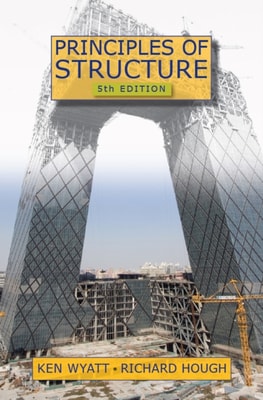
Since its first publication in 1974, Principles of Structure has established itself at the forefront of introductory texts for students of architecture, building and project management seeking a basic understanding of the behavior and design of building structures.
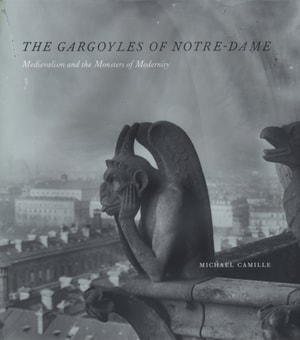
Most of the seven million people who visit the cathedral of Notre Dame in Paris each year probably do not realize that the legendary gargoyles adorning this medieval masterpiece were not constructed until the nineteenth century.
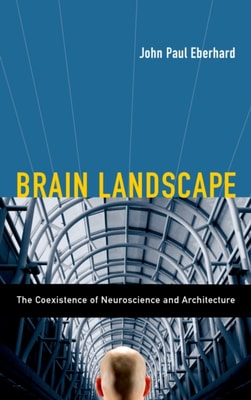
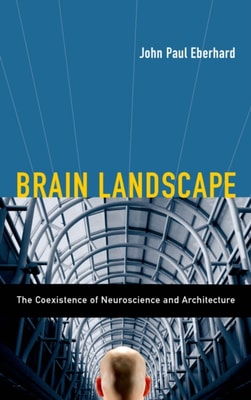
Brain Landscape: The Coexistence of Neuroscience and Architecture is the first book to serve as an intellectual bridge between architectural practice and neuroscience research.
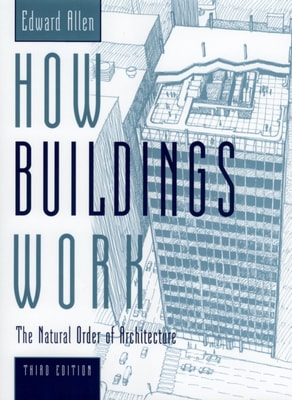
Illustrated with hundreds of illuminating line drawings, this classic guide reveals virtually every secret of a building's function: how it stands up, keeps its occupants safe and comfortable, gets built, grows old, and dies--and why some buildings do this so much better than others.
Recent advances in green technologies and sustainable development deals with cutting-edge research and innovative ideas in different categories of green technologies and operational aspects of sustainable development including renewable energy sources, power systems, mathematical ecol?
Recent Developments of Geopolymer Materials: Processing and Characterisations focuses on the development, processing, and characterization of sustainable and eco-friendly materials, highlighting recent research developments in this field.
The quality of 'monumentality' is attributed to the buildings of few historical epochs or cultures more frequently or consistently than to those of the Roman Empire.
In Making Dystopia, distinguished architectural historian James Stevens Curl tells the story of the advent of architectural Modernism in the aftermath of the First World War, its protagonists, and its astonishing, almost global acceptance after 1945.
In Making Dystopia, distinguished architectural historian James Stevens Curl tells the story of the advent of architectural Modernism in the aftermath of the First World War, its protagonists, and its astonishing, almost global acceptance after 1945.
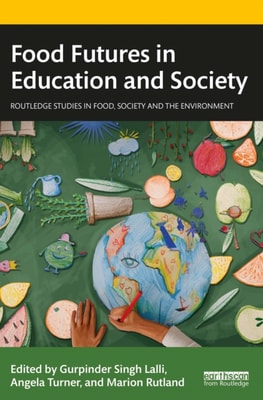
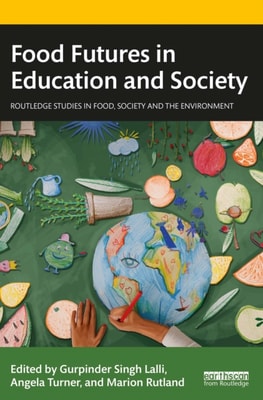
This book brings together a unique collection of chapters to facilitate a broad discussion on food education that will stimulate readers to think about key policies, recent research, curriculum positions and how to engage with key stakeholders about the future of food.
This book brings together a unique collection of chapters to facilitate a broad discussion on food education that will stimulate readers to think about key policies, recent research, curriculum positions and how to engage with key stakeholders about the future of food.
In real estate markets all around the country, real estate "e;flippers"e; have discovered that a small down payment, a little paint, some cleaning, and some time can net them tens (even hundreds) of thousands of dollars in profits, possibly tax-free.
Brain Landscape: The Coexistence of Neuroscience and Architecture is the first book to serve as an intellectual bridge between architectural practice and neuroscience research.
Illustrated with hundreds of illuminating line drawings, this classic guide reveals virtually every secret of a building's function: how it stands up, keeps its occupants safe and comfortable, gets built, grows old, and dies--and why some buildings do this so much better than others.
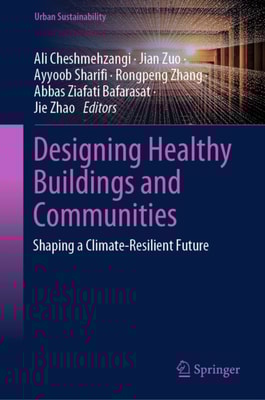
This book aims to explore and showcase global case studies focused on creating buildings and communities that promote health while enhancing climate resilience.
You can use this book to design a house for yourself with your family; you can use it to work with your neighbors to improve your town and neighborhood; you can use it to design an office, or a workshop, or a public building.
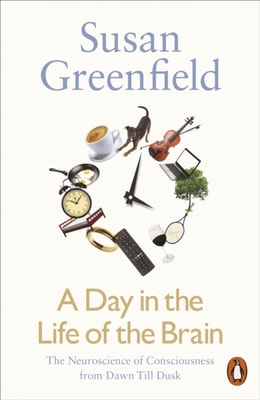
'Required reading for anyone remotely curious about how they came to be remotely curious' Observer'Enthralling' Spectator What is human consciousness and how is it possible?
Eco-efficient Repair and Rehabilitation of Concrete Infrastructures provides an updated state-of-the-art review on eco-efficient repair and rehabilitation of concrete infrastructure.
This book explores the concept of fragile heritage as an architectural legacy and a territorial resource in rural China, emphasizing the significance in safeguarding its unique cultural trajectory, and laying the groundwork for future developments.
Quantifying exergy losses in the energy supply system of buildings reveals the potential for energy improvement, which cannot be discovered using conventional energy analysis.
The current climate crisis and the rapid transformation of the natural environments will inevitably pose a threat to human settlements around the world.
Safety and Reliability Modeling and Its Applications combines work by leading researchers in engineering, statistics and mathematics who provide innovative methods and solutions for this fast-moving field.
Energy Services Fundamentals and Financing, first volume of the Energy Services and Management series, provides a global view of energy services schemes and practices.
This book explores membrane materials as a means of translating natural and renewable resources into a more flexible, dynamic, and reactive architectural skin.
Rethinking Building Skins: Transformative Technologies and Research Trajectories provides a comprehensive collection of the most relevant and forward-looking research in the field of facade design and construction today, with a focus on both product and process innovation.
Civil Engineering Materials: From Theory to Practice presents the state-of-the-art in civil engineering materials, including the fundamental theory of materials needed for civil engineering projects and unique insights from decades of large-scale construction in China.
This book thoroughly examines the aims of green urbanism, providing a perspective to help responding to the growing environmental challenges posed by the enormous increase in human needs.
This book examines the best available empirical evidence regarding one of the most challenging and pervasive questions throughout ages, cultures, and religions: the survival of human consciousness after death.
A major new theory of why human intelligence has not evolved in other speciesThe Human Evolutionary Transition offers a unified view of the evolution of intelligence, presenting a bold and provocative new account of how animals and humans have followed two powerful yet very different evolutionary paths to intelligence.