New Trends in Eco-efficient and Recycled Concrete describes different recycled materials that have been used in eco-efficient concrete, reviewing previous publications to identify the most effective recycled materials to be applied in concrete manufacture.
Numerical Modeling of Masonry and Historical Structures: From Theory to Application provides detailed information on the theoretical background and practical guidelines for numerical modeling of unreinforced and reinforced (strengthened) masonry and historical structures.
Eco-efficient Repair and Rehabilitation of Concrete Infrastructures provides an updated state-of-the-art review on eco-efficient repair and rehabilitation of concrete infrastructure.
This book highlights the latest knowledge and innovations in the fields of civil engineering and construction industry striving for a sustainable built environment.
Cost-Effective Energy Efficient Building Retrofitting:Materials, Technologies, Optimization and Case Studies provides essential knowledge for civil engineers, architects, and other professionals working in the field of cost-effective energy efficient building retrofitting.
Lea's Chemistry of Cement and Concrete, Fifth Edition, examines the suitability and durability of different types of cements and concretes, their manufacturing techniques and the role that aggregates and additives play in achieving concrete's full potential of delivering a high-quality, long-lasting, competitive and sustainable product.
Smart Buildings: Advanced Materials and Nanotechnology to Improve Energy Efficiency and Environmental Performance presents a thorough analysis of the latest advancements in construction materials and building design that are applied to maximize building efficiency in both new and existing buildings.
Handbook of Materials Failure Analysis: With Case Studies from the Chemicals, Concrete and Power Industries provides an in-depth examination of materials failure in specific situations, a vital component in both developing and engineering new solutions.
Dreamers, owner-builders, natural and sustainable building contractors, modern homesteaders Cordwood construction - log-ends set in insulated mortar - is a versatile, economical, low-impact, and beautiful building method.
The original, complete, user-friendly introduction to natural building, now fully revised and updated The popularity of natural building has grown by leaps and bounds, spurred by a grassroots desire for housing that is healthy, affordable, and environmentally responsible.
Landscape Urbanism and New Urbanism - negotiating the relationship between cities and the natural world In contemporary Western society, urban development is regarded as an unfortunate blight from which nature provides a much-needed respite.
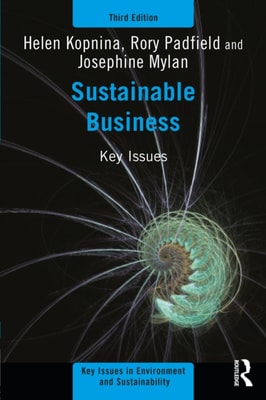
Sustainable Business: Key Issues is the first comprehensive introductory-level textbook to address the interface between environmental challenges and business solutions to provide an overview of the basic concepts of sustainability, sustainable business, and business ethics.
Environmental issues such as ozone layer depletion, overpopulation, biodiversity loss, global warming, natural resource depletion, and so on affect every organism on the planet somehow.
Songs, barks, roars, hoots, squeals, and growls: exploring the mysteries of how animals communicate by soundWhat is the meaning of a bird's song, a baboon's bark, an owl's hoot, or a dolphin's clicks?
Microbial or biological degradation has long been the subject of active concern, and the rapid expansion and growing sophistication of various industries in the last century has significantly increased the volume and complexity of toxic residues of wastes.
For the first time ever, five-time number-one RE/MAX agent worldwide, Jordan Cohen, reveals his secret sales strategies that will elevate your real estate sales career to the highest levels.
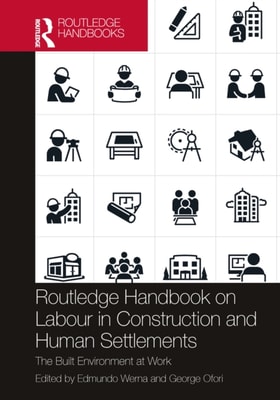
Routledge Handbook on Labour in Construction and Human Settlements presents a detailed and comprehensive examination of the relationship between labour and the built environment, and synergises these critical focus areas in innovative ways.
The Designing Environments book series addresses questions regarding necessary environmental transformation in the context of the fast-unfolding environmental crisis.
The book encodes a vision for the actively sustainable management and development of the built environment by referring to the application of timber-based construction systems as additive solutions for the multi-purpose improvement of existing buildings.
This monograph, now in its 2nd edition with 31 new chapters and significant updates, is the first book of its kind written specifically for graduate students and clinicians.
Smart Technologies and Design for Healthy Built Environment connects smart technology to a healthy built environmentthat builds upon the sustainable building movement.
This book presents a new approach to building renovation, combining aspects of various professional disciplines, integrating green building design, structural stability, and energy efficiency.
A volume of five parts, this book is a culmination of selected research papers from the second version of the international conferences on Urban Planning & Architectural Design for sustainable Development (UPADSD) and Urban Transit and Sustainable Networks (UTSN) of 2017 in Palermo and the first of the Resilient and Responsible Architecture and Urbanism Conference (RRAU) of 2018 in the Netherlands.
This title is a refereed, academic research annual, that is devoted to publishing articles about advancements in the development of accounting and its related disciplines from an international perspective.
The Routledge Handbook of Sustainable Design considers the design, not only of artifacts, but of structures, systems, and interactions in the context of sustaining our shared planet.
Arsenic contamination in drinking water and crops is a major health issue in many countries worldwide, threatening the health of millions of people due to arsenic's toxicity and carcinogenicity.
Arsenic contamination in drinking water and crops is a major health issue in many countries worldwide, threatening the health of millions of people due to arsenic's toxicity and carcinogenicity.
This book delves into the transformative potential of neuromorphic computing within the realm of civil engineering, emphasizing its role in advancing smart infrastructure systems.
The book provides new perspectives from leading researchers accentuating and examining the central role of the built environment in conceiving and implementing multifaceted solutions for the complex challenges of climate change, revealing critical potentials for architecture and design to contribute in more informed and long-term ways to the urgent transition of our society.
An illuminating look at the adaptive nature of our memoriesand how their flexibility and fallibility help us survive and thriveWe tend to think of our memories as impressions of the past that remain fully intact, preserved somewhere inside our brains.