This book proposes a new critical relationship between computation and architecture, developing a history and theory of representation in architecture to understand and unleash potential means to open up creativity in the field.
The current phase of capitalist development manifests itself through a very diverse range of spatial byproducts: data centers, warehouses, container terminals, logistics parks, and many others.
Illustrated with hundreds of illuminating line drawings, this classic guide reveals virtually every secret of a building's function: how it stands up, keeps its occupants safe and comfortable, gets built, grows old, and dies--and why some buildings do this so much better than others.
You can use this book to design a house for yourself with your family; you can use it to work with your neighbors to improve your town and neighborhood; you can use it to design an office, or a workshop, or a public building.
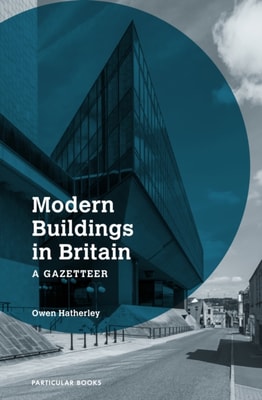
The definitive illustrated guide to modern British architecture, from one of the most acclaimed critics at work todayModernism is now a century old, and its consequences are all around us, built into our everyday lived environments.
'Required reading for anyone remotely curious about how they came to be remotely curious' Observer'Enthralling' Spectator What is human consciousness and how is it possible?
John Ruskin overturned Victorian society s ideas about art and architecture, arguing that ancient buildings must be conserved for their deep, mystical links with the past and that creative design is essential not for financial gain, but to communicate eternal human truths.
Revolutionary essays on design, aesthetics and materialism - from one of the great masters of modern architectureAdolf Loos, the great Viennese pioneer of modern architecture, was a hater of the fake, the fussy and the lavishly decorated, and a lover of stripped down, clean simplicity.
This book examines the best available empirical evidence regarding one of the most challenging and pervasive questions throughout ages, cultures, and religions: the survival of human consciousness after death.
A major new theory of why human intelligence has not evolved in other speciesThe Human Evolutionary Transition offers a unified view of the evolution of intelligence, presenting a bold and provocative new account of how animals and humans have followed two powerful yet very different evolutionary paths to intelligence.
The book focuses on all typological aspects of arches and vaults within the heritage of design and construction, while bringing attention to new "e;green"e; materials, promoting a circular economy informed by limitations caused by global warming.
This book examines reconstruction and resilience of historic cities and societies from multiple disciplinary and complementary perspectives and, by doing so, it helps researchers and practitioners alike, among them reconstruction managers, urban governance and professionals.
How a computational framework can account for the successes and failures of human cognitionAt the heart of human intelligence rests a fundamental puzzle: How are we incredibly smart and stupid at the same time?
A look at the extraordinary ways the brain turns thoughts into actions-and how this shapes our everyday livesWhy is it hard to text and drive at the same time?
Songs, barks, roars, hoots, squeals, and growls: exploring the mysteries of how animals communicate by soundWhat is the meaning of a bird's song, a baboon's bark, an owl's hoot, or a dolphin's clicks?
This book highlights the key phases and central findings of Alzheimer's Disease research since the introduction of the label 'Alzheimer's Disease' in 1910.
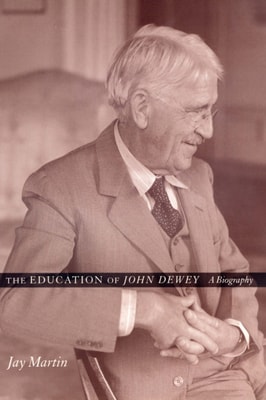
During John Dewey's lifetime (1859-1952), one public opinion poll after another revealed that he was esteemed to be one of the ten most important thinkers in American history.
This book aims to provide a cross-sectorial assessment in a multidisciplinary and trans-cultural context onto the innovations in urban and architectural approaches in designing next human environments within the Albanian context.
This is a second edition of a textbook that provides the first comprehensive, easy-to-read, and up-to-date account of the fascinating discipline of archaeoastronomy, in which the relationship between ancient constructions and the sky is studied in order to gain a better understanding of the ideas of the architects of the past and of their religious and symbolic worlds.
This book traces the history of urban design in tropical South East Asia with a view to offering solutions to contemporary architectural and urban problems.
Llegamos a esta publicación a partir del trabajo conjunto, que compartimos durante tres años, en el marco del Proyecto "Recuperación de procesos de co-construcción interactoral del conocimiento, en el marco de una pluriversalidad cognitiva, para la transformación social en el campo del hábitat".
The book investigates speculative filmic architectural projects and animations that go beyond representing buildings, touching upon issues concerning medium, act of representation, or conducting criticism on history, culture, society, or urban politics, along with the mediated character of contemporary spatial experience - interpreting it primarily through protocols of architectural imaging.
Songs, barks, roars, hoots, squeals, and growls: exploring the mysteries of how animals communicate by soundWhat is the meaning of a bird's song, a baboon's bark, an owl's hoot, or a dolphin's clicks?
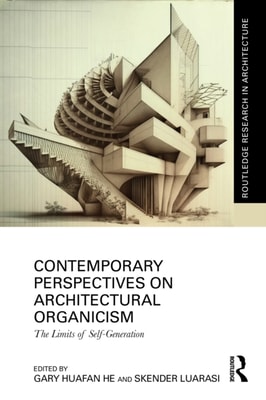
This project is born out of similar questions and discussions on the topic of organicism emergent from two critical strands regarding the discourse of organic self-generation: one dealing with the problem of stopping in the design processes in history, and the other with the organic legacy of style in the nineteenth century as a preeminent form of aesthetic ideology.
This project is born out of similar questions and discussions on the topic of organicism emergent from two critical strands regarding the discourse of organic self-generation: one dealing with the problem of stopping in the design processes in history, and the other with the organic legacy of style in the nineteenth century as a preeminent form of aesthetic ideology.
Political Postmodernisms shows how sites outside of Western Europe and North America undermine an established narrative of architecture theory and history.
Political Postmodernisms shows how sites outside of Western Europe and North America undermine an established narrative of architecture theory and history.
Phenomenological Perspectives on Place, Lifeworlds and Lived Emplacement is a compilation of seventeen previously published articles and chapters by David Seamon, one of the foremost researchers in environmental, architectural, and place phenomenology.
This monograph, now in its 2nd edition with 31 new chapters and significant updates, is the first book of its kind written specifically for graduate students and clinicians.
This book reveals how subjective and objective data gathered by innovative methods of measurement give us the ability to quantify stress, health, performance, and wellbeing outcomes in different built environments.
An illuminating look at the adaptive nature of our memoriesand how their flexibility and fallibility help us survive and thriveWe tend to think of our memories as impressions of the past that remain fully intact, preserved somewhere inside our brains.
This book-Mind, Body, and Digital Brains-focuses on both theoretical and empirical issues and joins contributions from different disciplines, concepts, and sensibilities, bringing together scholars from fields that at first glance may appear different-Neuroscience and Cognitive Neuroscience; Robotics, Computer Science, Deep Learning, and Information Processing Systems; Education, Philosophy, Law, and Psychology.
ZERO PIRANESIGiovanni Battista Piranesi's engravings, Campo Marzio dell'antica Roma of 1762, have a peculiar position within the discipline of ar- chitecture.
This volume is a sequel to the work I published, several years ago, under the title, Byzantine Constantinople: the Walls of the City, and adjoining Historical Sites.
Contemporary cities are shaped by the unlikely adjacencies of objects that are vastly different in kind, origin, and scale: buildings, infrastructure, and other urban components that over time accumulate into mismatched configurations.
This book orchestrates a convergence of two discourses from the 1960s-Nelson Goodman's aesthetic theory on one side and critiques of modern architecture articulated by figures like Peter Blake, Charles Jencks, and Robert Venturi/Denise Scott Brown on the other.
CULINARY LESSONS - The Space of Food is based on a series of events, Culinary Lessons, which were hosted by the Stadelschule Architecture Class and which engaged with the relation between food, art and architecture.