Jointly hosted by the Ergonomics Society of South Africa (ESSA) and the International Ergonomics Association (IEA), this conference was attended by over 300 delegates and represented the largest and most prestigious gathering of eminent international ergonomists in the history of Africa.
The Routledge Handbook of Sustainable Design considers the design, not only of artifacts, but of structures, systems, and interactions in the context of sustaining our shared planet.
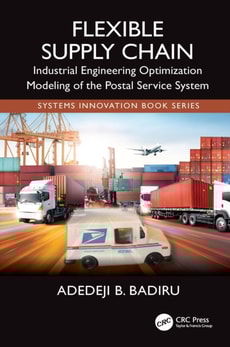
The capability modeling and simulation (M&S) supplies for managing systems complexity and investigating systems behaviors has made it a central activity in the development of new and existing systems.
The text provides in-depth knowledge about recent advances in solar collector systems, photovoltaic systems, the role of thermal energy systems in buildings, phase change materials, geothermal energy, biofuels, and thermal management systems for EVs in social and industrial applications.
The text provides in-depth knowledge about recent advances in solar collector systems, photovoltaic systems, the role of thermal energy systems in buildings, phase change materials, geothermal energy, biofuels, and thermal management systems for EVs in social and industrial applications.
Businesses have faced a variety of difficulties as a result of the global pandemic, and how they responded to this disruption has affected both their resilience and their ability to get through this crisis.
This book provides applications of machine learning in healthcare systems and seeks to close the gap between engineering and medicine by combining design and problem-solving skills of engineering with health sciences to advance healthcare treatment.
This book provides applications of machine learning in healthcare systems and seeks to close the gap between engineering and medicine by combining design and problem-solving skills of engineering with health sciences to advance healthcare treatment.
Comprehensive guide to industrial automation and robotics, covering fluid power systems, control mechanisms, and AI integration for enhanced operational efficiency.
Comprehensive guide to industrial automation and robotics, covering fluid power systems, control mechanisms, and AI integration for enhanced operational efficiency.
This is the seventh book in the popular Simplified Design series from John Lenk, which teaches engineers, technicians, and students to use and modify off-the-shelf ICs to suit their individual design needs.
Die Dynamische Systementwicklungsmethode (DSDM) ist ein bewährtes und weit verbreitetes Framework, das die Prinzipien und Praktiken des agilen Projektmanagements aufgreift und perfektioniert.
Membrane technology is a rapidly developing area, with key growth accross the process sector, including biotech separation and biomedical applications (e.
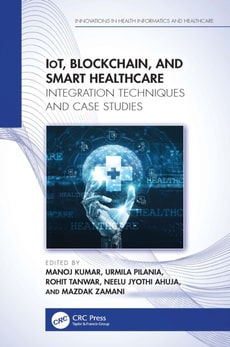
The book acts as a guide, taking the reader into the smart system domain and providing theoretical and practical knowledge along with case studies in smart healthcare.
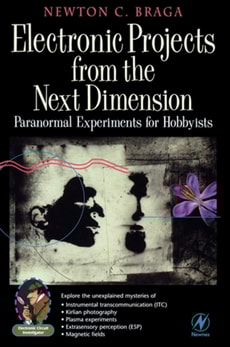
For years paranormal scientists have explored the detection and documentation of spirits, auras, ESP, hypnosis, and many more phenomena through electronics.
Recent technological advances have created a testing crisis in the electronics industry--smaller, more highly integrated electronic circuits and new packaging techniques make it increasingly difficult to physically access test nodes.
The text comprehensively discusses computational models including artificial neural networks, agent-based models, and decision field theory for reliability engineering.
Focusing on the business implications of green innovation, this book describes the sheer impact, spread, and opportunities arising every day, and how business leaders can implement green innovative practices today to realize tangible as well as intangible business advantages in the future.
The text comprehensively highlights the latest methodologies, models, techniques, and applications along with a description of modeling, optimization, and experimental works in the energy sector.
The application of internet of things (IoT) technologies and artificial intelligence (AI)-enabled IoT solutions has gradually become accepted by business and production organizations as an effective tool for automating several activities effectively and efficiently and developing and distributing products to the global market.
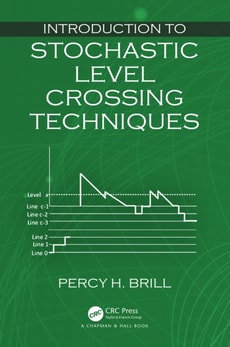
Introduction to Stochastic Level Crossing Techniques describes stochastic models and their analysis using the System Point Level Crossing method (abbreviated SPLC or LC).
Focusing on the business implications of green innovation, this book describes the sheer impact, spread, and opportunities arising every day, and how business leaders can implement green innovative practices today to realize tangible as well as intangible business advantages in the future.
Artificial Intelligence and Knowledge Processing play a vital role in various automation industries and their functioning in converting traditional industries to AI-based factories.
This practical reference provides in-depth information required to understand and properly estimate compressor capabilities and to select the proper designs.
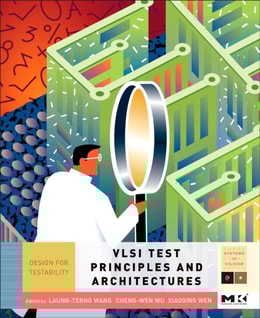
This book is a comprehensive guide to new DFT methods that will show the readers how to design a testable and quality product, drive down test cost, improve product quality and yield, and speed up time-to-market and time-to-volume.
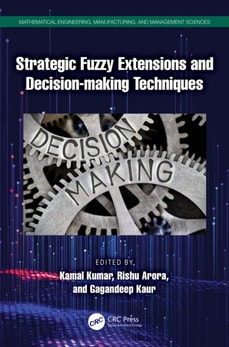
The application of a novel correlation coefficient of linguistic intuitionistic fuzzy sets to medical diagnosis problems provides the topic for Strategic Fuzzy Extensions and Decision-making Techniques.
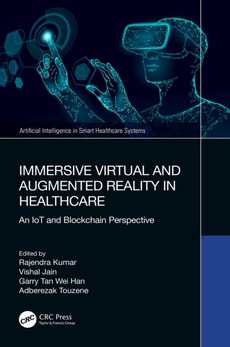
The book examines the integration of IoT, Blockchain, and Smart Healthcare, providing a comprehensive analysis of these advanced technologies and their impact on the healthcare industry.
This book serves as an invaluable reference to Power Electronics Design, covering the application of high-power semiconductor technology to large motor drives, power supplies, power conversion equipment, electric utility auxiliaries and numerous other applications.
In human factors and ergonomics, professionals play a key role in shaping the compatibility between tasks, products, and environments with the needs of individuals.