Amy Marcy Cheney Beach (1867-1944), the most widely performed composer of her generation, was the first American woman to succeed as a creator of large-scale art music.
Even as orchestras, performers, enthusiasts, and critics across the nation--and across the globe--celebrate the one-hundredth anniversary of his birth, George Gershwin (1898-1937) remains one of America's most popular yet least appreciated composers.
Alec Wilder wrote songs and lyrics of unsurpassed beauty and originality, and his work won the respect and admiration of such important musical figures as Frank Sinatra, Peggy Lee, Mitch Miller, Gunther Schuller, and many others.
Drawing upon a remarkable mix of intensive research and the personal experience of a career devoted to the music about which Dvorak so presciently spoke, Maurice Peress's lively and convincing narrative treats readers to a rare and delightful glimpse behind the scenes of the burgeoning American school of music and beyond.
George Schuyler, a renowned and controversial black journalist of the Harlem Renaissance, and Josephine Cogdell, a blond, blue-eyed Texas heiress and granddaughter of slave owners, believed that intermarriage would "e;invigorate"e; the races, thereby producing extraordinary offspring.
This book is the first biography of 20th-century pianist Rudolf Serkin, providing a narrative of Serkin's life with emphasis on his European roots and the impact of his move to America.
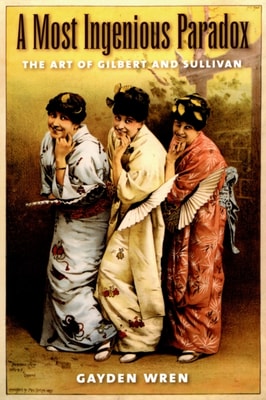
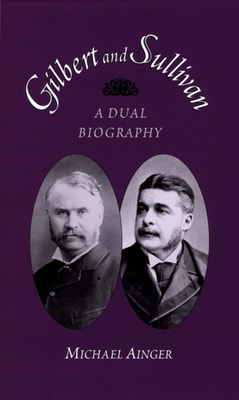
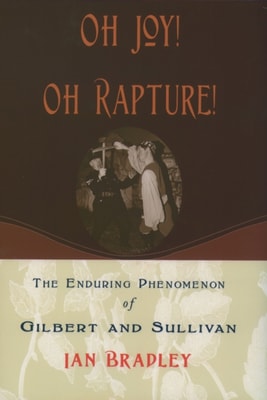
Written more than a century ago and initially regarded even by their creators as nothing more than light entertainment, the fourteen operas of Gilbert & Sullivan emerged over the course of the twentieth century as the world's most popular body of musical-theater works, ranking second only to Shakespeare in the history of English-language theater.
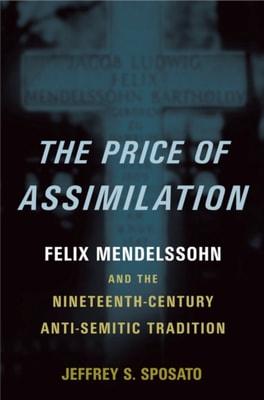
Most scholars since World War Two have assumed that composer Felix Mendelssohn Bartholdy (1809-1847) maintained a strong attachment to Judaism throughout his lifetime.
Following the earlier volumes in the Studies in Musical Genesis and Structure series, Mahler's Fourth Symphony is a study of origins of one of Mahler's most popular and accessible works.
A freewheeling blend of continental European folk music and the songs, tunes, and dances of Anglo and Celtic immigrants, polkabilly has enthralled American musicians and dancers since the mid-19th century.
In this penetrating study, Russell Stinson explores how four of the greatest composers of the nineteenth century--Felix Mendelssohn, Robert Schumann, Franz Liszt, and Johannes Brahms--responded to the model of Bach's organ music.
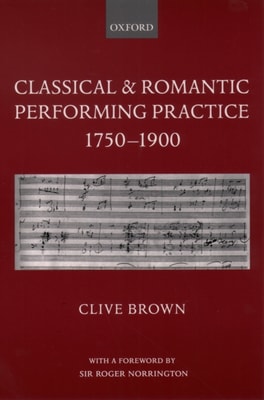
The past ten years have seen a rapidly growing interest in performing and recording Classical and Romantic music with period instruments; yet the relationship of composers' notation to performing practices during that period has received only sporadic attention from scholars, and many aspects of composers' intentions have remained uncertain.
Bach's cantatas are among the highest achievements of Western musical art, yet studies of the individual cantatas that are both illuminating and detailed are few.