Richard Rodgers and Lorenz Hart are one of the defining duos of musical theater, contributing dozens of classic songs to the Great American Songbook and working together on over 40 shows before Hart's death.
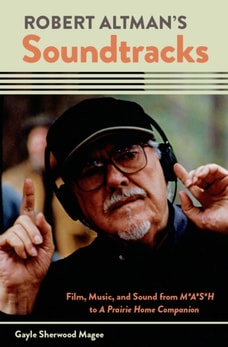
American director Robert Altman (1925-2006) first came to national attention with the surprise blockbuster M*A*S*H (1970), and he directed more than thirty feature films in the subsequent decades.
Without any formal training in music composition, Irving Berlin took a knack for music and turned it into the most successful songwriting career in American history.
Now that the political and economic plight of European Roma and the popularity of their music are objects of international attention, Romani Routes provides a timely and insightful view into Romani communities both in their home countries and in the diaspora.
In early 2005, an engineer at the Library of Congress accidentally discovered, in an unmarked box, the recording of Thelonious Monk's and John Coltrane's performance at a 1957 benefit concert at Carnegie Hall.
In the wake of the Asia-Pacific War, Korean survivors of the "e;comfort women"e; system-those bound into sexual slavery for the Japanese military during the war-lived under great pressure not to speak about what had happened to them.
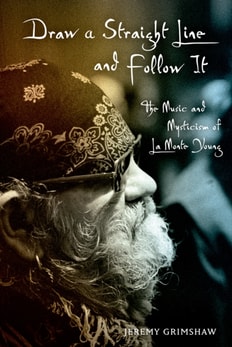
Recognized as the patriarch of the minimalist movement-Brian Eno once called him "e;the daddy of us all"e;--La Monte Young remains an enigma within the music world, one of the most important and yet most elusive composers of the late twentieth century.
Now that the political and economic plight of European Roma and the popularity of their music are objects of international attention, Romani Routes provides a timely and insightful view into Romani communities both in their home countries and in the diaspora.
Some of the most popular works of nineteenth-century music were labeled either "e;Hungarian"e; or "e;Gypsy"e; in style, including many of the best-known and least-respected of Liszt's compositions.
Although military music was among the most widespread forms of music making during the nineteenth-century, it has been almost totally overlooked by music historians.
While female performers in the early 20th century were regularly advertised as dancers, mimics, singers, or actresses, they wove together techniques and elements drawn from a wide variety of genres and media.
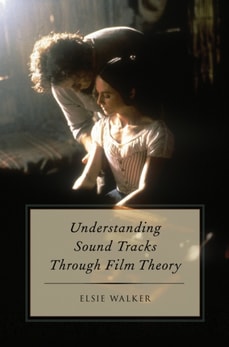
Understanding Sound Tracks Through Film Theory breaks new ground by redirecting the arguments of foundational texts within film theory to film sound tracks.
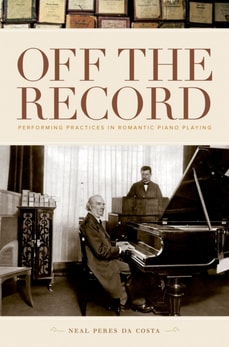
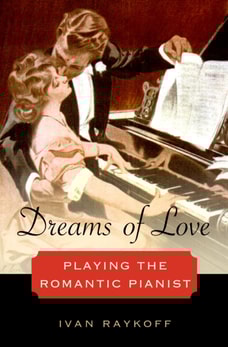
The Romantic pianist - the solo pianist who plays nineteenth-century piano music - has become an attractive figure in the popular imagination, considering the innumerable artworks, literary works, and films representing this performer's seductive allure.
Few Mexican musicians in the twentieth century achieved as much notoriety or had such an international impact as the popular singer and songwriter Agustin Lara (1897-1970).
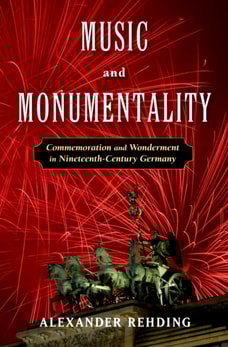
This critical study locates musical monumentality, a central property of the nineteenth-century German repertoire, at the intersections of aesthetics and memory.
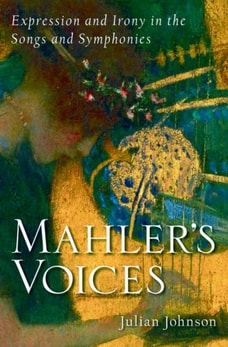
Mahler's Voices brings together a close reading of the renowned composer's music with wide-ranging cultural and historical interpretation, unique in being a study not of Mahler's works as such but of Mahler's musical style.
Combining musical insight with the most recent research, William Kinderman's Beethoven is both a richly drawn portrait of the man and a guide to his music.
In Meeting Jimmie Rodgers, the first book to explore the deep legacy of "e;The Singing Brakeman"e; from a twenty-first century perspective, Barry Mazor offers a lively look at Rodgers' career, tracing his rise from working-class obscurity to the pinnacle of renown that came with such hits as "e;Blue Yodel"e; and "e;In the Jailhouse Now.
Unfinished Music draws its inspiration from the riddling aphorism by Walter Benjamin that serves as its epigraph: "e;the work is the death mask of its conception.
Setting the stage for a most intriguing journey into the world of minimalism, Robert Carl's Terry Riley's In C argues that the work holds its place in the canon because of the very challenges it presents to "e;classical"e; music.
In this third edition of the classic Verdi, renowned authority Julian Budden offers a comprehensive overview of Verdi the man and the artist, tracing his ascent from humble beginnings to the status of a cultural patriarch of the new Italy, whose cause he had done much to promote, and demonstrating the gradual enlargement over the years of his artistic vision.