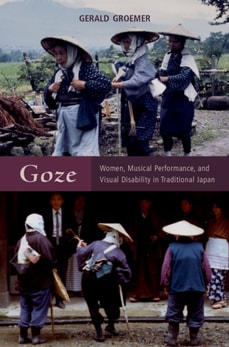
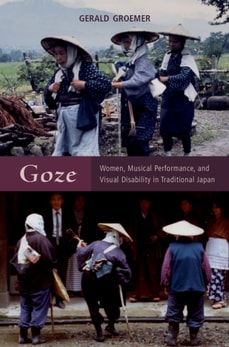
In a tradition extending from the medieval era to the early twentieth century, visually disabled Japanese women known as goze toured the countryside as professional singers.
Since 1997, the war in the east of the Democratic Republic of the Congo has taken more than 6 million lives and shapes the daily existence of the nation's residents.
Since 1997, the war in the east of the Democratic Republic of the Congo has taken more than 6 million lives and shapes the daily existence of the nation's residents.
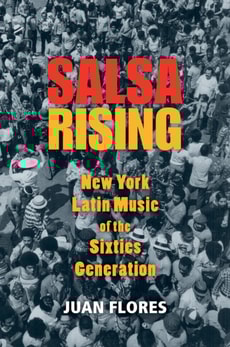
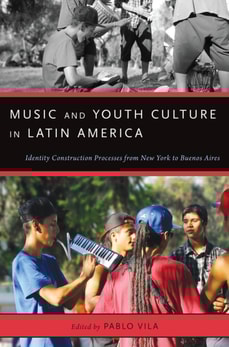
In the 1920s and 30s, musicians from Latin America and the Caribbean were flocking to New York, lured by the burgeoning recording studios and lucrative entertainment venues.
Today, teachers and performers of Turkish classical music intentionally cultivate melancholies, despite these affects being typically dismissed as remnants of the Ottoman Empire.
In Spirit Song: Afro-Brazilian Religious Music and Boundaries, Marc Gidal investigates how and why a multi-faith community in southern Brazil utilizes music to combine and segregate three Afro-Brazilian religions: Umbanda, Quimbanda, and Batuque.
In the 1920s and 30s, musicians from Latin America and the Caribbean were flocking to New York, lured by the burgeoning recording studios and lucrative entertainment venues.
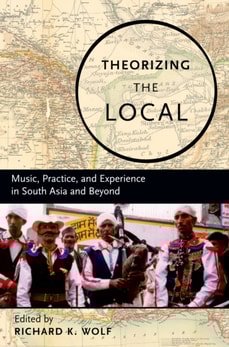
Over the past four decades, the "e;globalized"e; aspects of cultural circulation have received the majority of scholarly-and consumer-attention, particularly in the study of South Asian music.
Beginning in the 1930s, men and a handful of women came from India's many communities-Marathi, Parsi, Goan, North Indian, and many others--to Mumbai to work in an industry that constituted in the words of some, "e;the original fusion music.
In a tradition extending from the medieval era to the early twentieth century, visually disabled Japanese women known as goze toured the countryside as professional singers.
In Local Fusions, author Barbara Rose Lange explores musical life in Hungary, Slovakia, and Austria between the end of the Cold War and the world financial crisis of 2008.
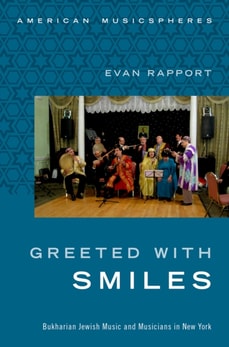
As the Soviet Union stood on the brink of collapse, thousands of Bukharian Jews left their homes from across the predominantly Muslim cities of Central Asia, to reestablish their lives in the United States, Israel and Europe.
Istanbul is home to a multimillion dollar transnational music industry, which every year produces thousands of digital music recordings, including widely distributed film and television show soundtracks.
During the decades leading up to 1910, Portugal saw vast material improvements under the guise of modernization while in the midst of a significant political transformation - the establishment of the Portuguese First Republic.
In Roma Music and Emotion, author Filippo Bonini Baraldi forges a much-needed theory of music, emotion, and empathy from an anthropological perspective, addressing the failure of the prevailing psychological theories on music and emotion to account for non-western musical cultures.
In Roma Music and Emotion, author Filippo Bonini Baraldi forges a much-needed theory of music, emotion, and empathy from an anthropological perspective, addressing the failure of the prevailing psychological theories on music and emotion to account for non-western musical cultures.
How can a traditional music with little apparent historical connection to Berlin become a way of hearing and making sense of the bustling German capital in the twenty-first century?
How can a traditional music with little apparent historical connection to Berlin become a way of hearing and making sense of the bustling German capital in the twenty-first century?
THE FIRST EVER OFFICIAL BOOK-Published in celebration of BTS's 10th Anniversary, stories that go beyond what you already know about BTS, including unreleased photos and all album information.