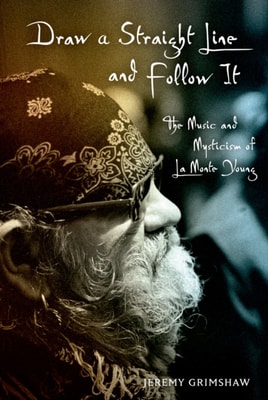
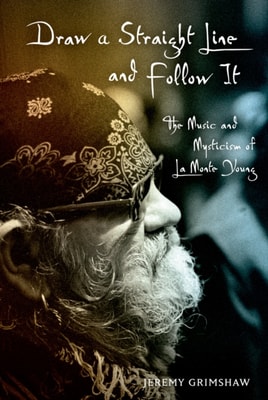
Recognized as the patriarch of the minimalist movement-Brian Eno once called him "e;the daddy of us all"e;--La Monte Young remains an enigma within the music world, one of the most important and yet most elusive composers of the late twentieth century.
The Oxford Handbook of Sondheim Studies offers a series of cutting-edge essays on the most important and compelling topics in the growing field of Sondheim Studies.
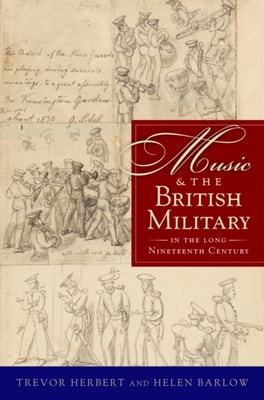
Although military music was among the most widespread forms of music making during the nineteenth-century, it has been almost totally overlooked by music historians.
The Oxford Handbook of Dance and the Popular Screen sets the agenda for the study of dance in popular moving images - films, television shows, commercials, music videos, and YouTube - and offers new ways to understand the multi-layered meanings of the dancing body by engaging with methodologies from critical dance studies, performance studies, and film/media analysis.
In Meeting Jimmie Rodgers, the first book to explore the deep legacy of "e;The Singing Brakeman"e; from a twenty-first century perspective, Barry Mazor offers a lively look at Rodgers' career, tracing his rise from working-class obscurity to the pinnacle of renown that came with such hits as "e;Blue Yodel"e; and "e;In the Jailhouse Now.
Perhaps the most highly regarded French filmmaker after Jean Renoir, Robert Bresson created a new kind of cinema through meticulous refinement of the form's grammatical and expressive possibilities.
Show Tunes fully chronicles the shows, songs, and careers of the major composers of the American musical theatre, from Jerome Kern's earliest interpolations to the latest hits on Broadway.
Gioachino Rossini was one of the most influential, as well as one of the most industrious and emotionally complex of the great nineteenth-century composers.
Granddaughter of the philosopher Moses Mendelssohn and sister of the composer Felix Mendelssohn Bartholdy, Fanny Hensel (1805-1847) was an extraordinary musician who left well over four hundred compositions, most of which fell into oblivion until their rediscovery late in the twentieth century.
Gary Giddins's Weather Bird is a brilliant companion volume to his landmark in music criticism, Visions of Jazz, winner of the National Book Critics Circle Award in Criticism.
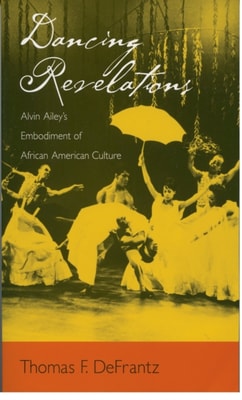
In the early 1960s, the Alvin Ailey American Dance Theater was a small, multi-racial company of dancers that performed the works of its founding choreographer and other emerging artists.
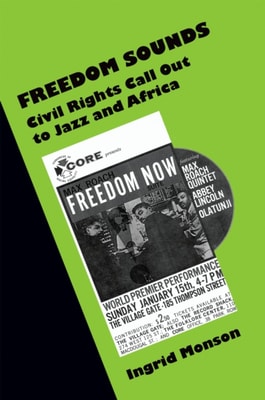
An insightful examination of the impact of the Civil Rights Movement and African Independence on jazz in the 1950s and 60s, Freedom Sounds traces the complex relationships among music, politics, aesthetics, and activism through the lens of the hot button racial and economic issues of the time.
Germany in the Loud Twentieth Century seeks to understand recent German history and contemporary German culture through its sounds and musics, noises and silences, using the means and modes of the emerging field of Sound Studies.
Recognized as the patriarch of the minimalist movement-Brian Eno once called him "e;the daddy of us all"e;--La Monte Young remains an enigma within the music world, one of the most important and yet most elusive composers of the late twentieth century.
Amid the recent increase in scholarly attention to rock music, Understanding Rock stands out as one of the first books that subjects diverse aspects of the music itself to close and sophisticated analytical scrutiny.
Have records, compact discs, and other sound reproduction equipment merely provided American listeners with pleasant diversions, or have more important historical and cultural influences flowed through them?
Few styles of popular music have generated as much controversy as progressive rock, a musical genre best remembered today for its gargantuan stage shows, its fascination with epic subject matter drawn from science fiction, mythology, and fantasy literature, and above all for its attempts to combine classical music's sense of space and monumental scope with rock's raw power and energy.
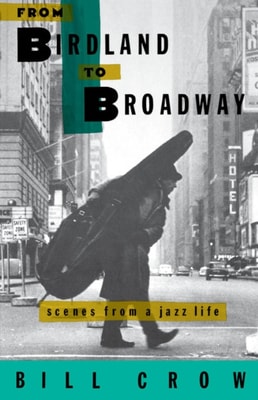
In the 1950s, New York City's Birdland was the center of the world of modern jazz--and a revelation to Bill Crow, a wet-behind-the-ears twenty-two-year-old from Washington State.
Poised to become a classic of jazz literature, Visions of Jazz: The First Century offers seventy-nine chapters illuminating the lives of virtually all the major figures in jazz history.
Hailed in The New York Times Book Review as "e;eclectic, exciting, convincing, provocative"e; and in The Washington Post Book World as "e;brilliantly original,"e; Henry Louis Gates, Jr.