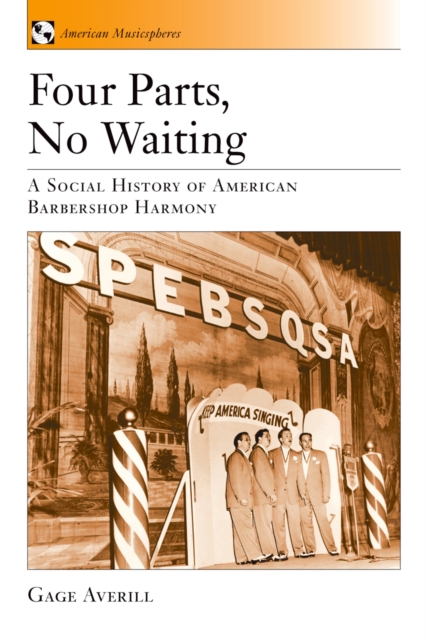
Four Parts, No Waiting investigates the role that vernacular, barbershop-style close harmony has played in American musical history, in American life, and in the American imagination.
An accessible exploration of an important and understudied music theory topic, Swain's book examines the dimensional technique of analyzing harmonic rhythm.
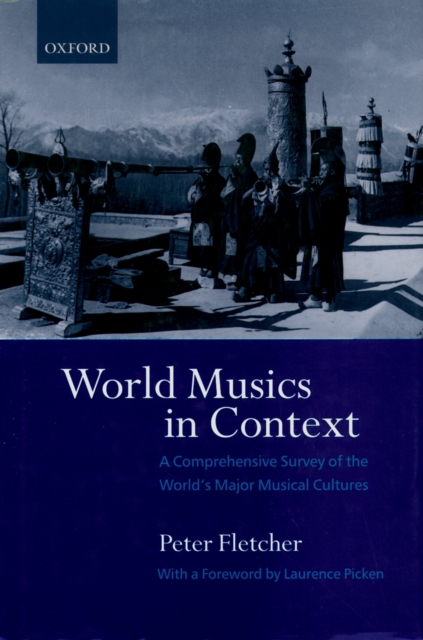
World Musics in Context is a wide-ranging survey of musics of the world, in their historical and social contexts, from ancient times to the present day.
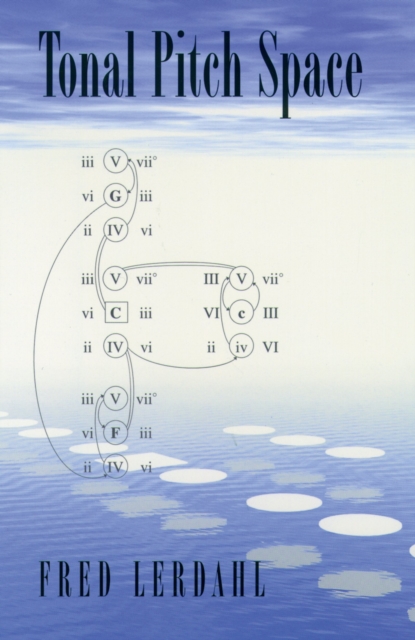
Building on the foundation of Lerdahl and Jackendoff's influential A Generative Theory of Tonal Music, this volume presents a multidimensional model of diatonic and chromatic spaces that quantifies listeners' intuitions of the relative distances of pitches, chords, and keys from a given tonic.
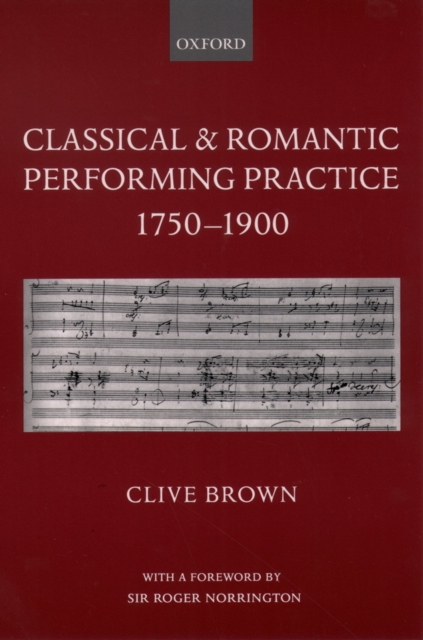
The past ten years have seen a rapidly growing interest in performing and recording Classical and Romantic music with period instruments; yet the relationship of composers' notation to performing practices during that period has received only sporadic attention from scholars, and many aspects of composers' intentions have remained uncertain.
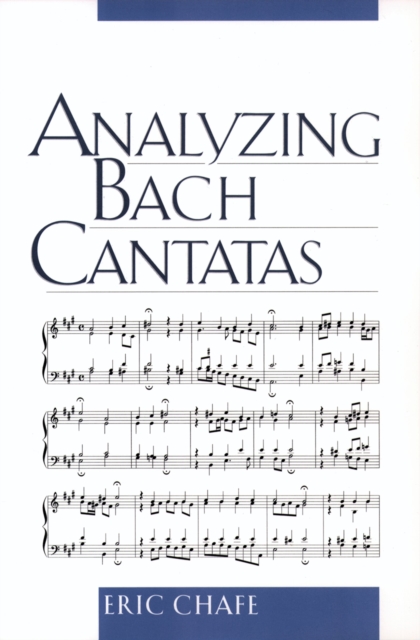
Bach's cantatas are among the highest achievements of Western musical art, yet studies of the individual cantatas that are both illuminating and detailed are few.
The attempt to play music with the styles and instruments of its era--commonly referred to as the early music movement--has become immensely popular in recent years.
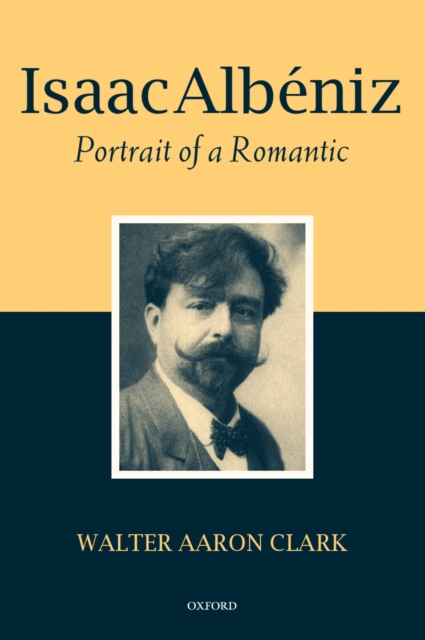
Walter Aaron Clark's detailed and accurate account (the first in English) of one of the most intriguing figures of the Romantic period is now available in paperback.
Descubre el Arte de la Dirección Coral con "El Director de Coro: Manual para la Dirección de Coros Vocacionales"La música coral ha sido una forma de expresión artística accesible y significativa a lo largo de la historia, uniendo a personas de diversas comunidades a través del canto colectivo.
Given the variety and richness of the sixteenth- and seventeenth-century English 'songscape', it might seem unsurprising to suggest that early modern song needs to be considered as sung.
Given the variety and richness of the sixteenth- and seventeenth-century English 'songscape', it might seem unsurprising to suggest that early modern song needs to be considered as sung.
The term 'world music' encompasses both folk and popular music across the globe, as well as the sounds of cultural encounter and diversity, sacred voices raised in worship, local sounds, and universal values.
The term 'world music' encompasses both folk and popular music across the globe, as well as the sounds of cultural encounter and diversity, sacred voices raised in worship, local sounds, and universal values.
The study of music and the brain can be traced back to the work of Gall in the 18th century, continuing with John Hughlings Jackson, August Knoblauch, Richard Wallaschek, and others.
The study of music and the brain can be traced back to the work of Gall in the 18th century, continuing with John Hughlings Jackson, August Knoblauch, Richard Wallaschek, and others.
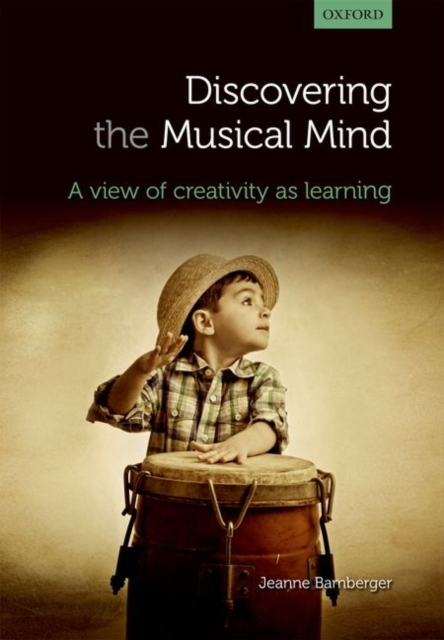
Following her distinguished earlier career as a concert pianist and later as a music theorist, Jeanne Bamberger conducted countless case studies analysing musical development and creativity the results of which were published in important scientific journals.
This volume presents a new collection of essays, all of them dealing with music, by Jerrold Levinson, one of the most prominent philosophers of art today.
Following her distinguished earlier career as a concert pianist and later as a music theorist, Jeanne Bamberger conducted countless case studies analysing musical development and creativity the results of which were published in important scientific journals.