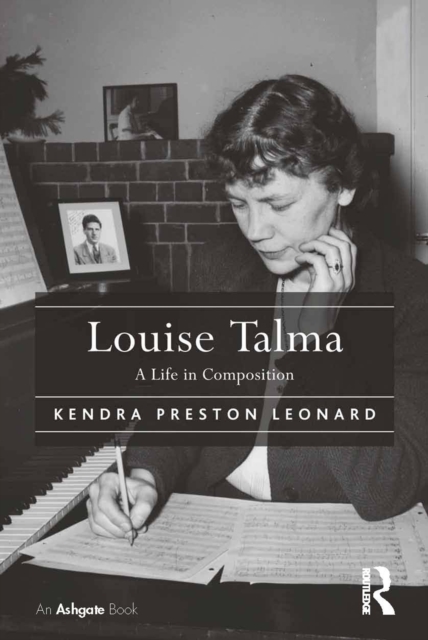
American composer Louise Talma (1906-1996) was the first female winner of two back-to-back Guggenheim Awards (1946, 1947), the first American woman to have an opera premiered in Europe (1962), the first female winner of the Sibelius Award for Composition (1963), and the first woman composer elected to the American Academy and Institute of Arts and Letters (1974).
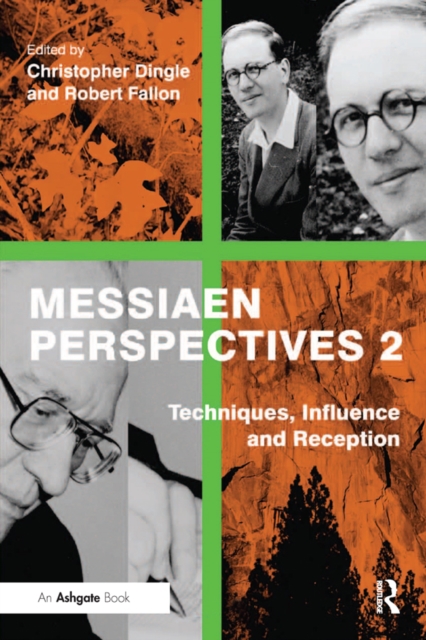
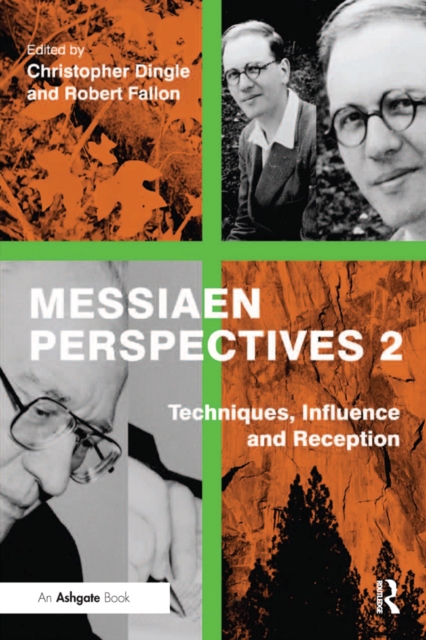
Focusing on Messiaen's relation to history - both his own and the history he engendered - the Messiaen Perspectives volumes convey the growing understanding of his deep and varied interconnections with his cultural milieux.
Focusing on Messiaen's relation to history - both his own and the history he engendered - the Messiaen Perspectives volumes convey the growing understanding of his deep and varied interconnections with his cultural milieux.
Despite Messiaen's position as one of the greatest technical innovators of the twentieth century, his musical language has not been comprehensively defined and investigated.
Despite Messiaen's position as one of the greatest technical innovators of the twentieth century, his musical language has not been comprehensively defined and investigated.
Written by leading experts, this volume provides a picture of the realities of current ICT use in musicology as well as prospects and proposals for how it could be fruitfully used in the future.
Written by leading experts, this volume provides a picture of the realities of current ICT use in musicology as well as prospects and proposals for how it could be fruitfully used in the future.
Music and Transcendence explores the ways in which music relates to transcendence by bringing together the disciplines of musicology, philosophy and theology, thereby uncovering congruencies between them that have often been obscured.
Music and Transcendence explores the ways in which music relates to transcendence by bringing together the disciplines of musicology, philosophy and theology, thereby uncovering congruencies between them that have often been obscured.
The gayat al-matlub fi 'ilm al-adwar wa-'l-durub by Ibn Kurr is the only theoretical text of any substance that can be considered representative of musicological discourse in Cairo during the first half of the fourteenth century CE.
The gayat al-matlub fi 'ilm al-adwar wa-'l-durub by Ibn Kurr is the only theoretical text of any substance that can be considered representative of musicological discourse in Cairo during the first half of the fourteenth century CE.
In his 1985 book The Idea of Music: Schoenberg and Others, Peter Franklin set out a challenge for musicology: namely, how best to talk and write about the music of modern European culture that fell outside of the modernist mainstream typified by Schoenberg, Berg, and Webern?
In his 1985 book The Idea of Music: Schoenberg and Others, Peter Franklin set out a challenge for musicology: namely, how best to talk and write about the music of modern European culture that fell outside of the modernist mainstream typified by Schoenberg, Berg, and Webern?
Music, Sexuality and the Enlightenment explains how Mozart's music for Le nozze di Figaro, Don Giovanni and CosA fan tutte 'sounds' the intentions of Da Ponte's characters and their relationships with one another.
Music, Sexuality and the Enlightenment explains how Mozart's music for Le nozze di Figaro, Don Giovanni and CosA fan tutte 'sounds' the intentions of Da Ponte's characters and their relationships with one another.
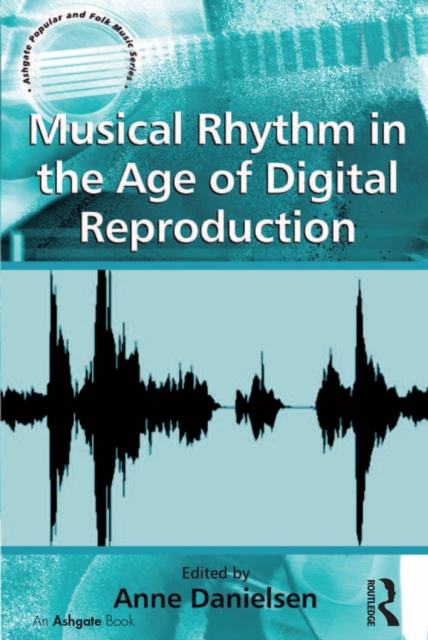
Musical Rhythm in the Age of Digital Reproduction presents new insights into the study of musical rhythm through investigations of the micro-rhythmic design of groove-based music.
Musical Rhythm in the Age of Digital Reproduction presents new insights into the study of musical rhythm through investigations of the micro-rhythmic design of groove-based music.
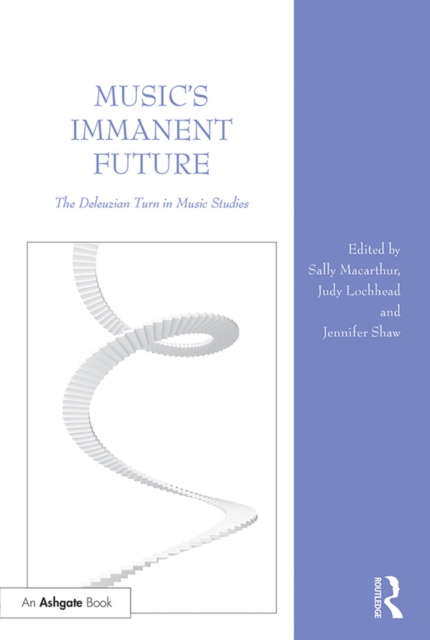
The conversations generated by the chapters in Music's Immanent Future grapple with some of music's paradoxes: that music of the Western art canon is viewed as timeless and universal while other kinds of music are seen as transitory and ephemeral; that in order to make sense of music we need descriptive language; that to open up the new in music we need to revisit the old; that to arrive at a figuration of music itself we need to posit its starting point in noise; that in order to justify our creative compositional works as research, we need to find critical languages and theoretical frameworks with which to discuss them; or that despite being an auditory system, we are compelled to resort to the visual metaphor as a way of thinking about musical sounds.
The conversations generated by the chapters in Music's Immanent Future grapple with some of music's paradoxes: that music of the Western art canon is viewed as timeless and universal while other kinds of music are seen as transitory and ephemeral; that in order to make sense of music we need descriptive language; that to open up the new in music we need to revisit the old; that to arrive at a figuration of music itself we need to posit its starting point in noise; that in order to justify our creative compositional works as research, we need to find critical languages and theoretical frameworks with which to discuss them; or that despite being an auditory system, we are compelled to resort to the visual metaphor as a way of thinking about musical sounds.
This book presents four extended essays that are rooted in the growing interdisciplinary field of applied musicology, in which music theory - in particular, the zygonic conjecture - is used to inform thinking in the domains of music psychology, music education and music therapy research.
This book presents four extended essays that are rooted in the growing interdisciplinary field of applied musicology, in which music theory - in particular, the zygonic conjecture - is used to inform thinking in the domains of music psychology, music education and music therapy research.
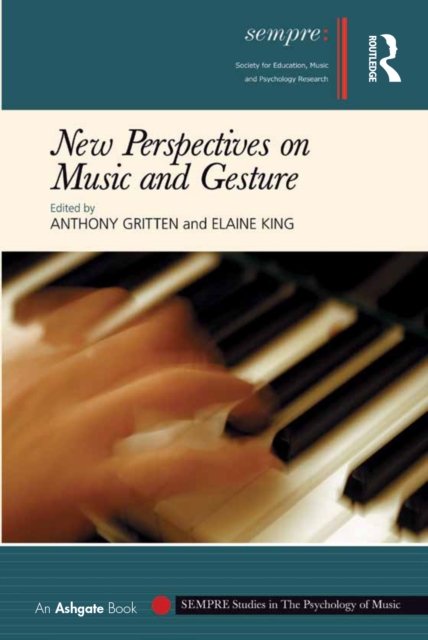
Building on the insights of the first volume on Music and Gesture (Gritten and King, Ashgate 2006), the rationale for this sequel volume is twofold: first, to clarify the way in which the subject is continuing to take shape by highlighting both central and developing trends, as well as popular and less frequent areas of investigation; second, to provide alternative and complementary insights into the particular areas of the subject articulated in the first volume.
Building on the insights of the first volume on Music and Gesture (Gritten and King, Ashgate 2006), the rationale for this sequel volume is twofold: first, to clarify the way in which the subject is continuing to take shape by highlighting both central and developing trends, as well as popular and less frequent areas of investigation; second, to provide alternative and complementary insights into the particular areas of the subject articulated in the first volume.
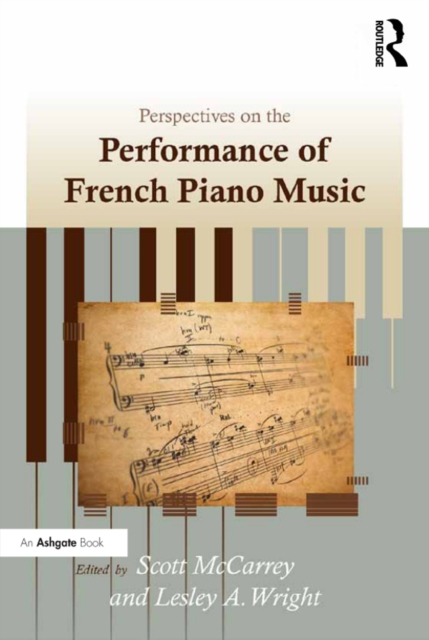
Perspectives on the Performance of French Piano Music offers a range of approaches central to the performance of French piano music of the nineteenth and twentieth centuries.
Perspectives on the Performance of French Piano Music offers a range of approaches central to the performance of French piano music of the nineteenth and twentieth centuries.
Since the 1970s, the landscape of higher education and research has been considerably altered by the integration of the arts within the university environment.
Since the 1970s, the landscape of higher education and research has been considerably altered by the integration of the arts within the university environment.
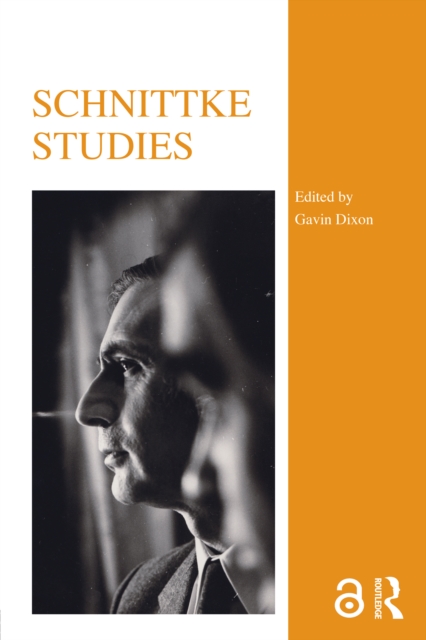
Alfred Schnittke (1934-1998) was arguably the most important Russian composer since Shostakovich, and his music has generated a great deal of academic interest in the years since his death.
Alfred Schnittke (1934-1998) was arguably the most important Russian composer since Shostakovich, and his music has generated a great deal of academic interest in the years since his death.
How does one go about writing the history of musical composition in the late twentieth century when, on the one hand, so much of it seems impossibly fractured and disassociated, and, on the other, there has been so little certainty about what the notion of 'music history' might entail under the critiques of post-modernism?
How does one go about writing the history of musical composition in the late twentieth century when, on the one hand, so much of it seems impossibly fractured and disassociated, and, on the other, there has been so little certainty about what the notion of 'music history' might entail under the critiques of post-modernism?