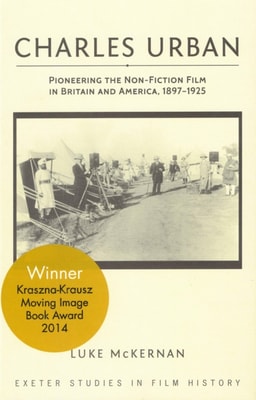
Charles Urban was a renowned figure in his time, and he has remained a name in film history chiefly for his development of Kinemacolor, the world's first successful natural colour moving picture system.
Charles Urban was a renowned figure in his time, and he has remained a name in film history chiefly for his development of Kinemacolor, the world's first successful natural colour moving picture system.
The films made by the British Instructional Films (BIF) company in the decade following the end of the First World War helped to shape the way in which that war was remembered.
The films made by the British Instructional Films (BIF) company in the decade following the end of the First World War helped to shape the way in which that war was remembered.
Making movies is the most exciting way to earn a living and it is not surprising that media and film studies remain the most popular courses at colleges across the western world.
Making movies is the most exciting way to earn a living and it is not surprising that media and film studies remain the most popular courses at colleges across the western world.
Frank Capra has long had a reputation as being the quintessential American director - the man who perfectly captured the identity and core values of the United States with a string of classic films in the 1930s and '40s, including It Happened One Night, Mr.
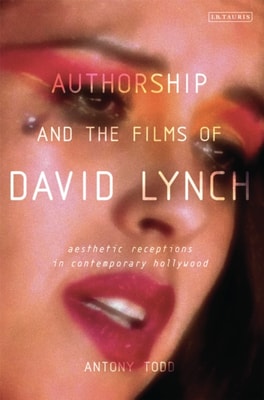
This important new contribution to studies on authorship and film explores the ways in which shared and disputed opinions on aesthetic quality, originality and authorial essence have shaped receptions of Lynch's films.
Frank Capra has long had a reputation as being the quintessential American director - the man who perfectly captured the identity and core values of the United States with a string of classic films in the 1930s and '40s, including It Happened One Night, Mr.
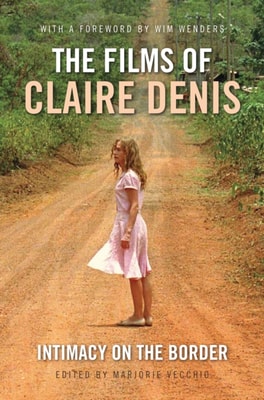
The films of Claire Denis, one of the most challenging and respected of contemporary filmmakers, probe the psyche of global citizenship, tracing the borderlines of family, desire, nationality and power.
This important new contribution to studies on authorship and film explores the ways in which shared and disputed opinions on aesthetic quality, originality and authorial essence have shaped receptions of Lynch's films.
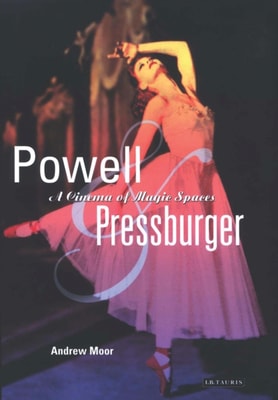
The producer behind such celebrated films as The Four Feathers and The Third Man is one of the most colourful and important figures in the history of the British cinema.
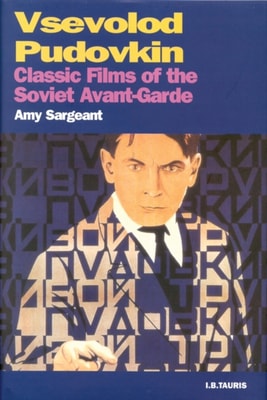
Pudovkin is listed amongst the great and the good of twentieth century directors: his influence is acknowledged by such diverse figures as Hitchcock and Kubrick, Zavattini and Mamet, and Walter Benjamin usedhis work as a vital source forhis studies of the aesthetics and cultural politics of the period.
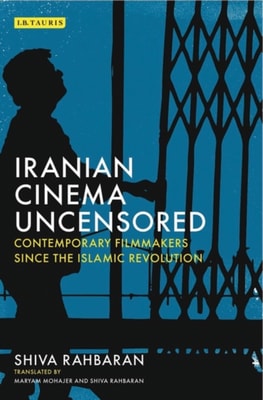
The name of Mohsen Makhmalbaf is almost synonymous with the dramatic rise of Iranian cinema in the aftermath of the Islamic Revolution, and over the last quarter of a century, his career as filmmaker and writer has reflected the tumultuous history of his homeland and the fate of its neighbours.
Kira Muratova is a respected and original contemporary film director, yet her earliest works were not welcomed when they were shown just after the end of Brezhnev's 'period of stagnation'.
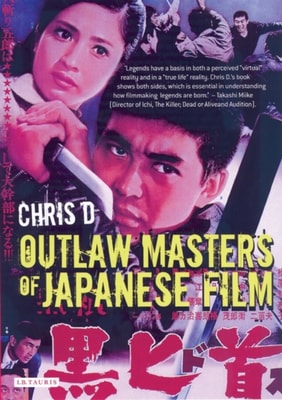
"e;Outlaw Masters of Japanese Film"e; offers an extraordinary close-up of the hitherto overlooked golden age of Japanese cult, action and exploitation cinema from the early 1950s through to the late 1970s, and up to the present day.
Adored by Russian audiences for his commercially-oriented films, and loathed by the Russian intelligentsia for the same, Nikita Mikhalkov is one of the most successful, ambitious and controversial film-directors in the history of Soviet and Russian cinema.
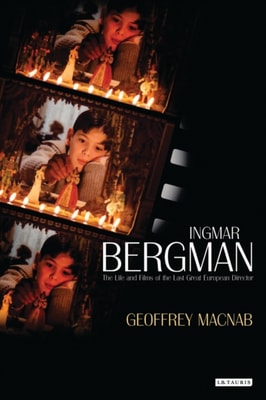
Ingmar Bergman was the last and arguably the greatest of the old-style European auteurs and his influence across all areas of contemporary cinema has continued to be considerable since his death in July 2007.
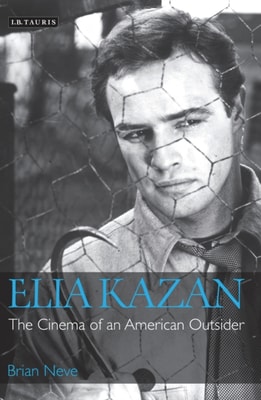
In 1999, Elia Kazan (1909-2003) received an honorary Oscar for lifetime achievement; it was a controversial award, for in 1952 he had given testimony to the HUAC Committee, for which he was ostracized by many.
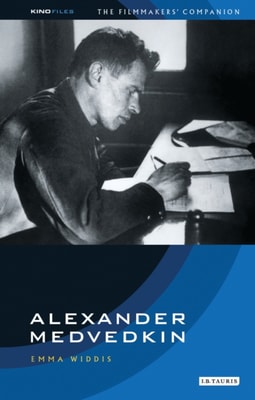
This first introduction to Medvedkin's film-making career traces his process of developing a unique brand of cinematic satire throughout the period of the Soviet revolutionary experiment.
The British Film Guides are a fresh departure for the Cinema and Society series, each telling the story of an important British film, presented and priced for a readership spanning scholars, students and general film enthusiasts.
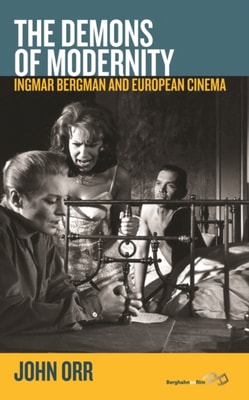
Ingmar Bergman s films had a very broad and rich relationship with the rest of European cinema, contrary to the myth that Bergman was a peripheral figure, culturally and aesthetically isolated from the rest of Europe.
The work of Andrzej Wajda, one of the world s most important filmmakers, shows remarkable cohesion in spite of the wide ranging scope of his films, as this study of his complete output of feature films shows.
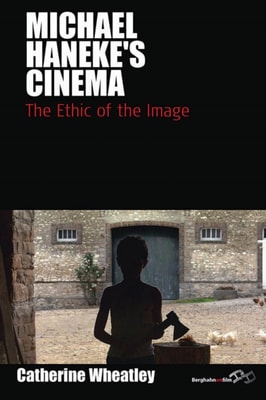
Existing critical traditions fail to fully account for the impact of Austrian director, and 2009 Cannes Palm d'Or winner, Michael Haneke s films, situated as they are between intellectual projects and popular entertainments.
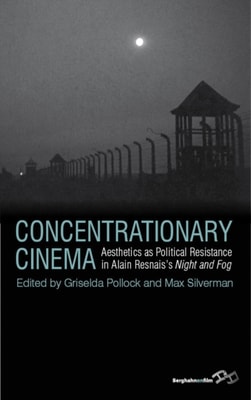
Since its completion in 1955, Alain Resnais s Night and Fog (Nuit et Brouillard) has been considered one of the most important films to confront the catastrophe and atrocities of the Nazi era.
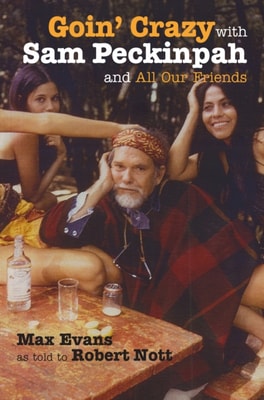
Almost as famous for the legendary excesses of his personal life as for his films, Sam Peckinpah (1925-1984) cemented his reputation as one of the great American directors with movies such as The Wild Bunch and Pat Garrett and Billy the Kid.
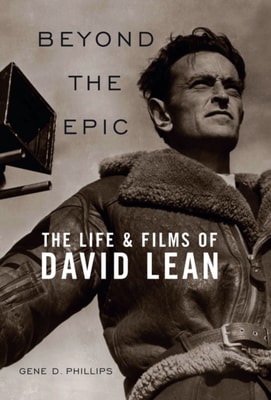
Two-time Academy Award winner Sir David Lean (1908-1991) was one of the most prominent directors of the twentieth century, responsible for the classics The Bridge on the River Kwai (1957), Lawrence of Arabia (1962), and Doctor Zhivago (1965).
In March 1980 Francis Coppola purchased the dilapidated Hollywood General Studios facility with the hope and dream of creating a radically new kind of studio, one that would revolutionize filmmaking, challenge the established studio machinery, and, most importantly, allow him to make movies as he wished.