Contrary to the common notion that news regarding the unfolding Holocaust was unavailable or unreliable, news from Europe was often communicated to North American Poles through the Polish-language press.
This study questions the widely held perception that books, as an artistic medium, are superior to and more respectable than film or television, sometimes considered frivolous and pernicious.
Today, it seems as if everyone from heroic-yet-angsty teenagers, to giggling schoolgirls, to middle-aged businessmen, to bored moms are finding themselves whisked away to save distant worlds from some kind of unspeakable evil.
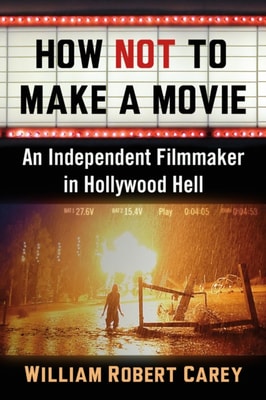
Part memoir, part primer, part cautionary tale, this book takes the reader along on a filmmaker's 12-year journey through Hollywood Hell, culminating in the movie Angels In Stardust (2016), starring Alicia Silverstone, AJ Michalka and Billy Burke.
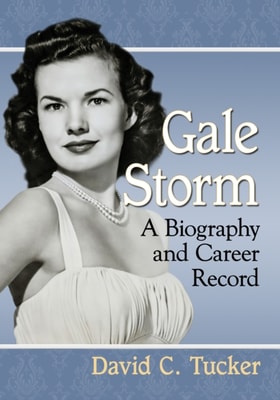
On December 31, 1939, nationwide radio audiences listened as 17-year-old Josephine Owaissa Cottle, a Texas schoolgirl, won Gateway to Hollywood's new talent competition.
Devoted to his craft--sometimes to the detriment of his reputation--cinematographer John Alton (1901-1996) was sought after by such directors as Vincente Minnelli, Richard Brooks and Anthony Mann but was disdained by others of comparable talent.
In 1969--the counter-cultural moment when Easy Rider triggered a "e;youthquake"e; in audience interests--Westerns proved more dominant than ever at the box office and at the Oscars.
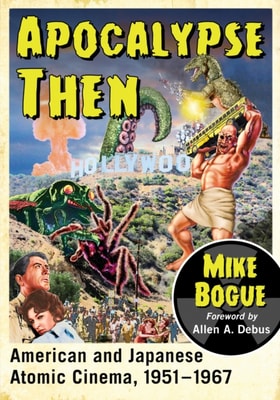
The United States, the only country to have dropped the bomb, and Japan, the only one to have suffered its devastation, understandably portray the nuclear threat differently on film.
Film noir is a particularly American stylistic phenomenon (although named by French film critics) that permeated nearly every major, minor and independent Hollywood studio production from 1940 through the early 1960s.
When people hear the term "e;role-playing games,"e; they tend to think of two things: a group of friends sitting around a table playing Dungeons & Dragons or video games with exciting graphics.
In this first ever book-length treatment, 11 scholars with a variety of backgrounds in medieval studies, film studies, and medievalism discuss how historical and fictional medieval women have been portrayed on film and their connections to the feminist movements of the 20th and 21st centuries.
From the first, brief moving images of female nudes in the 1880s to the present, the motion picture camera made the female body a battleground in what we now call the culture wars.
Films produced in late 1960s and early 1970s America--along with later films focusing on that period--continue to frame our understanding of the counterculture era.
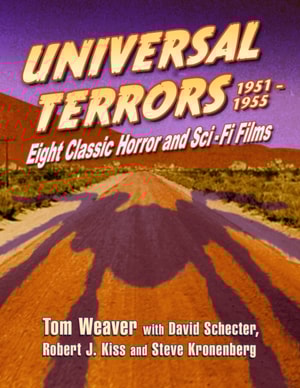
Universal Studios created the first cinematic universe of monsters--Dracula, Frankenstein, the Mummy and others became household names during the 1930s and 1940s.
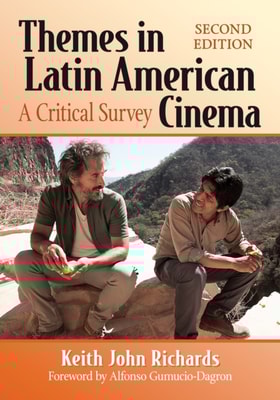
This updated and expanded edition gives critical analyses of 23 Latin American films from the last 20 years, including the addition of four films from Bolivia.
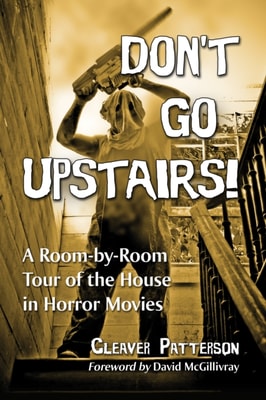
Throughout cinematic history, the buildings characters inhabit--whether stately rural mansions or inner-city apartment blocks--have taken on extra dimensions, often featuring as well developed characters themselves.