In sharp contrast to many 1960s science fiction films, with idealized views of space exploration, Ridley Scott's Alien (1979) terrified audiences, depicting a harrowing and doomed deep-space mission.
From their heyday in the 1910s to their lingering demise in the 1950s, American film serials delivered excitement in weekly installments for millions of moviegoers, despite minuscule budgets, nearly impossible shooting schedules and the disdain of critics.
Before his rise to superstardom portraying Detective Steve McGarrett on the long-running police drama Hawaii Five-O, Jack Lord was already a dedicated and versatile actor on Broadway, in film and on television.
Controversial yet beloved among audiences, Christmas-themed horror movies emerged in the early 1970s and gained a notorious reputation with Silent Night, Deadly Night (1984), depicting Santa as an ax-wielding maniac.
Horror cinema flourishes in times of ideological crisis and national trauma--the Great Depression, the Cold War, the Vietnam era, post-9/11--and this critical text argues that a succession of filmmakers working in horror--from James Whale to Jen and Sylvia Soska--have used the genre, and the shock value it affords, to challenge the status quo during these times.
Directed by Jonathan Glazer (Sexy Beast, Birth) and starring Scarlett Johansson, the 2013 film Under the Skin contains elements of science fiction and fantasy, horror, mystery, and thriller.
Billy the Kid, Wild Bill Hickok, Belle Starr, Wyatt Earp, the Younger Gang, the Dalton-Doolin Gang and Bat Masterson--these real-life lawmen and lawbreakers have been the basis of so many Hollywood Westerns that it has become difficult to discover where the truth ends and the legend begins.
Examining images of gender and violence, this book analyzes selected works of three influential artists of the Irish cinema--Ford, Sheridan and Greengrass--whose careers, taken together, span the period from 1939 to the present.
The 2005 James McTeigue and Wachowski Brothers film V for Vendetta represents a postmodern pastiche, a collection of fragments pasted together from the original Moore and Lloyd graphic novel of the same name, along with numerous allusions to literature, history, cinema, music, art, politics, and medicine.
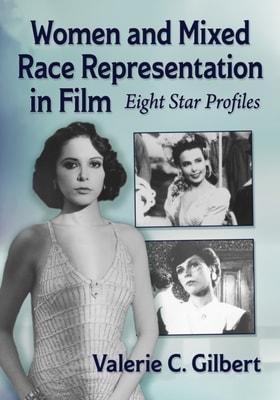
This book uses a black/white interracial lens to examine the lives and careers of eight prominent American-born actresses from the silent age through the studio era, New Hollywood, and into the present century: Josephine Baker, Nina Mae McKinney, Fredi Washington, Lena Horne, Dorothy Dandridge, Lonette McKee, Jennifer Beals and Halle Berry.
The XXX Filmography, 1968-1988 features more than 3,000 A to Z entries, covering the historic, artistic, and technical aspects of adult cinema from those years, including 35mm features, 16mm storefront features, and 8mm loops.
Profiling World War II veterans who became famous Hollywood personalities, this book presents biographical chapters on celebrities like Audie Murphy, "e;America's number one soldier"e;; Clark Gable, the "e;King of Hollywood"e;; Jimmy Stewart, combat pilot; Gene Autry, the "e;singing cowboy,"e; who flew the infamous Hump; the amorous Mickey Rooney; Jackie Coogan, "e;the Kid"e; who crashed gliders in the jungle; James Arness, who acquired his Gunsmoke limp in the mountains of Italy; Tony Bennett, who discovered his voice during the Battle of the Bulge; and Lee Marvin, a Marine NCO who invaded 29 islands.
Since her first appearance in 1992, Harley Quinn--eccentric sidekick to the Joker--has captured the attention of readers like few new characters have in eight decades of Batman comics.
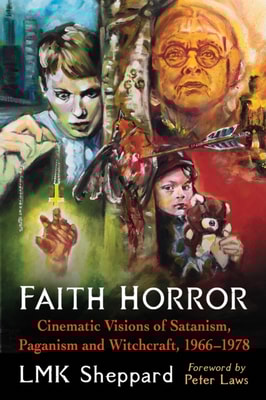
Faith horror refers to a significant outcropping of mid-1960s and 1970s films and adaptative novels that depict non-Christian communities of evil doers and their activities.
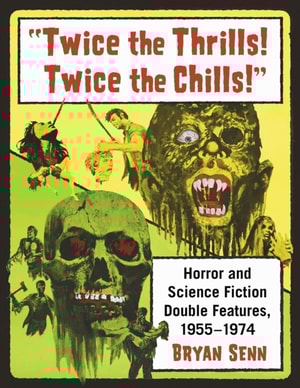
In the mid-1950s, to combat declining theater attendance, film distributors began releasing pre-packaged genre double-bills--including many horror and science fiction double features.
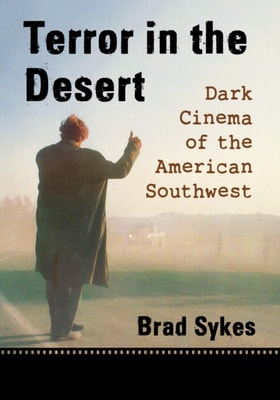
Set in the American Southwest, "e;desert terror"e; films combine elements from horror, film noir and road movies to tell stories of isolation and violence.
Arctic cinemas represent a noteworthy new subfield of film studies, and in the current era of unprecedented global warming, interest in the Arctic region and its cinematic portrayals has never been greater.
Jeffrey Hunter is best remembered today for his roles as half-breed Martin Pawley in John Ford's classic western The Searchers (1956), as Jesus Christ in Nicholas Ray's King of Kings (1961) and as Christopher Pike, the first captain of the U.
Oscar-winning actor, translator of Bertolt Brecht's Galileo, and director of the iconoclastic The Night of the Hunter, Charles Laughton's name alone commanded box office and theatre acclaim.
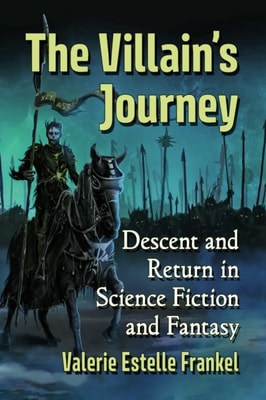
The original Star Wars trilogy famously follows Joseph Campbell's model for the hero's journey, making Luke Skywalker's story the new hero quest for a modern age.
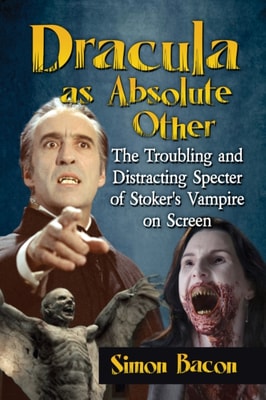
Dark, dangerous and transgressive, Bram Stoker's Dracula is often read as Victorian society's absolute Other--an outsider who troubles and distracts those around him, one who represents the fears and anxieties of the age.
Squirrels have made numerous appearances in mass media over the years, from Beatrix Potter's Nutkin and Timmy Tiptoes, to Rocky the flying squirrel of The Adventures of Rocky and Bullwinkle, and to Conker and Squirrel Girl of video game fame.
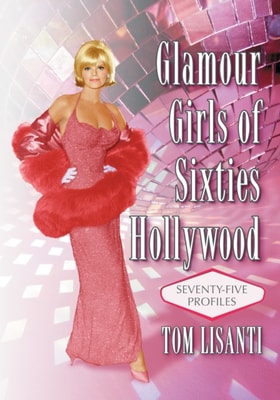
During the 1960s, many models, Playboy centerfolds, beauty queens, and Las Vegas showgirls went on to become "e;decorative actresses"e; appearing scantily clad on film and television.