Few morose thoughts permeate the brain when Yosemite Sam calls Bugs Bunny a ';long-eared galut' or a frustrated Homer Simpson blurts out his famous catch-word, ';D'oh!
An academically acclaimed and globally celebrated cultural critic, Hamid Dabashi is the Hagop Kevorkian Professor of Iranian Studies and Comparative Literature at Columbia University.
The cinema of Lucrecia Martel provides a comprehensive analysis of the work of the acclaimed Argentine director, whose elusive and elliptical feature films have garnered worldwide recognition since her 2001 debut La cienaga.
Groundbreaking case studies mapping the rhetoric inherent in acts of presentation and concealmentRhetorics of Display is a pathbreaking volume that brings together a distinguished group of scholars to assess an increasingly pervasive form of rhetorical activity.
The mere hint recently that British actor Idris Elba might take up the mantle of James Bond in future instalments of the film franchise was a major international news story - a testament to the enduring interest and appeal of Bond, a figure who has become a true global icon.
The writings of Gilles Deleuze and Felix Guattari offer the most enduring and controversial contributions to the theory and practice of art in post-war Continental thought.
Taking as its starting point the notion of photocinema - or the interplay of the still and moving image - the photographs, interviews, and critical essays in this volume explore the ways in which the two media converge and diverge, expanding the boundaries of each in interesting and unexpected ways.
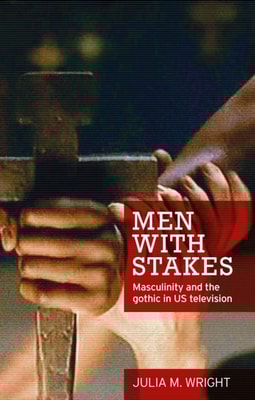
Men with stakes builds on recent discussions of television Gothic by examining the ways in which the Gothic mode is deployed specifically to call into question televisual realism and, with it, conventional depictions of masculinity.
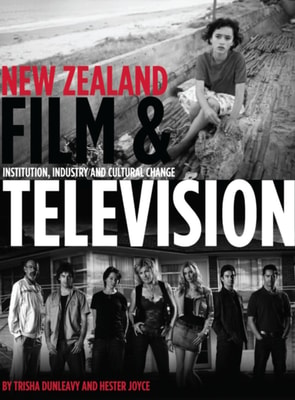
Notwithstanding the challenges of a limited population size and the struggle to fund such costly forms of screen production as high-end film and television, both of these New Zealand screen industries have been the site of significant expectation, achievement and cultural influence.
World Film Locations: Tokyo gives readers a kaleidoscopic view of one of the world's most complex and exciting cities through the lens of world cinema.
This landmark collection draws together a number of accessible and insightful essays that explore, for the first time, an exciting new area of academic analysis and debate.
An illuminating and visually led guide to a selection of the films set wholly or in part in Melbourne, World Film Locations: Melbourne covers the big screen representations of life in the city from the Victorian era to the present day.
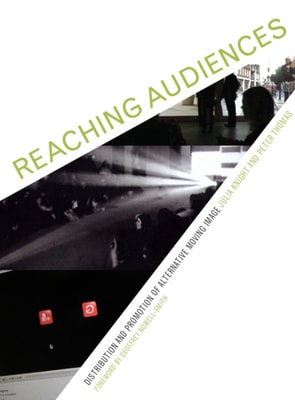
Through a series of case studies, this book tracks the inventive distribution and exhibition initiatives developed over the last 40 years by an array of small companies on the periphery of the beleaguered UK film industry.
Beyond Auteurism is a comprehensive study of nine film authors from France, Italy and Spain who since the 1980s have blurred the boundaries between art-house and mainstream, and national and transnational film production.
Mika Kaurismaki's films challenge many boundaries - national societies, genre formations, art/popular culture, fiction/documentary, humanity/nature and problematic distinctions between different zones of development.
New Zealand has produced one of the world’s most vibrant film cultures, a reflection of the country’s evolving history and the energy and resourcefulness of its people.
ARS (Artists Rights Society) requires for the e-book that a statement be affixed to the website, 'Reproduction, including downloading of this work is prohibited by copyright laws and international conventions without the express written permission of the Artists Rights Society (ARS), New York'.
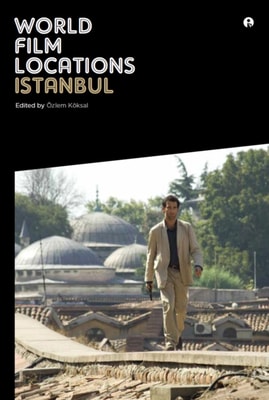
From Fatih Akin's Head-On (2004) to Sydney Lumet's Murder on the Orient Express (1974), World Film Locations: Istanbul offers a compelling look at many films shot on location in this multicultural metropolis.
With more and more filmmakers taking advantage of its rich and varied settings, New Orleans has earned star-studded status as the 'Hollywood of the South'.
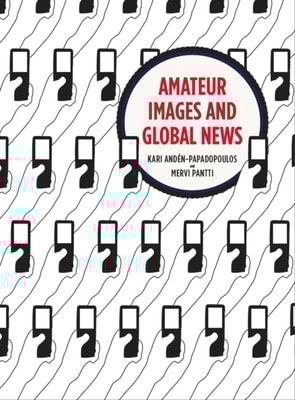
Modern technology has enabled anyone with a digital camera or cell phone to capture images of newsworthy events as they develop, and news organizations around the world increasingly depend on these amateur images for their coverage of unfolding events.
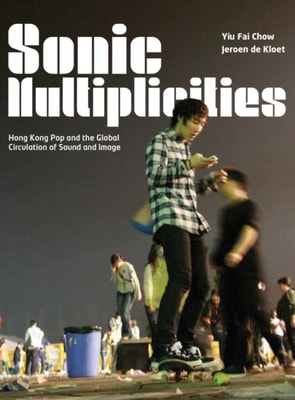
Sonic Multiplicities is a fascinating book, with essays rich in empirical detail and - captivatingly combining the personal and the theoretical - evocative of the complexities of experience, desire and politics in our perplexingly mobile and entangled world.
Werner Schroeter is one of the most important and influential directors of the New German Cinema, yet discussion of his films within film theory has been intermittent and un-sustained.
Following the success of prominent feature films shot on location, including Tolkien s wildly popular The Lord of the Rings, New Zealand boasts an impressive film tourism industry.
An important addition to Intellect's popular series, Directory of World Cinema: Finland provides historical and cultural overviews of the country's cinema.